Introduction
The Garnet Pitta, scientifically known as Erythropitta granatina, is a remarkable bird species known for its vibrant plumage and elusive nature. Belonging to the family Pittidae, this bird is native to the humid tropical forests of Southeast Asia, where it thrives in dense undergrowth and bamboo thickets. This article delves into the intricate details of the Garnet Pitta, exploring its habitat, behavior, diet, conservation status, and the challenges it faces in its natural environment.
Taxonomy and Description
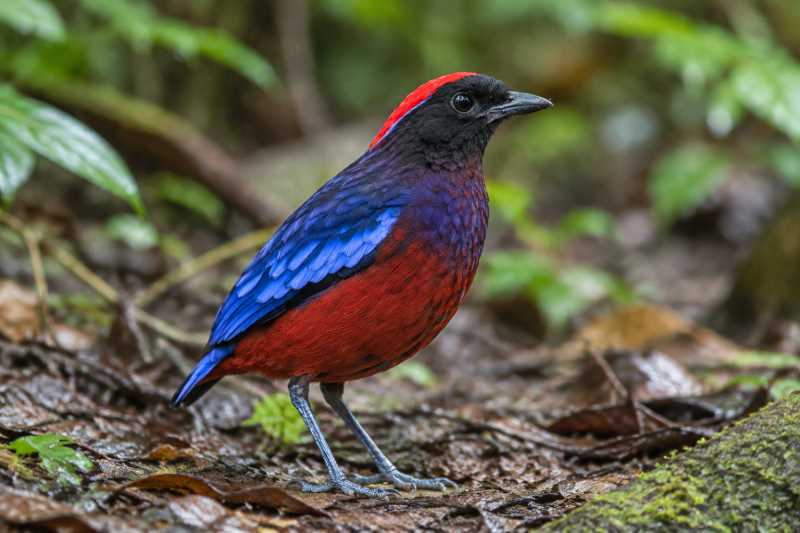
The Garnet Pitta is a small bird, measuring approximately 16 to 19 centimeters in length, with a weight ranging from 42 to 56 grams. The species is noted for its striking appearance, predominantly characterized by a deep red and black plumage. The head and upperparts are a rich crimson, while the underparts are a contrasting black, creating a stunning visual appeal. The wings and tail are also marked by a combination of black and red, with subtle blue hues appearing on the wing coverts.
Taxonomically, the Garnet Pitta falls under the genus Erythropitta, which encompasses several other vividly colored pittas. The bird’s nomenclature reflects its garnet-like coloration, which stands out against the lush green backdrop of its natural habitat.
Habitat and Distribution
The Garnet Pitta is predominantly found in the lowland rainforests of Southeast Asia, spanning regions in Malaysia, Thailand, Brunei, and Indonesia, particularly on the islands of Sumatra and Borneo. These birds prefer dense, humid forest environments where they can find ample cover and food resources. They are often found in primary and secondary forests, as well as logged forests, provided that there is sufficient undergrowth to offer protection and foraging opportunities.
The bird’s distribution is patchy, largely influenced by habitat availability and environmental conditions. Despite their preference for lowland forests, Garnet Pittas have occasionally been observed in hill forests at elevations up to 600 meters.
Behavior and Ecology
Garnet Pittas are elusive and solitary birds, known for their secretive behavior. They are adept at navigating through dense vegetation, often making them difficult to spot. These birds spend much of their time on the forest floor, where they forage for insects, worms, and other invertebrates, which constitute the bulk of their diet.
Their foraging behavior involves hopping or walking along the ground, flipping over leaves and debris to uncover hidden prey. This ground-dwelling lifestyle is complemented by their strong, robust legs, which are well-suited for moving through thick underbrush.
Garnet Pittas are also known for their distinctive calls, which are often the first indication of their presence in the forest. The call is a series of repetitive notes that can be heard echoing through the forest, especially during the breeding season.
Breeding and Reproduction
The breeding season for the Garnet Pitta varies depending on the region, but it generally occurs during the wetter months when food is abundant. The birds construct their nests close to the ground, often in a clump of vegetation or among tree roots. The nest is a spherical structure made of leaves, twigs, and fibers, with a side entrance that offers protection from predators and the elements.
Typically, the female lays two to three eggs, which are incubated primarily by the female. The incubation period lasts about 17 to 18 days, after which the chicks hatch. Both parents share the responsibility of feeding and caring for the young until they are ready to fledge, usually within 20 to 21 days after hatching.
Conservation Status
The Garnet Pitta is currently listed as Near Threatened on the IUCN Red List. The primary threat to its survival is habitat loss due to deforestation and land conversion for agriculture, logging, and human settlement. The fragmentation of forests poses a significant risk, limiting the available habitat and increasing the bird’s vulnerability to predation and environmental changes.
Conservation efforts are focused on preserving the remaining tracts of lowland forests and promoting sustainable land-use practices. Protected areas and reserves play a crucial role in safeguarding the habitats of the Garnet Pitta and other forest-dependent species.
Challenges and Future Directions
The future of the Garnet Pitta hinges on effective conservation strategies and increased awareness of the importance of biodiversity. Addressing deforestation and habitat fragmentation is paramount, requiring collaboration between governments, conservation organizations, and local communities.
Research into the ecology and behavior of the Garnet Pitta is essential for informing conservation actions. Understanding the species’ breeding patterns, habitat preferences, and population dynamics can aid in developing targeted conservation strategies.
Conclusion
The Garnet Pitta is a jewel of the Southeast Asian forests, captivating bird enthusiasts and researchers alike with its striking appearance and elusive nature. While the species faces considerable threats, concerted conservation efforts can help ensure its survival for future generations. Protecting the Garnet Pitta and its habitat is not only crucial for the species itself but also for maintaining the ecological integrity of the tropical forests it inhabits.
Related posts