Introduction
The Dusky Hummingbird, Phaeoptila sordida, is a small hummingbird endemic to Mexico. It is associated mainly with dry landscapes in the Balsas Basin and adjacent valleys of south-western and south-central Mexico. Its subdued bronze-green and grey plumage distinguishes it from many more brightly coloured hummingbirds.
Physical Description
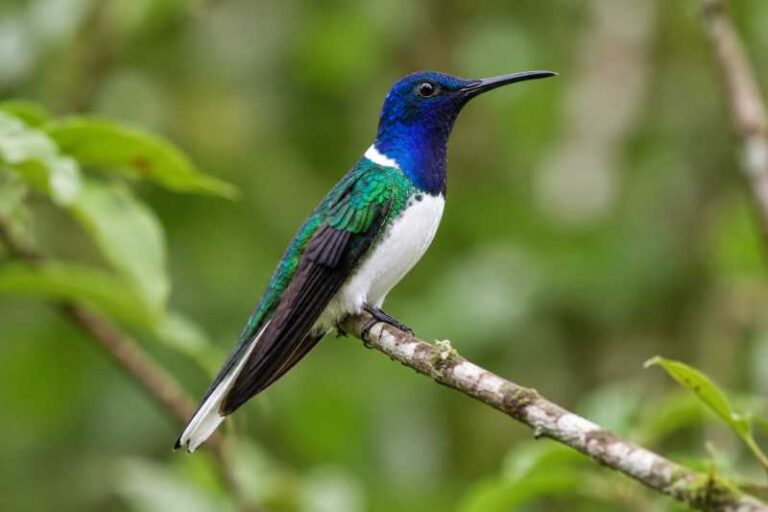
The Dusky Hummingbird is approximately 10 cm long. The upperparts are dull bronzy-green, while the underparts are greyish or greyish-brown, often appearing paler on the belly and undertail-coverts. A pale spot behind the eye is a useful feature at close range, as are small white feather tufts on the sides of the lower back and rump.
The bill is slender and slightly curved, with a pale or flesh-coloured base and a darker tip. The wings are dark brown, and the tail is relatively short, dark and slightly forked. The outer tail feathers may show pale grey or whitish tips with a darker subterminal band.
The sexes are broadly similar, although females are generally paler below and may show more obvious pale edging on the outer tail feathers. Juveniles and recently fledged birds are less well marked and may appear duller than adults. The original description of the species and modern field accounts indicate limited sexual colour differences compared with many other hummingbirds.
Range and Habitat
The Dusky Hummingbird is endemic to Mexico. Its range extends from eastern Michoacán and Morelos through Puebla to Oaxaca, including the Balsas Basin, the Tehuacán-Cuicatlán region and the Central Valleys of Oaxaca.
It usually occurs between approximately 900 and 2,200 metres above sea level. Preferred habitats include arid montane scrub, xerophytic vegetation, seasonally dry tropical forest and open or semi-open country with scattered trees. It also uses gallery vegetation, flowering shrubs, columnar cacti and agaves. Gardens and cultivated areas may attract the species when suitable flowering plants are available, but it is most characteristic of naturally dry habitats.
The species is considered resident, and no regular long-distance migration has been established. Genetic research indicates geographic structure among populations in the Balsas Basin and the dry valleys of Puebla and Oaxaca, reflecting the fragmented nature of its habitat.
Where to See This Species
Yagul Natural Monument, Oaxaca, Mexico
Yagul protects dry ecosystems in the Tlacolula Valley east of Oaxaca City. The combination of xerophytic scrub, rocky slopes and scattered trees provides suitable habitat, and birding records document Dusky Hummingbirds at the archaeological site and in surrounding foothill vegetation.
Nearby accommodation: San Pablo Villa de Mitla, Tlacolula de Matamoros and Oaxaca City provide hotels, guest houses and self-catering accommodation.
Monte Albán Archaeological Zone, Oaxaca, Mexico
The dry scrub and open woodland around Monte Albán offer another practical opportunity in the Oaxaca Valley. Field birding records have documented Dusky Hummingbirds at the site, particularly around shrubs and foothill vegetation. Early morning visits are useful for observing hummingbirds before the strongest heat of the day.
Nearby accommodation: Oaxaca de Juárez is the main accommodation base, with hotels, guest houses and self-catering options.
Cañón del Río Blanco National Park, Veracruz, Mexico
The park’s xerophytic scrub supports a range of Mexican endemic birds, including the Dusky Hummingbird. Look for it around flowering shrubs and open, dry vegetation rather than in the park’s wetter forested areas.
Nearby accommodation: Orizaba and nearby mountain communities offer hotels, guest houses, cabins and other small-scale accommodation.
Behaviour and Diet
The Dusky Hummingbird is active and agile, feeding while hovering at flowers and moving rapidly between perches and feeding sites. It commonly forages in the middle and upper levels of shrubs and trees, although it also visits lower flowering plants and cacti.
Nectar forms the main part of its diet. Recorded and likely food plants include flowering shrubs, columnar cacti and agaves. Small insects and other arthropods supplement the diet and provide protein, particularly when birds are feeding young.
Males may defend productive feeding areas and can chase other hummingbirds from favoured flowers. The species is generally encountered alone or in pairs rather than in large flocks. Detailed information on its movements and breeding biology remains limited. As with other hummingbirds, the female is expected to build the nest, incubate the eggs and feed the young, but species-specific nesting observations should be treated cautiously.
Identification Tips
- Look for a small, relatively plain hummingbird with dull bronzy-green upperparts and greyish underparts.
- Check for the pale spot behind the eye and the small white feather tufts on the sides of the lower back.
- The bill is pale at the base but dark at the tip, a useful feature when the bird is perched.
- The short, dark tail may show pale or whitish tips on the outer feathers.
- Search dry scrub, thorny vegetation, seasonally dry forest edges and flowering cacti between about 900 and 2,200 metres.
- Do not rely on brightness alone. The Dusky Hummingbird often looks grey-brown or washed out in poor light, but the combination of habitat, pale post-eye marking, dark-tipped bill and tail pattern helps separate it from more colourful hummingbirds.
Conservation Status
The Dusky Hummingbird is currently assessed as Least Concern. Available assessments indicate a broadly stable population, although precise population estimates and long-term monitoring remain limited.
The main concerns are the loss and fragmentation of dry scrub and seasonally dry forest through agricultural expansion, urban growth, vegetation clearance, logging and poorly managed fire. Because the species is restricted to dry regions of Mexico and some populations are separated by unsuitable habitat, continued protection of connected scrub and dry-forest landscapes is important.
Protected areas such as Yagul Natural Monument and Cañón del Río Blanco National Park help conserve parts of its range. Maintaining native flowering plants, limiting unnecessary clearance and supporting local habitat monitoring can also benefit the species.
Frequently Asked Questions
Where does the Dusky Hummingbird live?
It is endemic to Mexico, occurring from eastern Michoacán and Morelos through Puebla to Oaxaca, especially in the Balsas Basin and other dry interior valleys.
What habitat does the Dusky Hummingbird prefer?
It favours arid montane scrub, xerophytic vegetation, seasonally dry tropical forest and open areas with scattered trees, usually between about 900 and 2,200 metres above sea level.
What does the Dusky Hummingbird eat?
It feeds mainly on nectar from flowering shrubs, cacti and agaves. Small insects and other arthropods provide additional protein.
Is the Dusky Hummingbird migratory?
It is generally regarded as resident. No regular long-distance migration has been clearly documented.
How can the Dusky Hummingbird be identified?
Look for a small hummingbird with dull bronzy-green upperparts, greyish underparts, a pale spot behind the eye, a dark-tipped bill and a short dark tail with pale markings on the outer feathers.
Is the Dusky Hummingbird endangered?
No. It is currently assessed as Least Concern, although habitat loss, fragmentation, fire and vegetation clearance remain important conservation concerns.
References
- BirdLife International
- IOC World Bird List
- Ornithology
Related posts