Discovering Cook’s Petrel: A Master of the Skies
Cook’s Petrel (Pterodroma cookii) is a small seabird that belongs to the Procellariidae family. This remarkable bird has captured the attention of ornithologists and bird enthusiasts alike due to its incredible navigational abilities, unique breeding habits, and the conservation challenges it faces.
Description and Identification
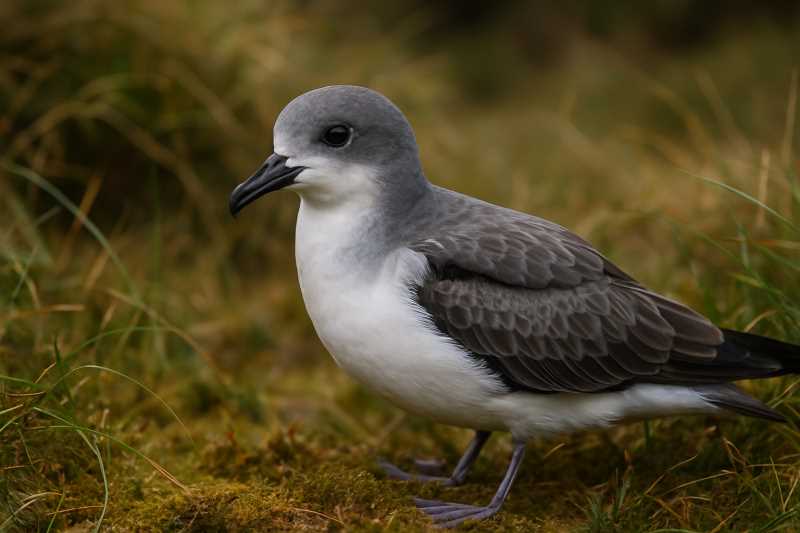
Cook’s Petrel is a medium-sized petrel, measuring about 25 to 30 centimeters in length, with a wingspan of approximately 66 to 71 centimeters. The bird’s plumage is characterized by its soft grey upper parts and white underparts, with a distinct dark ‘M’ pattern across its wings when viewed from above. Its head is marked by a dark cap and a striking white forehead, which makes it relatively easy to identify in its native habitats.
The bill of Cook’s Petrel is slender and hooked, perfectly adapted for its diet primarily consisting of squid, small fish, and crustaceans. The petrel’s legs and feet are blue-grey, adding another layer of subtle beauty to its appearance.
Habitat and Range
Historically, Cook’s Petrel was found in large numbers across the North and South Islands of New Zealand. However, due to habitat destruction and the introduction of invasive species, the current breeding range is restricted to a few predator-free islands, such as Little Barrier Island and Codfish Island. These islands provide a safe haven where the birds can nest without the threat of predation.
Outside the breeding season, Cook’s Petrel is pelagic, spending most of its life in the open ocean. These birds have an extensive range, traveling across the Pacific Ocean, with sightings reported as far east as the coasts of North and South America.
Breeding and Lifecycle
Breeding season for Cook’s Petrel begins in November, coinciding with the Southern Hemisphere’s spring. The species is monogamous, with pairs often mating for life. Nesting occurs in burrows, which are typically dug into soft soil on forested slopes or ridges.
The female lays a single egg, which both parents incubate over approximately 45 days. After hatching, the chick is fed by both parents and fledges around 90 days later. After breeding, the adults and fledglings migrate to the open ocean, where they remain until the next breeding season.
Navigational Skills
One of the most fascinating aspects of Cook’s Petrel is its extraordinary navigational ability. Like other petrels, Cook’s Petrel relies on a combination of environmental cues, including the Earth’s magnetic field, the position of the sun and stars, and olfactory signals, to navigate vast distances across the ocean. These skills are crucial for locating food sources and returning to their breeding grounds.
Conservation Status and Threats
Cook’s Petrel is currently classified as “Vulnerable” by the International Union for Conservation of Nature (IUCN). The primary threats to its survival include habitat destruction, predation by introduced species such as rats and cats, and the impacts of climate change.
Conservation efforts are focused on eradicating invasive predators from breeding islands and protecting these vital habitats. Successful eradication programs have led to significant recoveries in petrel populations, highlighting the importance of continued conservation work.
Human Interactions and Cultural Significance
Cook’s Petrel, like many seabirds, has cultural significance to indigenous communities in New Zealand. Efforts to conserve this species are often intertwined with preserving cultural heritage and the natural environment.
The Future of Cook’s Petrel
The future of Cook’s Petrel depends on sustained conservation efforts and increased awareness of the challenges facing seabird populations globally. Protecting their breeding habitats and mitigating the impacts of climate change are essential steps in ensuring the survival of this remarkable species.
In conclusion, Cook’s Petrel is a testament to the wonders of avian life, showcasing extraordinary adaptability and resilience. By continuing to support conservation initiatives, we can help secure a future where Cook’s Petrel and other seabirds thrive in their natural habitats, enriching the biodiversity of our planet.
Related posts