Common Smoky Honeyeater: A Detailed Exploration of Melipotes fumigatus
The Common Smoky Honeyeater, scientifically known as Melipotes fumigatus, is a fascinating bird species that captivates ornithologists and birdwatchers alike. Found primarily in the montane forests of New Guinea, this bird is a testament to the rich biodiversity of the region. This article delves into the unique characteristics, habitat, behavior, and conservation status of the Common Smoky Honeyeater.
Taxonomy and Description
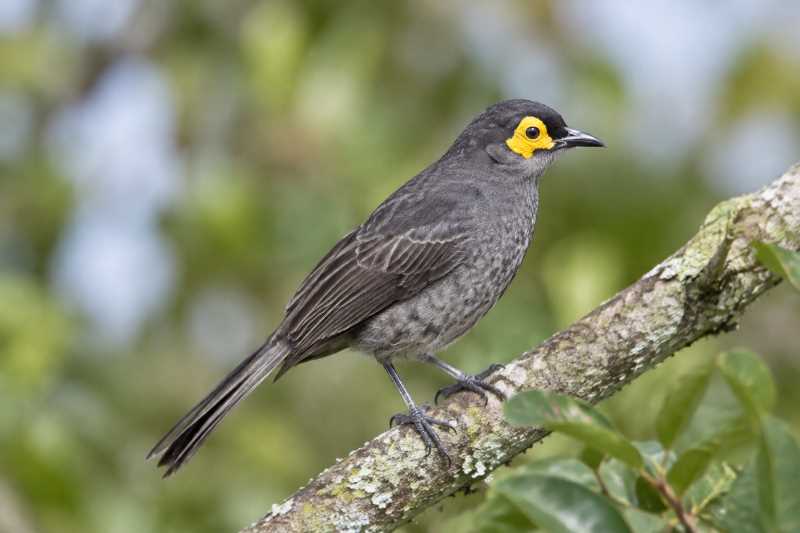
Belonging to the family Meliphagidae, the Common Smoky Honeyeater is one of the four species in the genus Melipotes. It was first described by the British ornithologist Walter Rothschild in 1896. The bird is medium-sized, typically measuring around 22 to 26 centimeters in length. Its plumage is predominantly smoky gray, which gives the bird its common name. The bird’s distinguishing feature is its bare, bright orange facial skin, which adds a striking contrast to its otherwise muted coloration.
The Smoky Honeyeater’s bill is slightly curved, a characteristic feature of honeyeaters, adapted for nectar feeding. Its legs are strong and adapted for perching among the dense foliage of its forest habitat.
Habitat and Distribution
The Common Smoky Honeyeater is endemic to the high-altitude regions of New Guinea, particularly in the central mountain ranges. It thrives in montane forests, typically at elevations ranging from 1,800 to 3,400 meters above sea level. These forests are characterized by high rainfall and dense vegetation, providing an ideal environment for the honeyeater to find food and shelter.
The bird’s habitat is often isolated, and it is rarely found in lowland areas or degraded forests. This preference for high-altitude montane forests makes the Common Smoky Honeyeater an important species for studying the ecological dynamics of these unique environments.
Behavior and Diet
The Common Smoky Honeyeater is known for its active and agile behavior. It is primarily a nectar-feeder, playing a crucial role in the pollination of various plant species. The honeyeater uses its specialized tongue to extract nectar from flowers, often hovering like a hummingbird or perching delicately on branches.
In addition to nectar, the bird’s diet includes insects and small arthropods, which provide essential protein. It often forages in the mid to upper canopy, sometimes joining mixed-species feeding flocks. These flocks offer increased protection from predators and a more efficient foraging experience.
Reproduction and Lifespan
Breeding behaviors in Common Smoky Honeyeaters are not extensively documented, but like many honeyeaters, they are believed to be monogamous, forming long-term pair bonds. Nesting typically occurs in dense foliage, where the female constructs a cup-shaped nest from twigs, leaves, and other plant material.
The clutch size is usually two eggs, which the female incubates. Both parents are involved in feeding and caring for the chicks once they hatch. Information about their lifespan in the wild is limited, but honeyeaters typically have a lifespan of several years, depending on environmental conditions and predation pressures.
Conservation Status
The International Union for Conservation of Nature (IUCN) currently lists the Common Smoky Honeyeater as a species of Least Concern. This status reflects its relatively stable population across its range. However, like many species endemic to New Guinea, it faces potential threats from habitat loss due to logging, agricultural expansion, and climate change.
Conservation efforts in New Guinea’s montane forests are crucial for maintaining the biodiversity of the region, including the preservation of the Common Smoky Honeyeater’s habitat. Continued research and monitoring are necessary to ensure that potential threats do not escalate into significant conservation challenges.
Cultural and Ecological Significance
The Common Smoky Honeyeater holds ecological importance as a pollinator within its habitat, contributing to the reproductive success of various flowering plants. Its presence is indicative of a healthy montane forest ecosystem.
Culturally, birds play a significant role in the indigenous communities of New Guinea, often featuring in folklore and traditional practices. The Smoky Honeyeater, with its distinctive appearance and behaviors, is no exception.
Conclusion
The Common Smoky Honeyeater (Melipotes fumigatus) stands as a symbol of New Guinea’s rich natural heritage. Its unique adaptations, critical ecological role, and the challenges it faces underscore the importance of conservation efforts in the region. As research continues to unveil more about this remarkable bird, it remains a fascinating subject for those passionate about avian biodiversity and conservation.
Preserving the habitats of the Common Smoky Honeyeater not only ensures the survival of this species but also maintains the intricate balance of New Guinea’s montane forest ecosystems. Observing these birds in their natural habitat is a reminder of the biodiversity we all share responsibility to protect.
Related posts