Introduction
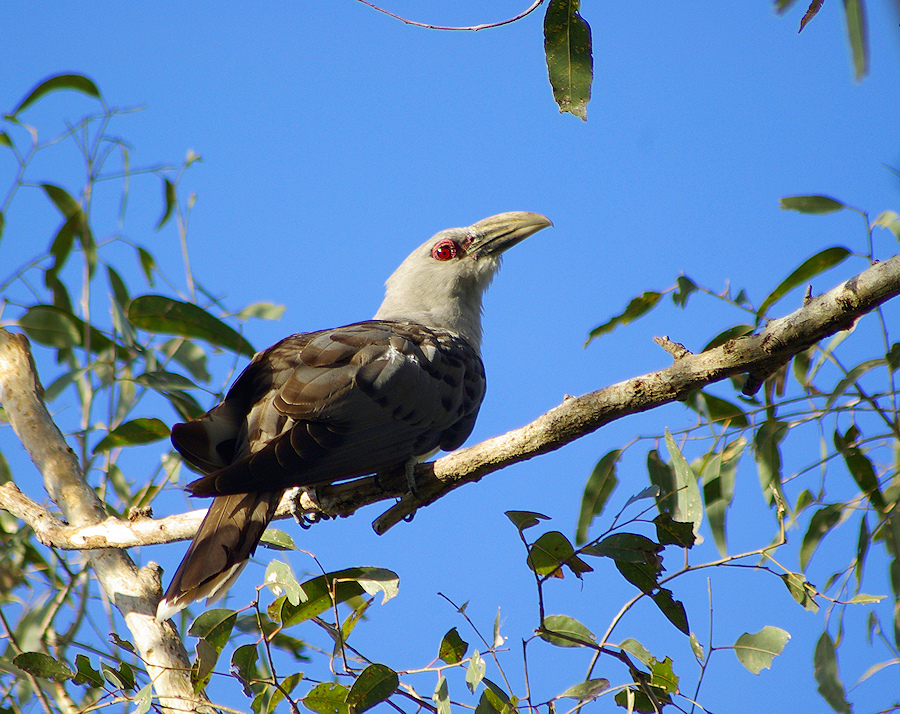
The Channel-billed Cuckoo (Scythrops novaehollandiae) is Australia’s largest cuckoo and one of its most distinctive summer migrants. It is recognised by its enormous pale, down-curved bill, grey plumage, long barred tail and loud, far-carrying calls. The species breeds in Australia and migrates between Australia, New Guinea and parts of Indonesia. Like other cuckoos, it is a brood parasite, laying its eggs in the nests of other birds.
Physical Description
The Channel-billed Cuckoo is a large, long-winged bird measuring about 62 centimetres in length. Adults have mainly grey plumage, with darker grey to brown upperparts and wings, a paler head and underparts, and a long tail marked with dark barring. The massive, pale bill curves strongly downwards and gives the species its common name. The eyes are surrounded by a noticeable reddish area.
The sexes are broadly similar in appearance. Young birds are generally duller and more heavily mottled, with buff, brown and grey tones that become less pronounced as the plumage develops. In flight, the combination of long wings, a long barred tail and slow, deep wingbeats creates a distinctive cross-shaped silhouette.
Range and Habitat
The Channel-billed Cuckoo occurs across northern and eastern Australia, including parts of Western Australia, the Northern Territory, Queensland and New South Wales. It also occurs in New Guinea, the Bismarck Archipelago and islands of eastern Indonesia. Some island populations are resident, while birds associated with Australia are migratory.
Australian birds usually arrive between August and October and depart between February and March. They favour tall open forests, woodland, rainforest edges and other habitats with mature fruiting trees and suitable host birds. The species also uses urban parklands, gardens and suburban areas, particularly where large trees, figs and currawongs, magpies or ravens are present.
Where to See This Species
Australian Botanic Garden Mount Annan, New South Wales, Australia
The Australian Botanic Garden Mount Annan is a documented site for Channel-billed Cuckoos during the warmer months. Its woodland areas and mature trees provide suitable habitat, and the species may be located by its loud calls or by watching for aggressive responses from currawongs, ravens and magpies. Spring and summer are the most useful seasons to look.
Nearby accommodation: Camden and Campbelltown provide practical accommodation, including hotels, guest houses and self-catering options.
Royal Botanic Garden Sydney, New South Wales, Australia
Channel-billed Cuckoos are recorded at the Royal Botanic Garden Sydney as seasonal visitors. The Garden’s mature trees, woodland plantings and abundant urban birdlife make it a realistic place to look during the spring and summer migration period. Listen for the distinctive calls and scan the canopy, especially around fruiting trees.
Nearby accommodation: Sydney city centre and the surrounding harbour districts offer hotels, serviced apartments, guest houses and other accommodation.
Lane Cove National Park, New South Wales, Australia
Channel-billed Cuckoos have been documented in and around Lane Cove National Park during the warmer months. The park’s tall eucalypt forest and connected urban bushland provide suitable habitat, although birds may remain high in the canopy and can be easier to detect by sound than by sight.
Nearby accommodation: Chatswood, Ryde and the wider northern suburbs of Sydney provide hotels, serviced apartments and short-term rental accommodation.
Behaviour and Diet
Channel-billed Cuckoos are generally arboreal and spend much of their time in the upper canopy. They are active during the day but may call at night, particularly during the breeding season. Their loud, raucous calls often reveal their presence before the birds are seen. Calls may consist of a strong, harsh note followed by a quicker series of weaker notes.
Fruit, especially figs and other native fruits, forms an important part of the diet. The large bill is well suited to taking fruit from trees. The species also eats insects, caterpillars, seeds and other small animal material. Occasional records indicate that small birds or nest contents may also be taken.
The Channel-billed Cuckoo is an obligate brood parasite. It lays its eggs in the nests of large host birds, including Pied Currawongs, Australian Magpies, ravens and crows. Magpie-larks, White-winged Choughs and some birds of prey have also been recorded as occasional hosts. The cuckoo chick does not usually eject the host’s eggs or young. Instead, it grows quickly and demands most of the food, which may result in the starvation of smaller nestmates.
Identification Tips
- Look for a very large grey cuckoo with a massive pale bill that curves downwards.
- Note the long tail with dark barring and the darker back and wings.
- In flight, the long wings and tail give the bird a distinctive cross-shaped outline.
- Listen for a loud, harsh, echoing call, often heard from high in the canopy or from a bird in flight.
- Red around the eye and the unusually large bill help separate it from other Australian cuckoos.
- Young birds are duller and more mottled than adults, with stronger buff and brown tones.
- During the breeding season, watch for smaller birds mobbing a large cuckoo near their nesting area.
Conservation Status
The Channel-billed Cuckoo is currently assessed as Least Concern globally. It remains widespread and uses a variety of forest, woodland and urban habitats. Nevertheless, it may be affected locally by the removal of mature trees, loss of fruiting plants, degradation of woodland and changes to the habitats of its host species.
Because it is migratory, conservation also depends on maintaining suitable habitat across its breeding, migration and non-breeding range. Protecting mature trees, retaining native fruiting vegetation and conserving healthy populations of host birds are important practical measures.
Frequently Asked Questions
Where does the Channel-billed Cuckoo live?
It occurs in northern and eastern Australia, New Guinea, the Bismarck Archipelago and parts of eastern Indonesia. Australian birds migrate seasonally, while some island populations remain resident.
When can Channel-billed Cuckoos be seen in Australia?
They are generally seen between August and March, with numbers often highest during the spring and summer breeding period. Many birds depart for the north between February and March.
What does a Channel-billed Cuckoo eat?
Its diet is dominated by figs and other fruit, but it also includes insects, caterpillars, seeds and occasional small animal material.
Which birds raise Channel-billed Cuckoo chicks?
Common host species include Pied Currawongs, Australian Magpies, ravens and crows. Other large birds, including Magpie-larks and White-winged Choughs, may occasionally be used.
How can a Channel-billed Cuckoo be identified by sound?
Its call is loud, harsh and raucous, commonly beginning with a strong note followed by a faster series of weaker notes. It is often heard from high in the canopy or during flight.
References
- BirdLife Australia
- Botanic Gardens of Sydney
- NSW Department of Education, Field of Mars Environmental Education Centre
Related posts