The Black Petrel (Procellaria parkinsoni): A Comprehensive Overview
The Black Petrel, known scientifically as Procellaria parkinsoni, is a seabird of remarkable resilience and ecological significance. Endemic to New Zealand, this medium-sized petrel is a member of the Procellariidae family, renowned for its long-distance migratory patterns and life spent predominantly over open seas. Despite its fascinating life history, the Black Petrel faces numerous challenges, making it a critical focus for conservation efforts.
Morphology and Identification
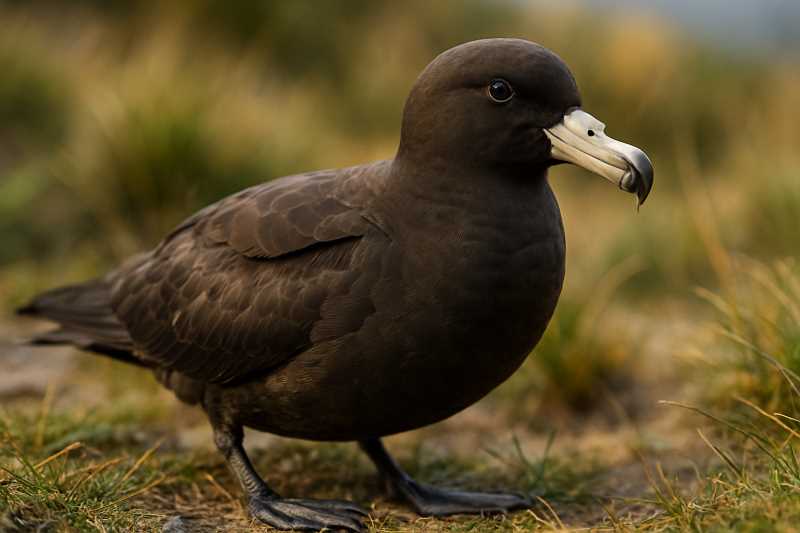
The Black Petrel is easily recognized by its sooty black plumage, which provides excellent camouflage against the ocean waves. Adult birds typically measure between 46 to 51 centimeters in length, with a wingspan ranging from 110 to 120 centimeters. This wingspan is a vital adaptation, allowing the bird to glide effortlessly over vast ocean distances. The species possesses a robust, hooked bill adapted for its diet of squid, fish, and crustaceans.
Juvenile Black Petrels resemble adults but can be distinguished by their slightly lighter plumage and less pronounced bill. These physical attributes are integral to their survival, allowing them to blend into their environment and avoid predators.
Habitat and Distribution
The Black Petrel breeds exclusively on Great Barrier Island (Aotea) and Little Barrier Island (Hauturu) in New Zealand. They prefer nesting in burrows dug into the soft volcanic soils of these islands’ forested areas. The seclusion and dense vegetation provide protection from terrestrial predators and the elements.
Outside the breeding season, Black Petrels undertake an impressive migration, traveling to the eastern tropical Pacific, with sightings reported as far north as the Galápagos Islands. This trans-equatorial migration is one of the longest known among seabirds, highlighting their extraordinary navigational abilities and endurance.
Breeding and Life Cycle
The breeding season for the Black Petrel begins in October when adults return to their island nesting sites. They are monogamous, often reuniting with the same partner each year. Nesting occurs in burrows, where a single egg is laid around December. Both parents share incubation duties, which last approximately 57 days.
Once hatched, the chick is cared for by both parents, who take turns foraging at sea. The chick remains in the burrow for about 100 days before fledging in April. This extended parental care period is crucial for the chick’s development, ensuring it gains enough strength and size to embark on its first migration.
Conservation Status and Threats
Currently listed as Vulnerable on the IUCN Red List, the Black Petrel faces several threats that jeopardize its survival. The primary threats include bycatch in commercial fisheries, predation by invasive species, and habitat degradation.
Bycatch, particularly in longline fisheries, poses a significant threat as birds are inadvertently caught and drowned. Efforts to mitigate this issue include the implementation of bird-scaring lines and weighted hooks to reduce seabird mortality.
Invasive species such as rats and feral cats pose another critical threat, preying on eggs and chicks. Conservation efforts on breeding islands focus on predator control and eradication programs to safeguard nesting sites.
Conservation Efforts and Future Outlook
Conservation organizations, alongside local communities and government agencies, are actively working to protect the Black Petrel. Initiatives include monitoring populations, conducting research on migration patterns, and advocating for sustainable fishing practices.
One of the most promising conservation strategies involves community engagement and education. By raising awareness about the Black Petrel’s plight, these programs aim to foster a sense of stewardship among local communities and promote actions that benefit both the birds and the broader ecosystem.
The future of the Black Petrel depends on sustained conservation efforts and international cooperation. Given their migratory nature, protecting these birds requires not only national but global commitment to addressing threats like bycatch and climate change.
Conclusion
The Black Petrel is a testament to the beauty and complexity of marine life. While they face significant challenges, concerted conservation efforts offer hope for their continued survival. By understanding and protecting these remarkable seabirds, we contribute to the health and diversity of our planet’s ecosystems, ensuring that future generations can marvel at the Black Petrel’s grace and resilience.
In summary, the Black Petrel is not just a bird; it is a symbol of the interconnectedness of our global environment and the shared responsibility we have in preserving it.
Related posts