Australia is home to a dazzling array of nectar-feeding birds, but few are as striking and enigmatic as the Black Honeyeater (Sugomel niger). With its contrasting plumage, delicate build, and graceful flight, this small honeyeater is a distinctive resident of the nation’s dry inland zones. Despite its understated size and elusive habits, the Black Honeyeater plays a vital ecological role and captivates those lucky enough to spot it.
Identification and Description
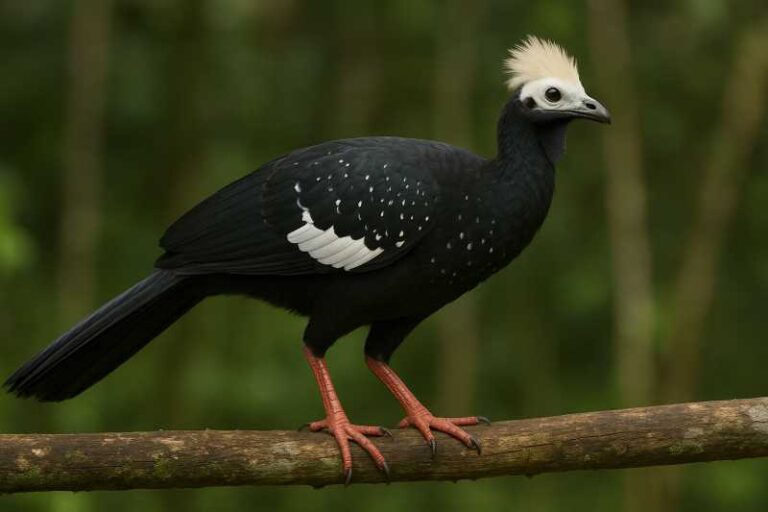
The Black Honeyeater is a small bird, measuring around 12 to 14 cm in length and weighing just 8 to 11 grams. Males are unmistakable with their glossy black plumage accented by a bold white shoulder patch and white undersides with a plunging black bar down the middle of the chest. Their slightly downcurved bill is adapted perfectly for extracting nectar from native flowers. Females and immatures are quite different—drabber in appearance, with brownish-grey upperparts and pale, streaked underparts. This sexual dimorphism often leads to misidentification, but once learned, both sexes are easily distinguishable in the field.
One of the most beautiful features of the male Black Honeyeater is its courtship display. During breeding season, the male flutters in front of the female in a butterfly-like dance, showcasing its crisp white wing patch and soft warbling calls. The simplicity of the plumage belies the energy and elegance of its behavior.
Range and Habitat
The Black Honeyeater is endemic to Australia and favors arid and semi-arid regions, particularly in central and inland areas of Western Australia, South Australia, New South Wales, and Queensland. It is a highly nomadic species, tracking the availability of flowering shrubs and trees rather than adhering to a fixed range. Major movements are often driven by the blossoming of mistletoe, emu-bush (Eremophila spp.), and other nectar-rich flora.
Preferred habitats include mulga and acacia woodlands, open shrublands, and mallee, especially those with an understory of flowering plants. These habitats are typically dry and sparsely vegetated, and the honeyeater’s ability to thrive in such tough environments showcases its impressive ecological adaptability.
Feeding and Ecological Role
As a nectarivore, the Black Honeyeater relies primarily on the nectar of flowering native plants. However, it supplements its diet with insects and small arthropods, especially during the breeding season when protein is essential for raising chicks. It is particularly fond of the blossoms of Eremophila and mistletoe, both of which are common in arid Australia.
In doing so, the Black Honeyeater becomes a vital pollinator in its ecosystem. As it probes into flowers for nectar, pollen collects on its head and bill, facilitating cross-pollination across wide areas. This service supports the reproduction of numerous native plants, maintaining biodiversity and resilience in dryland environments.
Breeding and Behavior
Breeding usually occurs between August and December, but like many arid-zone birds, the Black Honeyeater’s nesting is opportunistic and closely tied to rainfall and food availability. The female constructs a small, cup-shaped nest from grass, spider webs, and plant down, typically in a shrub or low tree.
Clutches usually contain two to three eggs, which the female incubates alone. The male, however, assists with feeding the fledglings once they hatch. Their cooperative breeding behavior, while not as elaborate as some honeyeaters, is essential to chick survival in unpredictable climates.
Socially, the Black Honeyeater is typically solitary or found in pairs, but it can form loose flocks when food sources are abundant. Its flight is fast and erratic, with swooping glides that make it a challenge to follow with binoculars.
Conservation Status
Currently, the Black Honeyeater is listed as Least Concern by the IUCN, owing to its wide distribution and adaptability. However, threats loom in the form of habitat degradation, particularly from overgrazing, invasive plant species, and the clearing of native vegetation for agriculture. Because the species depends on flowering shrubs and trees that are vulnerable to land-use changes, localized declines may occur.
Climate change is also a looming threat. Altered rainfall patterns could disrupt flowering cycles, directly impacting the honeyeater’s food sources and breeding cues. Monitoring their populations and protecting key habitat zones will be vital in maintaining healthy populations.
Observation Tips
Birdwatchers hoping to see the Black Honeyeater should seek out flowering shrubs in inland regions, especially after good rains. Early morning is often the best time to spot them as they feed actively on nectar. Patience and a good ear are essential—their soft, warbling call can be the first sign of their presence.
For those venturing into Australia’s arid interior, the Black Honeyeater is a delightful reward. Its small size and quiet demeanor contrast with the vibrant role it plays in desert ecosystems, making it a worthy addition to any birding life list.
Related posts