The Black-and-white-casqued Hornbill: A Keystone Species of African Forests
The Black-and-white-casqued Hornbill (Bycanistes subcylindricus) is a remarkable bird species that inhabits the dense forests of Central and West Africa. This bird, with its striking appearance and distinctive call, plays a crucial role in the ecosystems it inhabits. Known for its unique casque—a hollow structure on top of its beak—the Black-and-white-casqued Hornbill is not just a fascinating subject for ornithologists but also an essential component of its natural habitat.
Physical Description
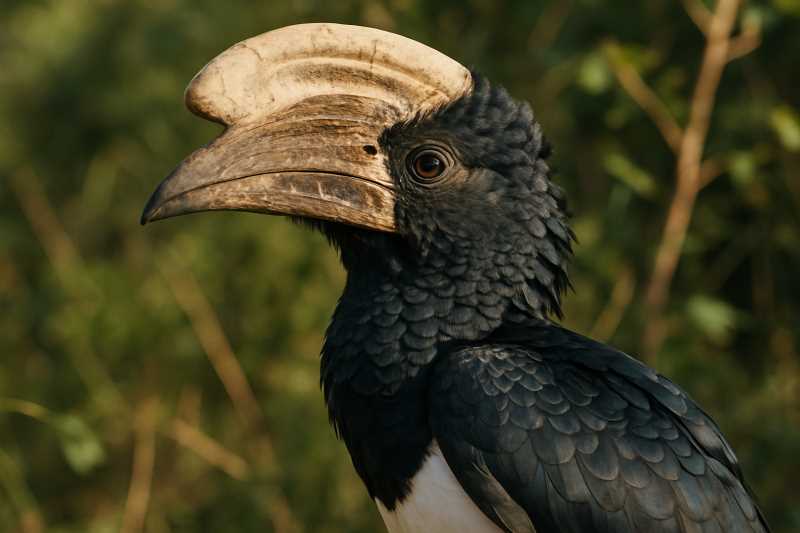
The Black-and-white-casqued Hornbill is a large bird, with adults typically measuring between 60 to 70 centimeters in length and weighing up to 1.5 kilograms. It is characterized by its predominantly black and white plumage, which provides camouflage in the dappled light of the forest canopy. The bird’s most striking feature is its casque, a prominent structure atop its bill. This casque is thought to play various roles, including amplifying the bird’s calls and serving as a visual cue during social interactions.
The bird’s large, curved bill is not only a tool for feeding but also an indicator of its health and vitality. Males and females have similar plumage, although males tend to be slightly larger and have a more pronounced casque.
Habitat and Distribution
The Black-and-white-casqued Hornbill is predominantly found in the lowland rainforests of Central and West Africa. Its range includes countries such as Cameroon, Gabon, the Democratic Republic of the Congo, and Uganda. These birds are typically found in primary forests, but they can also inhabit secondary forests and forest edges, which demonstrates their adaptability to different forest environments.
These hornbills are arboreal, spending most of their lives in the forest canopy. They are often seen in pairs or small family groups, although larger congregations may form in areas with abundant food resources.
Diet and Feeding Behavior
As frugivores, Black-and-white-casqued Hornbills primarily feed on fruits, which they pluck from trees with their robust bills. Their diet includes a variety of fruits, such as figs and drupes, which are abundant in their forest habitats. However, they are also known to consume insects and small animals, making them omnivorous to some extent.
Their feeding habits have significant ecological implications. By consuming fruits and dispersing seeds through their droppings, these hornbills contribute to forest regeneration and the maintenance of plant diversity. This seed dispersal is vital for the propagation of many tree species, some of which rely exclusively on hornbills for spreading their seeds.
Reproduction and Lifespan
The breeding season for Black-and-white-casqued Hornbills generally coincides with the availability of food resources, usually during the wet season. The nesting process is a fascinating aspect of their life cycle. The female selects a natural cavity in a large tree to lay her eggs. Once inside, she seals the entrance with a mixture of mud, droppings, and fruit pulp, leaving only a small slit through which the male can pass food.
This behavior protects the female and her chicks from predators. The female remains in the cavity for several months, relying entirely on the male for food. Once the chicks are ready to fledge, the female breaks out of the cavity, and the family continues to be fed by the male until the young are self-sufficient.
Black-and-white-casqued Hornbills have a relatively long lifespan, often living up to 20 years in the wild, though their life expectancy can be reduced by threats such as habitat loss and hunting.
Conservation Status
The Black-and-white-casqued Hornbill is currently listed as “Least Concern” by the International Union for Conservation of Nature (IUCN), but this does not mean the species is free from threats. Deforestation, driven by logging, agriculture, and human settlement, poses a significant threat to their habitat. Additionally, hunting for bushmeat and the pet trade further threatens their populations.
Conservation efforts are essential to ensure the survival of this species. Protecting large tracts of forest and promoting sustainable land-use practices are crucial measures. Additionally, raising awareness about the ecological importance of hornbills can help garner support for their conservation.
The Role of the Black-and-white-casqued Hornbill in Ecosystems
The Black-and-white-casqued Hornbill is considered a keystone species in its habitat. Its role in seed dispersal helps maintain the structure and diversity of tropical forests. By facilitating the growth of fruiting trees, hornbills indirectly support a multitude of other wildlife species that depend on these trees for food and shelter.
Moreover, their presence can be an indicator of forest health, as they require large, undisturbed areas to thrive. Efforts to conserve hornbills can thus have broader environmental benefits, promoting biodiversity and ecosystem stability.
Conclusion
The Black-and-white-casqued Hornbill is a fascinating and vital component of African forest ecosystems. Its unique behaviors, ecological roles, and striking appearance make it a subject of interest for both researchers and conservationists. Protecting this species and its habitat is essential not only for the survival of the hornbills themselves but also for the health and resilience of the forests they inhabit.
By understanding and appreciating the role of the Black-and-white-casqued Hornbill, we can better advocate for conservation efforts that ensure these magnificent birds continue to thrive in their natural environments for generations to come.
Related posts