The Crimson-crested Woodpecker: A Majestic Avian Marvel
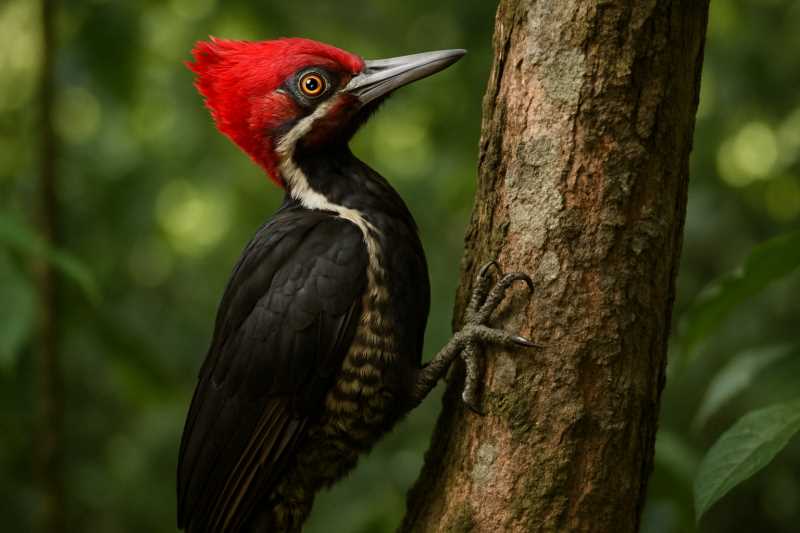
The avian world is rich with diversity and unexpected beauty, and among its most striking inhabitants is the Crimson-crested Woodpecker (Campephilus melanoleucos). This remarkable bird, with its vivid red crest and striking black and white plumage, is not only a visual delight but also an integral part of its ecosystem. Found primarily in the tropical and subtropical forests of South America, the Crimson-crested Woodpecker is a symbol of the rich biodiversity of this region.
Habitat and Distribution
The Crimson-crested Woodpecker inhabits a range of environments, primarily favoring tropical and subtropical forests. These birds are commonly found in countries such as Brazil, Bolivia, Peru, Ecuador, Colombia, Venezuela, and the Guianas. They thrive in both lowland and montane forests, often preferring areas with ample dead wood, which provides excellent foraging opportunities and nesting sites.
Their adaptability to different forest types is a testament to their resilience, although they are most often associated with primary and mature secondary forests. The presence of this woodpecker is often an indicator of a healthy, biodiverse ecosystem, as they require a balanced habitat to sustain their populations.
Physical Characteristics
The Crimson-crested Woodpecker is a large bird, measuring about 33 to 38 cm in length, with a wingspan of approximately 48 to 50 cm. Its most distinctive feature is the crimson crest found on both males and females, although it is more pronounced in males. The rest of the plumage is predominantly black with white markings on the wings and a white line running down the sides of the neck.
Their powerful, chisel-like beak is a crucial tool for excavating wood in search of insects, their primary food source. The tail feathers are stiff and spiny, providing essential support as the woodpecker climbs and perches on tree trunks.
Diet and Foraging Behavior
Crimson-crested Woodpeckers are primarily insectivorous, feeding on a variety of insects and larvae found within tree bark and wood. They are known for their strong, rhythmic drumming on tree trunks, which is not only a foraging technique but also serves as a means of communication and territory establishment.
In addition to insects, these woodpeckers occasionally consume fruits and nuts, which supplement their diet and provide necessary nutrients. Their foraging behavior plays a crucial role in controlling insect populations, thus contributing to the health of their forest habitats.
Breeding and Nesting
The breeding season of the Crimson-crested Woodpecker varies depending on their geographical location but generally occurs during the wetter months when food is more abundant. These birds are monogamous, forming long-term pair bonds and working together to raise their young.
Nesting occurs in cavities excavated in dead or decaying trees, a task that both male and female participate in. The female typically lays two to four eggs, which both parents incubate for about 14 to 15 days. Once hatched, the chicks are cared for by both parents, who take turns foraging and feeding their young.
The young woodpeckers fledge after about 30 to 35 days, but they remain dependent on their parents for food and protection for several more weeks. This extended parental care ensures that the fledglings develop the necessary skills to survive independently.
Conservation Status and Threats
Currently, the Crimson-crested Woodpecker is classified as a species of Least Concern by the International Union for Conservation of Nature (IUCN). However, like many other forest-dwelling species, they face threats from habitat destruction and fragmentation due to logging, agriculture, and urbanization.
Conservation efforts are essential to ensure the survival of these majestic birds and the preservation of their habitats. Protecting large tracts of forest, promoting sustainable land-use practices, and raising awareness about the importance of biodiversity are crucial steps in safeguarding their future.
Cultural Significance and Ecological Role
The Crimson-crested Woodpecker holds cultural significance in various indigenous communities across South America, often symbolizing strength and resilience. Their striking appearance and distinctive drumming have made them a subject of fascination and admiration for birdwatchers and researchers alike.
Ecologically, these woodpeckers play a vital role in their environments. By controlling insect populations and creating nesting cavities used by other species, they contribute to the ecological balance and biodiversity of their habitats. Their presence indicates a healthy forest ecosystem, highlighting the interconnectedness of species within these complex environments.
Conclusion
The Crimson-crested Woodpecker is a magnificent bird that embodies the beauty and complexity of tropical ecosystems. Its striking appearance, fascinating behaviors, and ecological importance make it a valuable subject for study and conservation. By understanding and protecting this species, we contribute to the broader effort of preserving the rich biodiversity of the world’s forests.
As we continue to explore and appreciate the natural world, the Crimson-crested Woodpecker serves as a reminder of the intricate relationships that sustain life on Earth and the importance of preserving these precious ecosystems for future generations.
Related posts