The Enigmatic Aldabra Drongo: An Avian Marvel of the Indian Ocean
Nestled in the remote reaches of the Indian Ocean lies the Aldabra Atoll, a UNESCO World Heritage site renowned for its unique biodiversity. Among the many species that call this isolated paradise home is the Aldabra Drongo (Dicrurus aldabranus), a bird whose enigmatic presence adds to the ecological tapestry of the region. This article delves into the fascinating world of the Aldabra Drongo, exploring its habitat, behavior, and the conservation efforts aimed at preserving this avian marvel.
Habitat and Distribution
The Aldabra Drongo is endemic to the Aldabra Atoll, part of the Seychelles archipelago. This means the species is found nowhere else on Earth, a characteristic that underscores its ecological significance. The atoll comprises four large coral islands encircling a shallow lagoon, creating a distinctive environment that supports a diverse array of wildlife.
The drongo thrives in the atoll’s mixed habitats, which include coastal scrub, mangrove forests, and casuarina woodlands. The bird’s adaptability to different environments within the atoll is a testament to its resilience and evolutionary success. Despite the seemingly idyllic setting, the atoll’s isolation presents challenges, such as limited resources and vulnerability to environmental changes.
Physical Characteristics
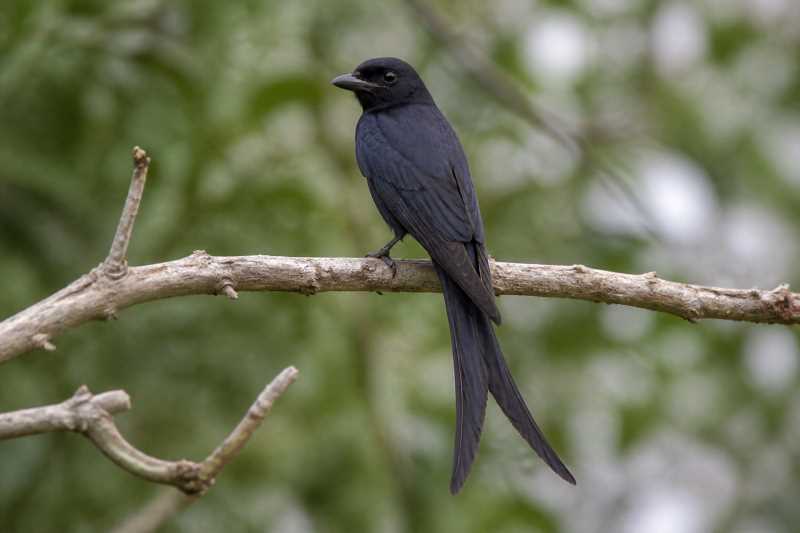
The Aldabra Drongo is a medium-sized bird, measuring approximately 25 centimeters in length. Its most striking feature is its glossy black plumage, which shimmers with a metallic sheen under sunlight. This iridescence is not merely for show; it plays a crucial role in communication and mate selection.
The drongo’s tail is another distinctive feature. Long and forked, it aids in agile flight maneuvers essential for catching prey. The bird’s sharp, slightly hooked bill is perfectly adapted for its insectivorous diet, allowing it to snatch insects mid-air with precision.
Behavior and Diet
Aldabra Drongos are highly social and intelligent birds, known for their complex vocalizations and mimicry skills. They communicate using a variety of calls, ranging from harsh caws to melodious whistles. Some studies suggest that these birds can mimic the calls of other species, a trait that may serve to confuse predators or deceive other birds.
In terms of diet, the Aldabra Drongo is primarily insectivorous, feasting on a variety of insects such as beetles, grasshoppers, and caterpillars. It employs a sit-and-wait hunting strategy, perching on branches and scanning the surroundings for prey. Once a target is spotted, the drongo launches into the air with remarkable agility, capturing its meal in mid-flight.
Reproduction and Lifespan
The breeding season for the Aldabra Drongo occurs during the wetter months, typically from November to April. During this time, the birds engage in elaborate courtship displays, showcasing their agility and vocal prowess to attract mates.
Nesting typically takes place in trees or shrubs, where the female lays a clutch of two to three eggs. Both parents share the responsibility of incubating the eggs and feeding the hatchlings, demonstrating a strong pair bond and cooperative parenting.
The lifespan of the Aldabra Drongo in the wild is not well-documented, but it is believed to be similar to other drongo species, which can live for over a decade.
Conservation Status
The Aldabra Drongo is currently listed as "Near Threatened" on the IUCN Red List. While the population is stable, the species faces potential threats from climate change, habitat degradation, and introduced predators. The atoll’s isolation provides a level of protection, but it also means that any ecological disruption could have significant consequences.
Conservation efforts are focused on maintaining the pristine condition of the Aldabra Atoll and mitigating potential threats. The Seychelles Islands Foundation, which manages the atoll, plays a pivotal role in conservation activities, including monitoring bird populations and conducting ecological research.
Conclusion
The Aldabra Drongo is a remarkable example of evolutionary adaptation and ecological specialization. Its presence on the Aldabra Atoll is a reminder of the delicate balance that sustains biodiversity in isolated ecosystems. As conservation efforts continue, understanding and appreciating the ecological role of the Aldabra Drongo is crucial for ensuring its survival for future generations.
In the grand tapestry of life on Earth, the Aldabra Drongo is a shining thread, weaving its unique story into the fabric of our natural world. Protecting such species is not only a testament to our commitment to biodiversity but also a pledge to preserve the wonders of our planet for those who come after us.
Related posts