Introduction
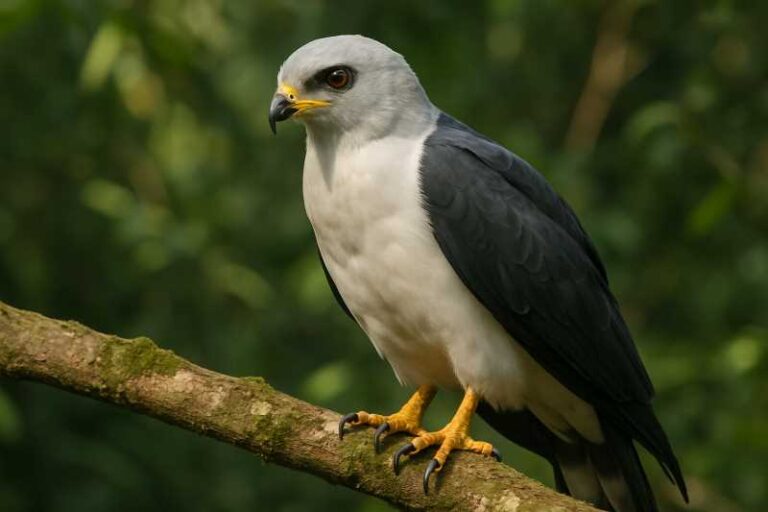
The African Cuckoo (Cuculus gularis), also known as the African Grey Cuckoo, is a medium-sized cuckoo of sub-Saharan Africa. It is recognised for its grey-and-white plumage, distinctive calls and brood-parasitic breeding strategy, in which it lays its eggs in the nests of other birds.
Physical Description
The African Cuckoo is a long-tailed bird measuring about 32–33 centimetres in length. Adults have dark grey upperparts, a paler grey throat and breast, and whitish underparts marked with dark barring. The tail is dark grey with prominent pale bars and a white tip. The bill is yellow with a darker tip, while the legs and feet are yellowish.
The sexes are broadly similar, although males usually have yellow eyes and females may have paler brownish eyes. Juveniles can appear browner than adults and may show heavier, less neatly defined barring on the underparts. Their plumage can also have buff or whitish edging, making them look more mottled.
Range and Habitat
The African Cuckoo occurs widely across sub-Saharan Africa, from parts of West and Central Africa through East Africa and southwards into southern Africa. It uses open woodland, savanna, woodland edges, riverine vegetation and other habitats that support suitable host species and a reliable supply of insect prey.
The species is partly migratory or seasonally mobile in different parts of its range. Local movements are often associated with rainfall and the breeding season, and birds may be more noticeable when they arrive in areas where host birds are nesting. It is not restricted to one particular elevation, although it is generally associated with lowland and upland woodland and savanna rather than dense forest interiors.
Where to See This Species
Kruger National Park, Limpopo and Mpumalanga, South Africa
The African Cuckoo is included on the official Kruger National Park bird checklist. Its preferred combination of open woodland, savanna, riverine vegetation and woodland edges is widespread in the park. Listening for its call during the breeding and rainy seasons can be useful, as the species may remain partly hidden in foliage despite its conspicuous vocalisations.
Nearby accommodation: Skukuza, Phalaborwa, Malelane and other established Kruger gateway areas provide hotels, guest houses, lodges, campsites and self-catering accommodation.
Marakele National Park, Limpopo, South Africa
Marakele National Park lists the African Cuckoo among its recorded bird species. The park’s wooded hills, savanna and riverine habitats offer suitable conditions for cuckoos and their passerine hosts. Birders should check open woodland and forest edges, particularly during the warmer and wetter part of the year when cuckoo activity may increase.
Nearby accommodation: Thabazimbi is the main practical gateway, with lodges, guest houses, hotels, campsites and self-catering accommodation in and around the town.
Behaviour and Diet
African Cuckoos are usually encountered singly or in pairs. They forage in trees, shrubs and sometimes on the ground, taking a range of invertebrates, especially caterpillars and other large insects. Their long wings and tail give them a swift, direct flight that can briefly resemble that of a small bird of prey.
The male’s call is a repeated, resonant two-note phrase, while the female has a faster, bubbling call. Vocal activity is often greatest during the breeding season and after seasonal rains.
The species is a brood parasite. The female lays her egg in the nest of another bird, and the host incubates the egg and feeds the young cuckoo. Recorded hosts include the Fork-tailed Drongo and Yellow-billed Shrike. The cuckoo egg may resemble those of the host, helping it avoid detection. After hatching, the young cuckoo may remove competing eggs or nestlings, although the details of host relationships can vary between populations and breeding attempts.
Identification Tips
- Look for a medium-sized, long-tailed cuckoo with dark grey upperparts and finely barred pale underparts.
- The tail usually shows strong, complete-looking pale barring and a white tip.
- The yellow bill has a darker tip, and the legs are yellowish.
- Its fast, direct flight can cause brief confusion with a small raptor, but the long tail, cuckoo-like shape and barred underparts are useful clues.
- The African Cuckoo can resemble the Common Cuckoo (Cuculus canorus) where their ranges overlap. The African species generally shows bolder barring across the outer tail feathers and more yellow at the base of the bill. Care is needed because lighting, age and plumage wear can affect these features.
- Juveniles may look browner and more heavily marked than adults.
Conservation Status
The African Cuckoo is currently assessed as Least Concern. Its broad distribution and ability to use a range of woodland and savanna habitats support this assessment. Nevertheless, habitat loss, woodland clearance, degradation of riverine vegetation and declines in host species could affect local populations.
Conservation measures should focus on protecting connected areas of savanna and woodland, maintaining riverine habitat and conserving the wider bird communities on which brood-parasitic cuckoos depend. Because population estimates and trends are not well established across its entire range, local monitoring remains important.
Frequently Asked Questions
Where is the African Cuckoo found?
It is found across much of sub-Saharan Africa, including parts of West, Central, East and southern Africa. It occupies open woodland, savanna, woodland edges and riverine vegetation.
What does the African Cuckoo eat?
Its diet consists mainly of invertebrates, particularly caterpillars and other large insects. It forages in trees, shrubs and occasionally on the ground.
Is the African Cuckoo a brood parasite?
Yes. It lays its eggs in the nests of other bird species, leaving the host birds to incubate the egg and feed the cuckoo chick. Fork-tailed Drongos and Yellow-billed Shrikes are among the documented hosts.
How can the African Cuckoo be identified?
It is a grey, long-tailed cuckoo with pale, barred underparts, a barred tail with a white tip and a yellow bill with a darker tip. Its repeated two-note call is also distinctive.
When is the best time to see an African Cuckoo?
The species is often easiest to detect during the rainy or breeding season, when birds may be more vocal and host species are nesting. Timing varies between regions because the species is seasonally mobile.
Is the African Cuckoo endangered?
No. The species is currently classified as Least Concern, although habitat loss and changes affecting host birds may create local pressures.
References
- IOC World Bird List
- SANParks
- IUCN Red List of Threatened Species
Related posts