Introduction
The Snow Leopard (Panthera uncia), often referred to as the "ghost of the mountains," is one of the most elusive and majestic cat species found in the wild. With its striking appearance and remarkable adaptability to some of the harshest climates on Earth, the Snow Leopard is both a symbol of the rugged beauty of the high-altitude regions it inhabits and a key indicator of the health of its ecosystem. This article provides an in-depth look at the Snow Leopard, covering aspects from its physical characteristics to its conservation status.
Physical Description
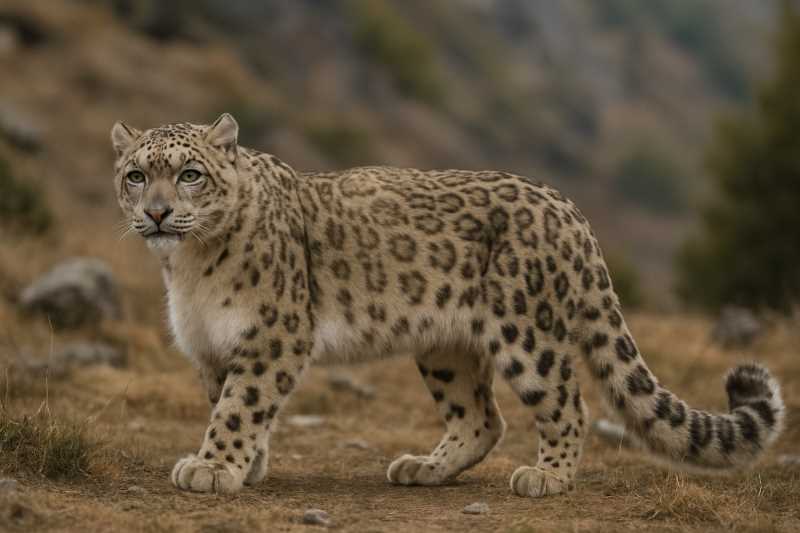
Snow Leopards are medium-sized cats, weighing between 60 to 120 pounds (27 to 55 kilograms) and measuring 39 to 51 inches (99 to 130 centimeters) in body length, with a tail that adds another 31 to 39 inches (80 to 100 centimeters) in length. Their dense, thick fur is smoky-gray with a pattern of open rosettes and spots that provide excellent camouflage against the rocky terrain of their habitat. This fur is not only beautiful but also functional, providing insulation against the cold temperatures of their mountainous homes. Snow Leopards have short forelimbs and long hind limbs, which make them powerful climbers and adept at navigating steep and rocky terrain. Their large, furry paws act as natural snowshoes, distributing their weight and providing traction on snow and ice.
Range and Habitat
Snow Leopards are native to the mountain ranges of Central and South Asia, inhabiting regions that span 12 countries, including Afghanistan, Bhutan, China, India, Kazakhstan, Kyrgyzstan, Mongolia, Nepal, Pakistan, Russia, Tajikistan, and Uzbekistan. They prefer rugged, mountainous terrain with elevations ranging from 9,800 to 14,800 feet (3,000 to 4,500 meters). These landscapes typically feature rocky outcrops, cliffs, and ravines, offering the Snow Leopards excellent vantage points for hunting and protection from predators.
Behavior and Diet
Snow Leopards are solitary and elusive, primarily active at dawn and dusk, which makes them crepuscular hunters. They are opportunistic predators with a diet mainly consisting of ungulates such as blue sheep (bharal) and ibex. However, they are known to prey on smaller animals, including rodents, hares, and birds, when larger prey is scarce. Snow Leopards have also been known to venture near human settlements to hunt livestock, leading to potential human-wildlife conflict.
The Snow Leopard’s hunting strategy involves using its camouflaged coat to stalk prey before launching a powerful and rapid attack. They can leap up to 50 feet (15 meters), a testament to their strength and agility. Despite their solitary nature, Snow Leopards communicate through vocalizations such as growls and meows, as well as scent markings to delineate territory.
Identification Tips (Field Recognition Cues)
Identifying a Snow Leopard in the wild can be challenging due to their elusive nature and preference for rugged terrain. However, a few key characteristics can aid in their identification:
- Fur and Pattern: Look for the smoky-gray fur with a unique pattern of open rosettes and spots.
- Tail: Observe the long, thick, and bushy tail, which is nearly as long as the body and often used for balancing on rocky surfaces.
- Silhouette and Gait: Notice the Snow Leopard’s low-profile silhouette and their smooth, fluid gait when moving across terrain.
Conservation Status (with Threats and Protections)
The Snow Leopard is currently listed as "Vulnerable" on the IUCN Red List of Threatened Species. The primary threats to their survival include habitat fragmentation, poaching for their fur and bones, and retaliatory killings by herders protecting livestock. Climate change poses a long-term threat by potentially reducing the availability of suitable habitats and prey.
Conservation efforts are underway to protect Snow Leopards, including the establishment of protected areas and wildlife corridors, community-based conservation programs, and international cooperation through initiatives like the Global Snow Leopard & Ecosystem Protection Program (GSLEP). Anti-poaching laws and livestock insurance programs are also being implemented to reduce human-wildlife conflict and poaching pressures.
Frequently Asked Questions
- What adaptations help Snow Leopards survive in cold climates?
Snow Leopards have several adaptations for cold climates, including thick, insulating fur, a large nasal cavity to warm cold air before it reaches the lungs, and a long tail that can be wrapped around the body for warmth when resting.
- How do Snow Leopards communicate?
Snow Leopards communicate through vocalizations such as growls, hisses, and meows. They also use scent markings and scrape the ground with their hind feet to mark territory.
- What are the main challenges in conserving Snow Leopards?
The main challenges in conserving Snow Leopards include habitat loss due to human encroachment, poaching, climate change, and human-wildlife conflict. Conservation efforts focus on habitat protection, anti-poaching measures, and community involvement.
- Why are Snow Leopards called "ghosts of the mountains"?
Snow Leopards are called "ghosts of the mountains" due to their elusive nature, excellent camouflage, and tendency to remain hidden in their rugged, mountainous habitats.
- Are Snow Leopards endangered?
Snow Leopards are listed as "Vulnerable," which means they are at risk of becoming endangered in the future. Conservation efforts are crucial to preventing further decline in their population.
Related posts