The Amsterdam Albatross: A Rare Avian Marvel of the Southern Oceans
The Amsterdam Albatross (Diomedea amsterdamensis) is a remarkable and rare seabird that captures the fascination of ornithologists and nature enthusiasts alike. This majestic bird, with its expansive wingspan and distinctive plumage, resides in one of the most isolated environments on Earth. The journey of the Amsterdam Albatross, from near extinction to its current status, is a testament to conservation efforts and the resilience of nature.
Habitat and Distribution
The Amsterdam Albatross is endemic to the French Southern and Antarctic Lands, specifically breeding on the remote Amsterdam Island, located in the southern Indian Ocean. This island, a small volcanic landmass, provides a unique and isolated habitat that is critical to the survival of this species. Its geographical isolation has played a significant role in the evolutionary path of the Amsterdam Albatross, distinguishing it from other albatross species.
Amsterdam Island, with its temperate climate and lush vegetation, offers a suitable breeding ground for the albatross. The island’s plateau, characterized by tussock grasses and scattered shrubs, provides nesting sites that are relatively safe from predators. However, the limited range of this bird makes it highly vulnerable to environmental changes and human activities.
Physical Characteristics
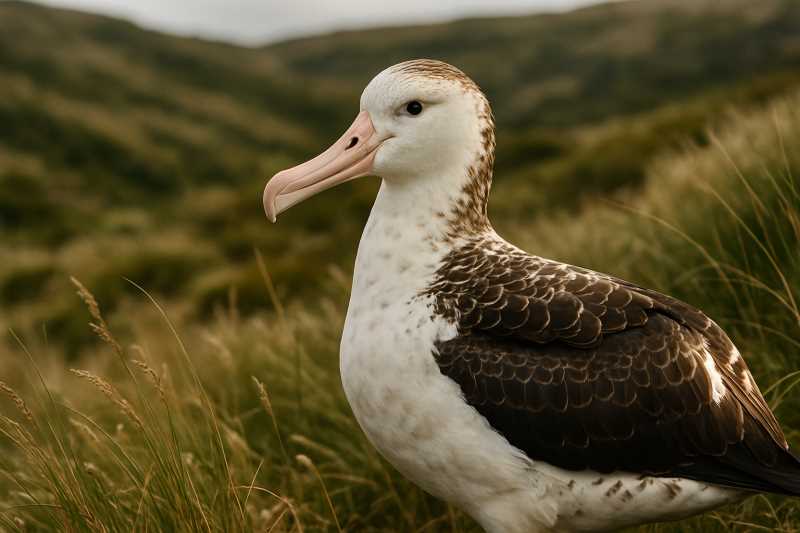
The Amsterdam Albatross is one of the largest albatross species, with a wingspan reaching up to 3.4 meters (11 feet). Its plumage is predominantly white, with dark brown wings and a distinctive brown cap on its head. The beak is robust and pale pink, with a sharp hook used for catching prey. These physical attributes are not only awe-inspiring but also play a crucial role in the bird’s survival, aiding in long-distance flight and efficient foraging.
Sexual dimorphism is not pronounced in this species, with males and females appearing similar. However, subtle differences in size and plumage pattern can be observed upon closer examination, with males typically being slightly larger.
Behavior and Diet
Amsterdam Albatrosses are known for their remarkable flight capabilities, spending the majority of their lives soaring over the vast oceans. Their wings are adapted for dynamic soaring, allowing them to glide effortlessly over long distances with minimal energy expenditure. This adaptation is crucial for their foraging strategy, as they travel thousands of kilometers in search of food.
The diet of the Amsterdam Albatross primarily consists of squid, fish, and crustaceans. They are opportunistic feeders, often following ships to scavenge for offal and bycatch. This feeding behavior, while beneficial for survival, also exposes them to threats such as bycatch in fishing gear.
Conservation Status
The Amsterdam Albatross is classified as Critically Endangered on the IUCN Red List, with an estimated population of only 130 mature individuals. This precarious status is a result of several factors, including habitat degradation, introduced predators, and human activities.
In the past, the introduction of non-native species such as rats and cats posed significant threats to the breeding success of the albatross. These predators would prey on eggs and chicks, drastically reducing the population. Conservation efforts have since focused on eradicating these invasive species and restoring the natural habitat of Amsterdam Island.
Furthermore, climate change poses an ongoing threat, with rising sea levels and changing ocean temperatures potentially impacting the availability of prey and suitable breeding sites. Conservationists are actively monitoring these changes and implementing strategies to mitigate impacts, such as habitat restoration and the establishment of marine protected areas.
Conservation Efforts
International cooperation is key to the conservation of the Amsterdam Albatross. France, which administers Amsterdam Island, has implemented strict regulations to protect the island’s ecosystem. Access to the island is heavily restricted to prevent disturbance to the breeding colonies.
Organizations such as BirdLife International and the Agreement on the Conservation of Albatrosses and Petrels (ACAP) play a vital role in coordinating conservation efforts. These organizations work towards reducing bycatch in fisheries, one of the leading causes of adult mortality for the Amsterdam Albatross. Innovative solutions, such as bird-scaring lines and weighted hooks, are being promoted to minimize accidental captures.
Educational campaigns are also crucial, raising awareness about the plight of the Amsterdam Albatross and garnering support for conservation initiatives. These efforts, combined with scientific research and monitoring, aim to secure a future for this magnificent bird.
Conclusion
The Amsterdam Albatross stands as a symbol of both the fragility and resilience of nature. While the challenges it faces are significant, the ongoing conservation efforts provide hope for its survival. Protecting this species requires a multifaceted approach, addressing threats on both local and global scales. Through continued vigilance and collaboration, we can ensure that the Amsterdam Albatross continues to grace the skies of the Southern Oceans for generations to come.
Related posts