Introduction
The Asian Barred Owlet (Glaucidium cuculoides) is a captivating bird of prey belonging to the Strigidae family. This small, yet formidable raptor is known for its striking appearance and widespread distribution across Asia. Despite its relatively diminutive size, the Asian Barred Owlet plays a significant role in its ecosystem, acting as both predator and prey. In this article, we delve into the fascinating world of the Asian Barred Owlet, exploring its habitat, behavior, diet, and the conservation challenges it faces.
Physical Description
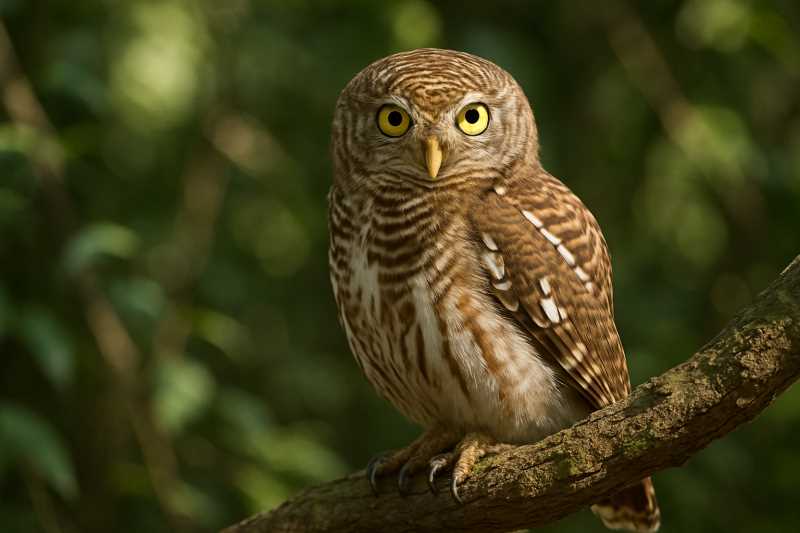
This species is characterized by its compact size, measuring about 22 to 25 centimeters in length, with a wingspan of approximately 35 to 45 centimeters. The Asian Barred Owlet is easily recognizable due to its barred plumage, which provides excellent camouflage against the bark of trees. Its feathers are primarily brown with distinctive white barring across the chest and belly, and it has a rounded head with no ear tufts. The eyes are strikingly yellow, providing excellent night vision, essential for its nocturnal lifestyle.
Habitat and Distribution
The Asian Barred Owlet is widely distributed across South and Southeast Asia. It can be found in countries such as India, Nepal, Bhutan, Bangladesh, Myanmar, Thailand, and Vietnam. This species thrives in a variety of habitats, including deciduous and coniferous forests, plantations, and even urban areas. Its adaptability to different environments has contributed to its success as a species, allowing it to exploit a range of ecological niches.
Behavior and Ecology
Primarily a nocturnal hunter, the Asian Barred Owlet is also known to be active during dawn and dusk, making it a crepuscular species. It is a solitary creature, often seen perched silently on branches, scanning for prey. This owlet utilizes its keen eyesight and acute hearing to detect small mammals, insects, and reptiles. It is an opportunistic feeder, capable of adjusting its diet based on prey availability.
Communication among Asian Barred Owlets is facilitated through a series of calls and vocalizations. Their calls are often described as a series of soft “hoo-hoo” notes, which can be heard echoing through the forest at night. These vocalizations play a crucial role during the breeding season, helping to establish territories and attract mates.
Breeding and Lifespan
The breeding season for Asian Barred Owlets typically occurs from February to April. They are cavity nesters, often utilizing natural tree holes or abandoned nests from other bird species. The female lays a clutch of two to four eggs, which she incubates for about 28 to 30 days. During this period, the male is responsible for providing food for the female and the young. Once hatched, the owlets are dependent on their parents for food and protection until they fledge at around four to five weeks old.
In the wild, Asian Barred Owlets can live up to 15 years, though their lifespan may vary depending on environmental conditions and predation risks.
Conservation Status and Threats
The International Union for Conservation of Nature (IUCN) currently lists the Asian Barred Owlet as a species of “Least Concern.” This classification is due, in part, to its wide distribution and relatively stable population numbers. However, like many other bird species, it faces threats from habitat loss and fragmentation, primarily due to deforestation and urban expansion. Additionally, the illegal pet trade poses a significant threat, as owlets are sometimes captured and sold as exotic pets.
Conservation efforts are focused on habitat preservation and monitoring population trends. Protected areas and wildlife reserves play a crucial role in safeguarding the natural habitats of the Asian Barred Owlet. Public education and awareness campaigns are also essential in curbing illegal trade and promoting coexistence with these remarkable birds.
Conclusion
The Asian Barred Owlet is a testament to the incredible biodiversity found within Asian ecosystems. Its adaptability and resilience have allowed it to thrive in a variety of habitats, from dense forests to bustling urban environments. As we continue to expand our understanding of this species, it is vital to address the conservation challenges it faces to ensure that future generations can enjoy the presence of this fascinating bird of prey. By promoting sustainable practices and fostering awareness, we can contribute to the preservation of the Asian Barred Owlet and the rich ecosystems it inhabits.
Related posts