Introduction
The Handsome Spurfowl (Pternistis nobilis) is a shy, ground-dwelling bird of montane forests and bamboo habitats in the Albertine Rift of Central and East Africa. Formerly known as the Handsome Francolin, it belongs to the pheasant family, Phasianidae, and is restricted to eastern Democratic Republic of the Congo, south-western Uganda, Rwanda and Burundi.
Physical Description
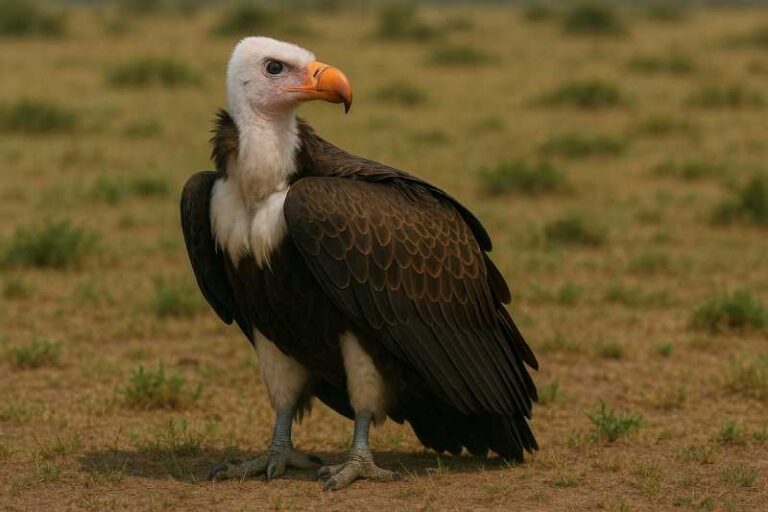
The Handsome Spurfowl is a medium-sized spurfowl, reaching about 35 cm in length. Adults have predominantly dark reddish-brown plumage, a greyish head and neck, rufous-grey underparts, a red bill and red legs. Bare red skin surrounds the eye, creating a useful field mark.
The sexes are broadly similar, although females are slightly smaller and may appear somewhat duller. Young birds have less vivid plumage than adults. The species has a relatively short tail and a compact, powerful build suited to moving through dense vegetation on the forest floor.
Range and Habitat
The species is endemic to the Albertine Rift. Its distribution extends through mountain forests in eastern Democratic Republic of the Congo, south-western Uganda, Rwanda and Burundi. Important areas include the Virunga region, Bwindi Impenetrable National Park, Nyungwe Forest and associated montane forest landscapes.
The Handsome Spurfowl uses lower montane forest, dense bamboo stands and adjoining high-altitude vegetation. It is particularly associated with thick undergrowth and patchy montane bamboo habitat. Records from parts of Uganda, Rwanda and Burundi commonly fall within approximately 2,150 to 2,500 metres, although the species may occur across a broader range of montane elevations.
It is considered a resident species rather than a long-distance migrant. Its distribution is naturally localised, and suitable habitat is fragmented in parts of the Albertine Rift.
Behaviour and Diet
The Handsome Spurfowl is primarily terrestrial and usually travels on foot through dense vegetation. It is secretive and is often detected by its call before it is seen. Birds may occur in pairs or small family groups, particularly in forest and bamboo habitat.
Its diet consists mainly of seeds and other plant material collected from the ground. It forages among leaf litter and low vegetation, using its bill and feet to search for food. Some ecological studies have classified it as a plant-seed feeder, although detailed information about seasonal diet remains limited.
Calls are important for communication in the forest and may help birds maintain contact or advertise their presence. Detailed information about nesting, eggs, breeding season and parental care remains scarce, so breeding behaviour should not be described with confidence beyond the limited observations available.
Identification Tips
Look for the following combination of features:
- A medium-sized, ground-dwelling forest bird with dark reddish-brown plumage.
- A greyish head and neck contrasting with the darker body.
- A red bill, red legs and conspicuous bare red skin around the eye.
- Rufous-grey underparts and a compact shape.
- Secretive behaviour in dense forest or bamboo, often accompanied by a call before a sighting.
The red facial skin and red bill help distinguish the Handsome Spurfowl from the Scaly Spurfowl, which is generally smaller-looking, duller brown and lacks the same prominent red around the eye. Jackson’s Spurfowl can also occur in the wider East African region, but it has a different distribution and is associated more strongly with open montane habitats.
Conservation Status
The Handsome Spurfowl is currently assessed as Least Concern on the IUCN Red List. This classification does not mean that local populations are secure. The species has a restricted range, and suitable montane forest and bamboo habitat is vulnerable to deforestation, agricultural expansion, resource extraction and human disturbance.
Hunting and trapping have also been documented as potential local threats. A survey in Bwindi Impenetrable National Park found that the species could be difficult to detect and reported evidence of francolin trapping in areas of suitable habitat. The same study noted that reliable information on population size and long-term trends was limited.
Protecting remaining montane forest, maintaining connected bamboo habitat, reducing unsustainable hunting and improving field monitoring are important conservation measures. Further research is especially needed on population trends, movements between habitat patches and breeding biology.
Frequently Asked Questions
Where does the Handsome Spurfowl live?
It lives in montane forest, bamboo stands and associated high-altitude vegetation in eastern Democratic Republic of the Congo, south-western Uganda, Rwanda and Burundi.
Is the Handsome Spurfowl a migratory bird?
No. It is generally regarded as a resident species. It may move locally through suitable forest and bamboo habitat, but it is not known for long-distance seasonal migration.
What does the Handsome Spurfowl eat?
Its diet consists mainly of seeds and other plant material gathered from the forest floor. Detailed information about seasonal food use is still limited.
How large is the Handsome Spurfowl?
Adults can reach about 35 cm in length. Females are slightly smaller than males, and young birds have duller plumage.
Why is the Handsome Spurfowl difficult to see?
It is secretive, spends most of its time on the ground and moves through dense forest undergrowth and bamboo. Observers often hear it before locating it visually.
Is the Handsome Spurfowl endangered?
The species is currently classified as Least Concern by the IUCN. However, its restricted Albertine Rift range, habitat loss and possible hunting pressure mean that local populations still require monitoring and protection.
References
- BirdLife International. 2018. Pternistis nobilis. The IUCN Red List of Threatened Species 2018: e.T22678883A130023191. https://doi.org/10.2305/IUCN.UK.2018-2.RLTS.T22678883A130023191.en. Accessed 8 September 2026.
- Gill, F., Donsker, D. and Rasmussen, P., eds. 2026. IOC World Bird List, version 15.2. International Ornithologists’ Union. https://www.worldbirdnames.org/. Accessed 8 September 2026.
- Mandiwana-Neudani, T. G., Little, R. M., Crowe, T. M. and Bowie, R. C. K. 2019. Taxonomy, phylogeny and biogeography of African spurfowls Galliformes, Phasianidae, Phasianinae, Coturnicini: Pternistis spp. Ostrich 90(2): 145–172. https://doi.org/10.2989/00306525.2019.1584925.
- Ssemmanda, R. and Fuller, R. A. 2005. Assessing the status of Handsome Francolin Francolinus nobilis in Bwindi Impenetrable National Park, western Uganda. Scopus 25: 41–50. https://www.ecotrendsalliance.org/assets/files/Ssemmanda-and-Fuller-2005.pdf.
- Vande weghe, J. P. and Vande weghe, G. 2018. Gishwati-Mukura National Park: A Guidebook. Rwanda Development Board and partners. https://d29l0tur8ol1gj.cloudfront.net/sites/default/files/guidebook-gishwati-mukura-national-park.pdf.
- U.S. Integrated Taxonomic Information System. n.d. Pternistis nobilis (Reichenow, 1908), Handsome Spurfowl. ITIS. https://itis.gov/servlet/SingleRpt/SingleRpt?search_topic=TSN&search_value=553862. Accessed 8 September 2026.
Related posts