La Sagra’s Flycatcher: A Closer Look at Myiarchus sagrae
La Sagra’s Flycatcher (Myiarchus sagrae) is a captivating species of bird that belongs to the Tyrannidae family. Known for their distinctive calls and striking appearance, these birds are a subject of interest for ornithologists and bird enthusiasts alike. Native to the Caribbean, particularly Cuba and the Bahamas, La Sagra’s Flycatcher has also been spotted in parts of southern Florida, where it occasionally strays. This article delves into the characteristics, habitat, behavior, and conservation status of this intriguing species.
Physical Characteristics
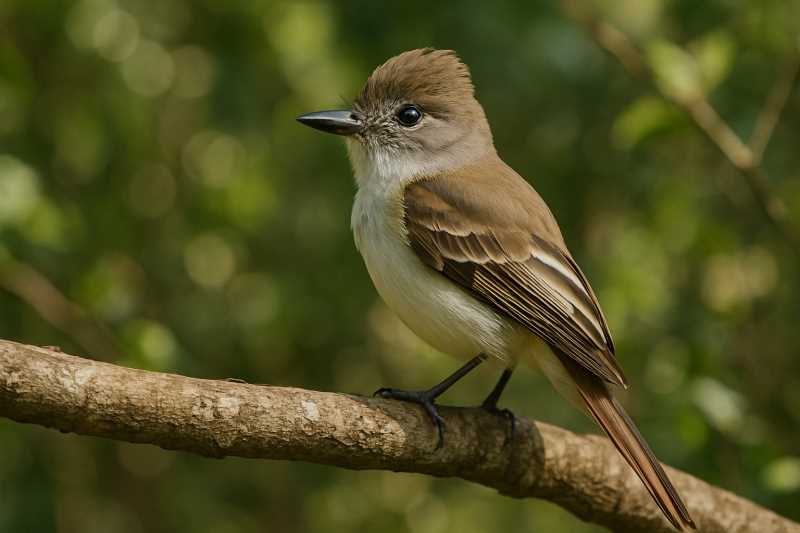
La Sagra’s Flycatcher is a medium-sized bird, measuring approximately 18-20 cm in length. It displays a combination of gray, brown, and olive hues that enable it to blend seamlessly into its natural habitat. The bird’s head and upperparts are a muted grayish-brown, while its breast is a pale gray, transitioning to a yellowish hue on the belly. One of the defining features of La Sagra’s Flycatcher is its crest, which it often raises when excited or alarmed. Its tail is relatively long and dark with a rusty base, providing a stark contrast to its otherwise subdued coloration.
Habitat and Distribution
La Sagra’s Flycatcher thrives in various habitats, ranging from dry forests and woodlands to mangroves and scrublands. Its adaptability allows it to occupy both natural and semi-natural environments, including agricultural areas and gardens. The species is most commonly found in Cuba and the Bahamas, with occasional sightings in southern Florida, especially in the Florida Keys.
The bird’s presence in Florida is generally attributed to vagrant individuals that have wandered from their usual range. While they do not breed in Florida, their occasional appearances add to the state’s rich avian diversity.
Behavior and Diet
La Sagra’s Flycatcher is an insectivorous bird that feeds primarily on a diet of insects, spiders, and other small invertebrates. It employs the ‘sit-and-wait’ hunting strategy, perching conspicuously on branches before darting out to capture prey mid-air. This behavior is characteristic of the Myiarchus genus, to which La Sagra’s Flycatcher belongs.
In addition to insects, the bird’s diet may occasionally include small fruits and berries, providing a source of nutrition when insect availability is low. This dietary flexibility is advantageous in environments where food sources can be unpredictable.
The vocalizations of La Sagra’s Flycatcher are a key aspect of its behavior. Its call is a series of clear, rising whistles, often described as “wheeep-wheeep.” These calls play a crucial role in communication, particularly during the breeding season when males use them to establish territories and attract mates.
Breeding and Nesting
The breeding season for La Sagra’s Flycatcher typically occurs from March to June, although this can vary slightly depending on geographical location. The species is known for its cavity-nesting habits, often utilizing abandoned woodpecker holes or natural cavities in trees. Nest sites are carefully chosen to provide protection from predators and environmental elements.
Females lay a clutch of 2-4 eggs, which are incubated for approximately two weeks. During this period, both parents participate in feeding and protecting the chicks. The young birds fledge about two weeks after hatching, gradually gaining independence as they learn to forage and fly.
Conservation Status
Currently, La Sagra’s Flycatcher is classified as a species of Least Concern by the International Union for Conservation of Nature (IUCN). This classification is due to the bird’s relatively stable population and wide distribution across its native range. However, like many bird species, La Sagra’s Flycatcher faces threats from habitat destruction and degradation, particularly in regions where natural habitats are being converted for agriculture and urban development.
Conservation efforts for La Sagra’s Flycatcher focus on habitat preservation and management to ensure the availability of suitable nesting sites and food resources. Protecting areas of natural vegetation and promoting sustainable land use practices are essential to maintaining healthy populations of this species.
Conclusion
La Sagra’s Flycatcher is an extraordinary bird that captivates those fortunate enough to observe it. Its adaptability, distinctive calls, and striking appearance make it a fascinating subject for study and appreciation. While currently not at significant risk, ongoing conservation efforts are crucial to preserving the habitats that support this and other avian species. By understanding and protecting La Sagra’s Flycatcher, we contribute to the broader effort of conserving the rich biodiversity of the Caribbean region.
With its enchanting presence and ecological significance, La Sagra’s Flycatcher serves as a reminder of the intricate connections within our natural world and the importance of safeguarding these connections for future generations.
Related posts