The Rufous-lored Tyrannulet: A Detailed Look at Phylloscartes flaviventris
The Rufous-lored Tyrannulet (Phylloscartes flaviventris) is a captivating small bird that belongs to the Tyrannidae family, known for its remarkable presence in the neotropical regions of Central and South America. This article delves into the species’ distinguishing characteristics, habitat preferences, behaviors, and conservation status, aiming to provide a comprehensive understanding of this intriguing avian species.
Taxonomy and Classification
The Rufous-lored Tyrannulet is classified under the genus Phylloscartes, which encompasses a group of small, active flycatchers. The species name ‘flaviventris’ is derived from Latin, meaning ‘yellow-bellied,’ which aptly describes one of its notable physical features. Within the birdwatching and ornithological communities, this species is often appreciated for its vibrant plumage and distinctive vocalizations.
Physical Description
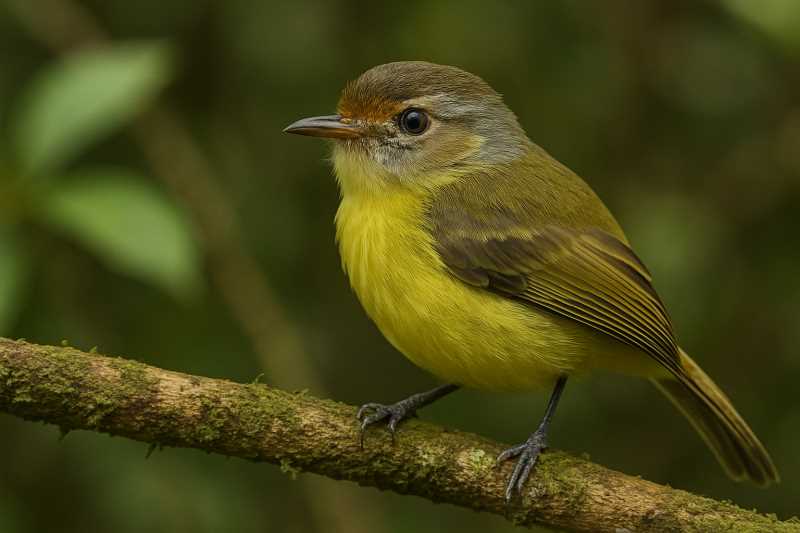
Measuring approximately 11 to 12 centimeters in length and weighing around 8 to 10 grams, the Rufous-lored Tyrannulet is a petite bird with striking features. It is characterized by its olive-green upperparts and a vivid yellow underside. The most distinguishing feature is the rufous (reddish-brown) lore, the area between the eye and bill, which contrasts sharply with its otherwise greenish-yellow plumage. The bird also exhibits a short, slightly notched tail and a thin, pointed bill, adaptations that facilitate its insectivorous feeding habits.
Habitat and Distribution
The Rufous-lored Tyrannulet inhabits the subtropical and tropical moist montane forests of Central America, with its range extending from southern Mexico through Guatemala, Honduras, El Salvador, and Nicaragua. It prefers elevations between 900 to 2,500 meters above sea level, often favoring the forest canopy and edges where it can forage effectively.
These birds are primarily found in undisturbed primary forests but can also be seen in secondary growth forests and plantations, illustrating a degree of adaptability to habitat changes. However, their presence is more prolific in areas where the forest is dense and relatively intact.
Behavior and Ecology
Rufous-lored Tyrannulets are active and agile, often seen flitting through the canopy as they search for insects and other small arthropods. Their foraging strategy involves gleaning prey items from foliage or catching them mid-air, a behavior typical of many flycatcher species.
These birds are often observed in mixed-species flocks, which provide mutual benefits such as enhanced predator detection and increased foraging efficiency. Their vocalizations, consisting of high-pitched whistles and trills, are integral to their social interactions and territorial displays.
Breeding behaviors are less well-documented, but like many of their relatives, Rufous-lored Tyrannulets are presumed to be monogamous, with both parents participating in nest-building and chick-rearing. They typically construct cup-shaped nests positioned in tree branches, which offer protection from predators and environmental elements.
Conservation Status
According to the International Union for Conservation of Nature (IUCN), the Rufous-lored Tyrannulet is currently classified as a species of Least Concern. However, this status does not imply that the species faces no threats. Habitat destruction and fragmentation due to agriculture expansion, logging, and human settlement continue to pose significant risks to their populations.
Conservation efforts are crucial to ensure the continued survival of the Rufous-lored Tyrannulet. Protecting large tracts of intact forest, implementing sustainable land-use practices, and promoting ecological research are vital steps in conserving these birds and their habitats.
The Importance of Continued Research
Ongoing research is essential to deepen our understanding of the Rufous-lored Tyrannulet’s ecology and behavior. Studies focusing on their population dynamics, breeding habits, and responses to environmental changes can inform conservation strategies and policy-making.
Birdwatchers and citizen scientists also play a critical role in monitoring Rufous-lored Tyrannulet populations. By contributing observations to databases like eBird, they provide valuable data that aids in tracking population trends and distribution changes over time.
Conclusion
The Rufous-lored Tyrannulet stands out as a vibrant and dynamic member of the avian world, contributing to the rich biodiversity of the neotropical ecosystems it inhabits. While currently not endangered, proactive conservation measures are necessary to safeguard its future. Raising awareness about the importance of preserving montane forest habitats and supporting research initiatives are pivotal actions that can ensure this species continues to thrive for generations to come.
In summary, the Rufous-lored Tyrannulet is not just a bird of striking beauty but also an essential component of its ecosystem, playing a role in insect population control and serving as an indicator of forest health. Its story underscores the broader narrative of biodiversity conservation in the face of growing ecological challenges.
Related posts