Tourmaline Sunangel: The Jewel of the Andes
The Tourmaline Sunangel (Heliangelus exortis) is a captivating hummingbird species found primarily in the cloud forests of the Andes Mountains, stretching across Colombia and Ecuador. This avian marvel, known for its vibrant plumage and rapid wing beats, plays a crucial role in the ecosystem as a pollinator and stands as a testament to the rich biodiversity of its habitat.
Physical Characteristics
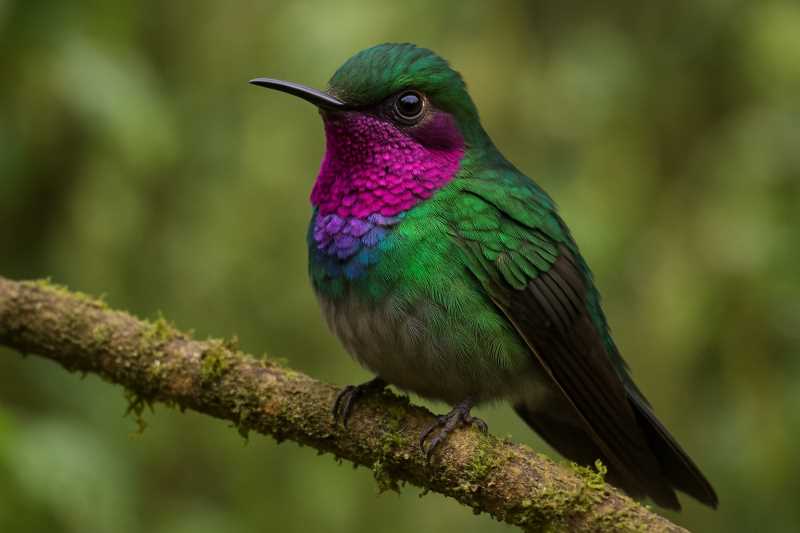
The Tourmaline Sunangel is renowned for its striking appearance. Measuring approximately 10-12 cm in length, this hummingbird exhibits a dazzling array of colors. Its metallic green body is complemented by a brilliant violet crown and a deep blue throat, which can appear almost iridescent in sunlight. The tail feathers are adorned with a mix of green and blue hues, adding to its jewel-like appearance. Both males and females share similar colors, although the males are slightly more vibrant.
Habitat and Distribution
This species thrives in the montane cloud forests, typically between 1,500 to 3,000 meters above sea level. These areas provide a unique environment characterized by high humidity, cooler temperatures, and frequent cloud cover. The dense foliage and abundant flowering plants create an ideal setting for the Tourmaline Sunangel, offering both food and shelter. While their range is somewhat limited geographically, the populations within Colombia and Ecuador are relatively stable due to the expansive, albeit fragmented, nature of their habitat.
Behavior and Diet
The Tourmaline Sunangel exhibits fascinating behaviors that highlight its adaptability and ecological importance. Known for its incredible agility, it can hover in mid-air with astonishing precision, allowing it to feed on nectar from flowers with remarkable efficiency. Its diet primarily consists of nectar from a variety of flowering plants, but it also consumes small insects and spiders, which provide essential proteins and nutrients.
In terms of social behavior, Tourmaline Sunangels are generally solitary except during the breeding season. Males are known to be territorial, often engaging in aerial displays to ward off rivals and attract females. The courtship rituals involve elaborate flights and vocalizations that showcase the male’s vibrant plumage and stamina.
Reproduction
The breeding season for the Tourmaline Sunangel varies slightly depending on geographical location but generally occurs during the wet season when food resources are abundant. Females are responsible for building the nest, typically constructing it from plant fibers, moss, and lichens, strategically placing it on a well-hidden branch. After a brief courtship, the female lays two white eggs, which she incubates for about 15-18 days. The chicks are born altricial, requiring intensive care and feeding from the mother until they fledge approximately three weeks later.
Conservation Status
Currently, the Tourmaline Sunangel is classified as a species of Least Concern by the International Union for Conservation of Nature (IUCN). However, like many species reliant on specific habitats, it faces threats from deforestation and habitat fragmentation. The expansion of agriculture and urban development in the Andes poses significant challenges to its environment. Conservation efforts are crucial to preserving these cloud forests, not only for the Tourmaline Sunangel but for the myriad of species that share its home.
Importance in Ecosystem
As a pollinator, the Tourmaline Sunangel plays a vital role in the health and sustainability of its ecosystem. By feeding on nectar, it facilitates the cross-pollination of flowering plants, contributing to genetic diversity and plant reproduction. This interaction supports the overall biodiversity of the cloud forests, underpinning the ecological balance and health of the region.
Conclusion
The Tourmaline Sunangel is more than just a visual marvel; it is a crucial component of the Andean cloud forest ecosystem. Its shimmering plumage and dynamic behavior captivate bird enthusiasts and ecologists alike, while its role as a pollinator underscores the interconnectedness of life in these high-altitude habitats. Protecting this species and its environment is essential for maintaining the ecological integrity of one of the world’s most biodiverse regions.
As we continue to explore and understand the natural world, the Tourmaline Sunangel serves as a reminder of the beauty and complexity of our planet’s ecosystems. Ensuring its survival requires concerted conservation efforts and a commitment to preserving the diverse habitats it calls home.
Related posts