The Enigmatic Beauty of the Ruddy Kingfisher (Halcyon coromanda)
The Ruddy Kingfisher, scientifically known as Halcyon coromanda, is a captivating bird species that enchants both ornithologists and birdwatchers alike with its stunning appearance and elusive nature. This fascinating avian species is part of the family Alcedinidae, which comprises a diverse range of kingfishers known for their vibrant plumage and distinctive hunting techniques. In this article, we delve into the intriguing world of the Ruddy Kingfisher, exploring its habitat, physical characteristics, behavior, and the conservation challenges it faces.
Habitat and Distribution
The Ruddy Kingfisher inhabits a broad range of environments across Asia, including dense forests, mangroves, and coastal areas. Its geographical range spans from the Indian subcontinent, through Southeast Asia, to the islands of Japan and Taiwan. This bird is predominantly found in regions where there is abundant vegetation near water bodies, such as rivers, streams, and marshes. Such habitats provide ideal hunting grounds for the Ruddy Kingfisher, as these areas are rich in prey, including small fish, crustaceans, and insects.
The species is migratory in some parts of its range, particularly in the northern areas, where it moves to warmer regions during the winter months. This migration is primarily driven by the availability of food and suitable breeding sites, ensuring the species’ survival in varying climatic conditions.
Physical Characteristics
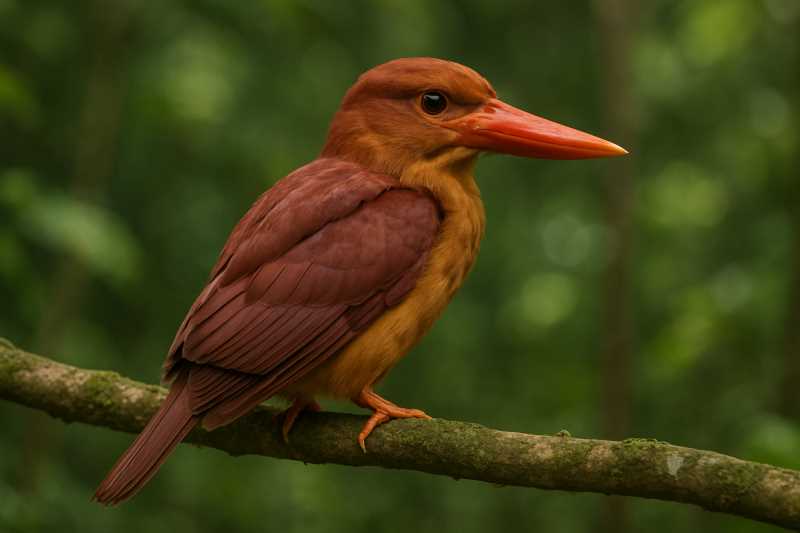
The Ruddy Kingfisher is renowned for its striking appearance, characterized by a deep, reddish-brown plumage that gives the bird its name. This vibrant coloration, combined with its large size compared to other kingfisher species, makes it a standout in its natural habitat. The bird’s wings and tail are a blend of reddish-brown and purple, while the underparts are a lighter, buff color.
One of the most distinctive features of the Ruddy Kingfisher is its large, coral-red bill, which is perfectly adapted for catching and handling prey. The bird’s eyes are dark, giving it a soulful expression that adds to its allure. Adult Ruddy Kingfishers typically measure between 25 to 29 centimeters in length, with a wingspan of approximately 40 centimeters.
Behavior and Diet
Ruddy Kingfishers are solitary and elusive birds, often heard more than seen due to their distinctive, melodious call that echoes through their forest habitats. They are known for their secretive nature, often perching silently on branches and waiting patiently for prey to come within striking distance.
Their diet primarily consists of small aquatic creatures such as fish and crustaceans, but they are also known to consume insects, small reptiles, and amphibians. The Ruddy Kingfisher employs a sit-and-wait hunting strategy, swooping down with precision to catch its prey with its robust bill.
Breeding and Nesting
The breeding season of the Ruddy Kingfisher varies depending on its geographical location, but it generally occurs during the spring and summer months. These birds are cavity nesters, often excavating burrows in riverbanks or termite mounds to lay their eggs. The female typically lays a clutch of two to five eggs, which both parents incubate.
Parental duties are shared, with both male and female taking turns to feed the chicks and protect the nest from potential predators. The young fledge after about three to four weeks, although they continue to rely on their parents for food and protection for some time after leaving the nest.
Conservation Status and Challenges
The Ruddy Kingfisher is currently listed under the Least Concern category by the International Union for Conservation of Nature (IUCN), indicating that, at present, the species is not at immediate risk of extinction. However, like many other bird species, the Ruddy Kingfisher faces several threats that could impact its population in the future.
Habitat destruction, primarily due to deforestation and the conversion of wetlands for agriculture and urban development, poses a significant threat to this species. Additionally, climate change could alter the availability of food and suitable nesting sites. Conservation efforts are essential to ensure the preservation of the Ruddy Kingfisher’s natural habitats, thereby supporting the survival of this enigmatic bird.
Conclusion
The Ruddy Kingfisher (Halcyon coromanda) is a remarkable bird that continues to fascinate with its vivid plumage and secretive behavior. Its presence in diverse habitats across Asia highlights the importance of conserving natural environments to maintain ecological balance and biodiversity. By understanding and addressing the challenges faced by the Ruddy Kingfisher, we can contribute to the preservation of this beautiful species for future generations to admire and study.
Related posts