Introduction
The Marquesan Swiftlet (Aerodramus ocistus) is a small, resident swift endemic to the Marquesas Islands of French Polynesia. It is recognised as a full species by the IOC World Bird List, although BirdLife International and the IUCN have also treated it within the broader Polynesian Swiftlet complex. The species is adapted to fast aerial flight, insect-catching and, like other Aerodramus swiftlets, probably uses echolocation in dark roosting or nesting sites.
Physical Description
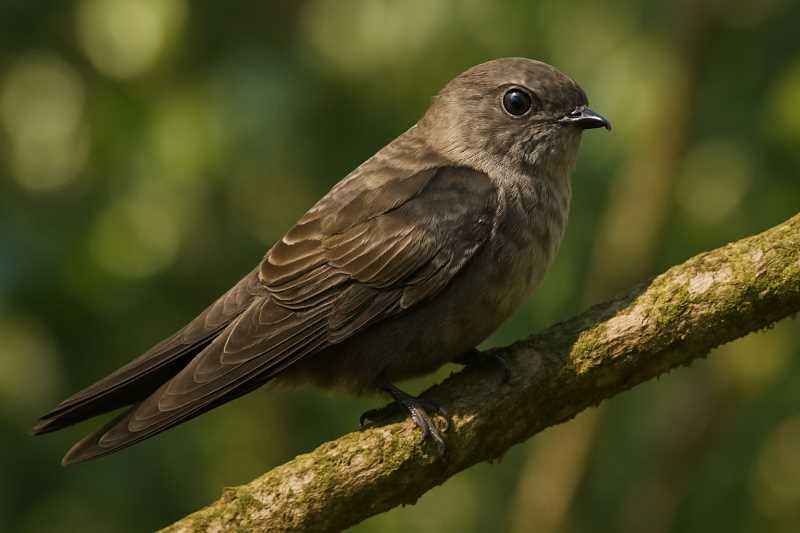
The Marquesan Swiftlet is approximately 11 centimetres long. It has a compact, streamlined body, long pointed wings and a distinctly forked tail. The upperparts are dark brown to blackish-brown, often with a contrasting greyish rump, while the underparts are paler grey-brown. The bill and legs are small, as expected in a bird that spends much of its time in flight.
Males and females are generally similar in appearance, and reliable information on age-related plumage differences is limited. The long, deeply forked tail and dark plumage help distinguish it from some other swiftlets in French Polynesia, although identification in the field can be difficult because the species is usually seen moving quickly overhead.
Range and Habitat
The Marquesan Swiftlet is endemic to the Marquesas Islands. It has been recorded on islands including Eiao, Nuku Hiva, Ua Huka, Ua Pou, Hiva Oa and Tahuata, with additional observations reported from other islands in the archipelago. The northern and southern island groups support geographically differentiated forms, including the northern form A. o. ocistus and the southern form A. o. gilliardi in taxonomic treatments that recognise subspecies.
It is usually associated with forest, wooded valleys, coconut groves, open hillsides and rocky cliff areas. The species may forage from near sea level to higher elevations, particularly where forest edges, ridges and steep valleys provide concentrations of flying insects. It is resident rather than migratory, although individuals may move locally between feeding areas, roosts and nesting sites.
Where to See This Species
Hitikau Plateau, Ua Huka, Marquesas Islands, French Polynesia
The Hitikau Plateau is one of the better documented locations for the Marquesan Swiftlet. Field surveys on Ua Huka recorded birds hunting over the plateau, summit cliffs and patches of dense shrubland and forest. Look above the forest canopy, cliff edges and open areas, particularly during periods of insect activity. The species may occur singly or in small groups, and local guidance is advisable when using upland trails.
Nearby accommodation: Hane village is the practical base on Ua Huka, with guesthouses, homestays and other small-scale visitor accommodation.
Eiao Island Nature Reserve, Eiao, Marquesas Islands, French Polynesia
Marquesan Swiftlets have been recorded on Eiao, which is included within the Eiao Island Nature Reserve. The island contains steep terrain, rocky valleys and remnant native habitats that are suitable for aerial foraging. Eiao is remote and uninhabited, so visits require careful logistical planning and confirmation of access conditions with local authorities or conservation managers.
Nearby accommodation: The nearest practical accommodation base is on Nuku Hiva, where visitors can find guesthouses, family-run lodgings and small hotels before arranging an authorised boat visit.
Behaviour and Diet
The Marquesan Swiftlet feeds mainly on flying insects caught in the air. It may forage over forest canopy, open slopes, coconut groves, valleys and cliff faces. Birds are often seen singly or in groups, and larger feeding aggregations have been reported.
The species is resident and may use the same island landscapes throughout the year. Its swift, agile flight allows it to exploit insects across a wide area, while its ability to use echolocation is likely to assist movement and communication in dark cavities. The details of its echolocation calls remain less well documented than those of some other Aerodramus species.
Nesting has been associated with crevices, shallow recesses beneath overhanging rocks, cliffs and caves. The nest is thought to be a small cup made from plant fibres and other vegetable material held together with saliva. Precise information on clutch size, incubation and chick development is limited, and breeding observations should be treated cautiously.
Identification Tips
- Look for a small, dark swiftlet with long pointed wings and a noticeably forked tail.
- The upperparts are dark brown or blackish-brown, with a generally greyer rump and paler grey-brown underparts.
- Search over wooded valleys, forest edges, ridgelines, cliffs and open slopes rather than on the ground.
- The species is usually identified by its combination of dark plumage, long forked tail, island location and swift flight.
- The Tahiti Swiftlet is a genuinely similar species, but it is associated with Tahiti and is generally shorter-tailed and paler in appearance. Taxonomic treatments that lump Marquesan and Tahiti birds require particular care when comparing older records.
Conservation Status
The Marquesan Swiftlet is recognised as Aerodramus ocistus by the IOC World Bird List. BirdLife International and the IUCN have also treated the Marquesan form as part of the broader Polynesian Swiftlet, assessed as Least Concern at that wider taxonomic level. A separate species-level assessment for Aerodramus ocistus may therefore not be directly comparable with the broader IUCN treatment.
No dependable species-level population estimate is available. The bird is reported from several Marquesan islands and can be locally common, but its restricted island range makes it vulnerable to habitat degradation, changes in forest cover and the effects of introduced species. Common mynas and other introduced animals have been identified as potential pressures on native island birds, although the scale of their effect on Marquesan Swiftlets is not well quantified.
Protecting native forest, rocky valley habitat and nesting sites is important. Conservation measures in the Marquesas include protected areas, habitat management and control of invasive species. Further surveys would help clarify the species’ distribution, abundance, breeding biology and response to introduced predators or competitors.
Frequently Asked Questions
Where is the Marquesan Swiftlet found?
It is endemic to the Marquesas Islands of French Polynesia. Records include Eiao, Nuku Hiva, Ua Huka, Ua Pou, Hiva Oa and Tahuata.
Is the Marquesan Swiftlet migratory?
No. It is considered resident, although individuals may move locally between forest, valley, cliff and coastal feeding areas.
What does the Marquesan Swiftlet eat?
Its diet consists mainly of flying insects, which it catches during aerial foraging over forests, valleys, open slopes and cliffs.
Can the Marquesan Swiftlet echolocate?
Like other swiftlets in the genus Aerodramus, it is believed to use echolocation, particularly when moving or communicating in dark nesting or roosting places. The species’ calls have not been studied as extensively as those of some related swiftlets.
How can the Marquesan Swiftlet be identified?
Look for a small, dark swiftlet with long pointed wings, a greyish rump, paler underparts and a long forked tail. Its fast flight and tendency to remain overhead make close identification difficult.
What is its conservation status?
The IUCN and BirdLife International treatment applies the Least Concern assessment to the broader Polynesian Swiftlet taxon, which includes the Marquesan form in their taxonomic system. The species-level conservation situation of Aerodramus ocistus remains less certain because reliable population data are limited.
References
- IOC World Bird List
- BirdLife International
- Smithsonian Institution, National Museum of Natural History
Related posts