The Rajah Scops Owl: A Glimpse into the Enigmatic Avian World
The Rajah Scops Owl (Otus brookii) is one of the most intriguing yet lesser-known species of the Strigidae family. With its distinctive features and elusive nature, this owl species has fascinated ornithologists and bird enthusiasts alike. Found primarily in the dense montane forests of Southeast Asia, particularly in Malaysia and Indonesia, the Rajah Scops Owl is a testament to the region’s rich biodiversity.
Unique Characteristics
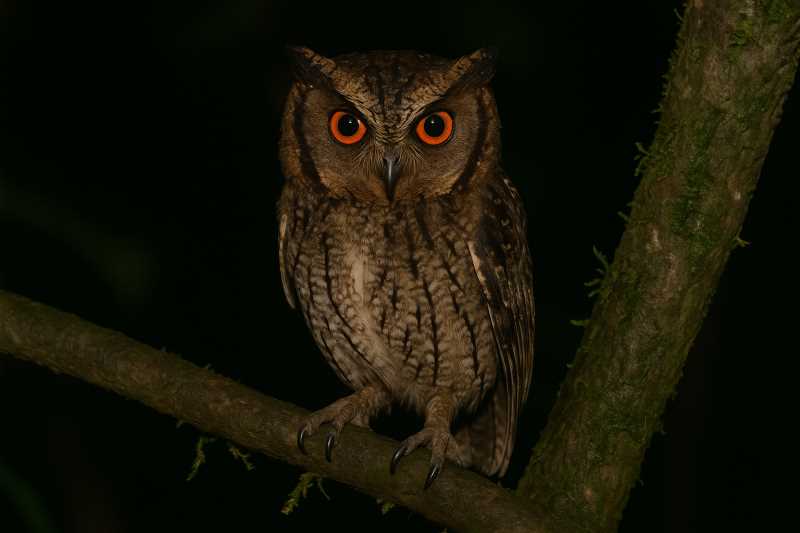
One of the most striking features of the Rajah Scops Owl is its size. Measuring approximately 20-25 centimeters in length, it is relatively small compared to other owl species. Its plumage is predominantly brown, providing excellent camouflage against the tree bark, which makes it a master of disguise. The owl’s facial disc, marked with dark and light streaks, enhances its ability to detect sound, an adaptation crucial for its nocturnal lifestyle.
The Rajah Scops Owl also exhibits a pair of prominent ear tufts, which are not actually ears but feather extensions that aid in its camouflage. These tufts can be raised or lowered based on the owl’s mood or when it feels threatened. Its eyes, large and forward-facing, are adapted for night vision, allowing it to hunt effectively under the cover of darkness.
Habitat and Distribution
The Rajah Scops Owl is predominantly found in the montane forests of Borneo and Sumatra. Preferring altitudes of 900 to 2,500 meters, these owls are typically located in lush, dense forests where human interference is minimal. This habitat preference has unfortunately made them susceptible to habitat loss due to deforestation and land conversion for agriculture.
Despite the challenges posed by habitat destruction, these owls continue to thrive in protected areas. Conservation efforts in regions like the Kinabalu National Park in Malaysia have been instrumental in preserving their natural habitat and ensuring their survival.
Diet and Hunting Behavior
The Rajah Scops Owl is a carnivorous bird with a diet that primarily consists of insects, small mammals, and occasionally other small birds. Its hunting strategy is characterized by silent flight, a trait common among owls, which allows it to approach prey without detection. The owl’s acute sense of hearing, aided by its facial disc, enables it to pinpoint the location of its prey, even in complete darkness.
Once it has detected its target, the Rajah Scops Owl swoops down with remarkable precision and grasps its prey with its sharp talons. This efficient hunting method ensures its status as a formidable predator in its ecosystem.
Reproductive Behavior
Little is known about the breeding habits of the Rajah Scops Owl due to its reclusive nature. However, like many other owl species, it is believed to be monogamous, forming long-term pair bonds. The breeding season typically coincides with periods of abundant food supply, ensuring that the young have adequate resources to thrive.
The female usually lays a clutch of 1-2 eggs, which she incubates while the male provides food. After hatching, both parents are involved in feeding and caring for the chicks until they are ready to fledge.
Conservation Status
The Rajah Scops Owl is currently listed as ‘Near Threatened’ by the International Union for Conservation of Nature (IUCN). The primary threat to its survival is habitat loss, driven by logging and agricultural expansion. Climate change also poses a potential risk by altering the montane environments the owl depends on.
Conservationists emphasize the need for continued protection of montane forest habitats and increased research to better understand the species’ ecology and behaviors. Raising awareness about the importance of biodiversity and sustainable practices is crucial in ensuring the survival of this enigmatic owl species.
Conclusion
The Rajah Scops Owl is a fascinating yet vulnerable species that highlights the delicate balance of our natural ecosystems. Its survival is intricately linked to the health of montane forests, underscoring the importance of habitat conservation. As we continue to learn more about this elusive bird, it is imperative to support conservation efforts that aim to protect not only the Rajah Scops Owl but also the myriad of species that share its habitat. Through concerted efforts, we can ensure that future generations will have the opportunity to marvel at the wonder of the Rajah Scops Owl and the rich biodiversity it represents.
Related posts