The Oriental Pratincole: A Comprehensive Overview of Glareola maldivarum
The Oriental Pratincole, scientifically recognized as Glareola maldivarum, is a captivating bird species that captures the interest of ornithologists and bird enthusiasts alike. This bird, with its unique foraging behaviors and migratory patterns, is a symbol of adaptability and resilience in the avian world. In this article, we delve into the various aspects that define the Oriental Pratincole, from its physical characteristics to its ecological significance.
Physical Characteristics
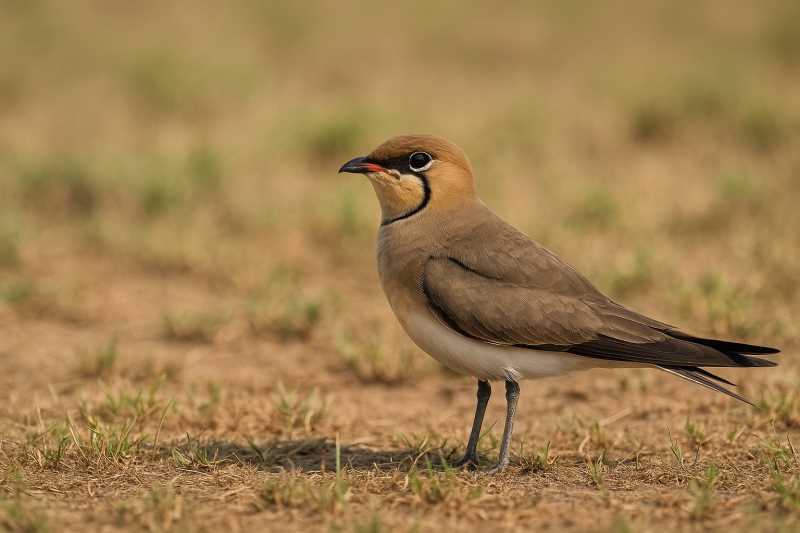
The Oriental Pratincole is a medium-sized bird, typically measuring between 24 to 28 centimeters in length. Its wingspan ranges from 60 to 70 centimeters, a feature that supports its agile flight capabilities. The bird’s plumage is a subtle blend of earthy tones, with a predominantly brown back and a lighter, cream-colored breast. One of its most distinguishing features is the stark white border along its wings, which becomes particularly noticeable in flight.
Its short, stout bill is well-adapted for its insectivorous diet, while its long, pointed wings and forked tail allow it to maneuver swiftly in the air. This agility is crucial for its feeding strategy, which involves catching insects on the wing. The Oriental Pratincole’s legs are relatively short, but strong enough to support its terrestrial lifestyle during breeding seasons.
Habitat and Distribution
The Oriental Pratincole is widely distributed across Asia, with its range extending from the Indian subcontinent to Southeast Asia and parts of Australia. It is particularly abundant in countries like India, China, Thailand, and the Philippines. The bird favors open landscapes, such as grasslands, marshes, and agricultural fields, which provide ample opportunities for foraging.
During the breeding season, the Oriental Pratincole is known to gather in large colonies, often selecting flat, open areas near water bodies. These sites offer ideal conditions for nesting, as well as proximity to food sources. The bird’s migratory behavior is one of its most fascinating traits, with populations moving towards Australia and other southern regions during the non-breeding season.
Breeding and Behavior
Breeding typically occurs from April to July, depending on the region. The Oriental Pratincole is a ground-nesting bird, laying its eggs directly on bare soil or in shallow scrapes. The clutch usually consists of two to three eggs, which are camouflaged with speckled patterns to blend in with the surrounding environment.
Both parents share the responsibility of incubating the eggs and caring for the hatchlings. The chicks are precocial, meaning they are relatively mature and mobile from the moment of hatching. This adaptability is crucial, as it allows the young birds to evade predators and thrive in their often harsh and exposed nesting sites.
Diet and Feeding Habits
The Oriental Pratincole’s diet primarily consists of insects, which it captures in flight using its agile aerial maneuvers. It is known to feed on a variety of insect species, including beetles, grasshoppers, and dragonflies. The bird’s feeding strategy is not only energy-efficient but also plays a vital role in controlling insect populations, contributing to ecological balance.
During the breeding season, the bird’s diet becomes more diverse, occasionally including small seeds and other plant materials. This dietary flexibility ensures that the Oriental Pratincole can sustain itself even when insect availability fluctuates.
Conservation Status
Currently, the Oriental Pratincole is classified as a species of Least Concern by the International Union for Conservation of Nature (IUCN). This status reflects its widespread distribution and relatively stable population trends. However, like many bird species, it faces threats from habitat loss and environmental changes.
Agricultural expansion and urban development pose significant challenges, as these activities often lead to the degradation of natural habitats. Conservation efforts are crucial to ensure that the Oriental Pratincole continues to thrive. Protecting key breeding and foraging sites, along with monitoring population dynamics, are essential strategies for its conservation.
Significance and Conclusion
The Oriental Pratincole is a remarkable example of nature’s adaptability and resilience. Its unique behaviors and migratory patterns offer valuable insights into the complexities of avian life. For bird enthusiasts and researchers, the Oriental Pratincole serves as a reminder of the intricate balance within ecosystems and the importance of conserving biodiversity.
As we continue to learn more about this fascinating bird, it becomes increasingly clear that the Oriental Pratincole is not just a marvel of nature, but also a vital component of the environments it inhabits. Through ongoing conservation efforts and research, we can ensure that future generations will also have the opportunity to admire and study this extraordinary species.
Related posts