
The Enigmatic Green-backed Kingfisher: A Jewel of the Rainforest
Tucked away in the lush, verdant rainforests of Sulawesi, Indonesia, the Green-backed Kingfisher (Actenoides monachus) is a captivating bird species that has fascinated ornithologists and birdwatchers alike. With its vibrant plumage and elusive nature, this bird is a symbol of the rich biodiversity that these tropical ecosystems support.
A Splendid Appearance
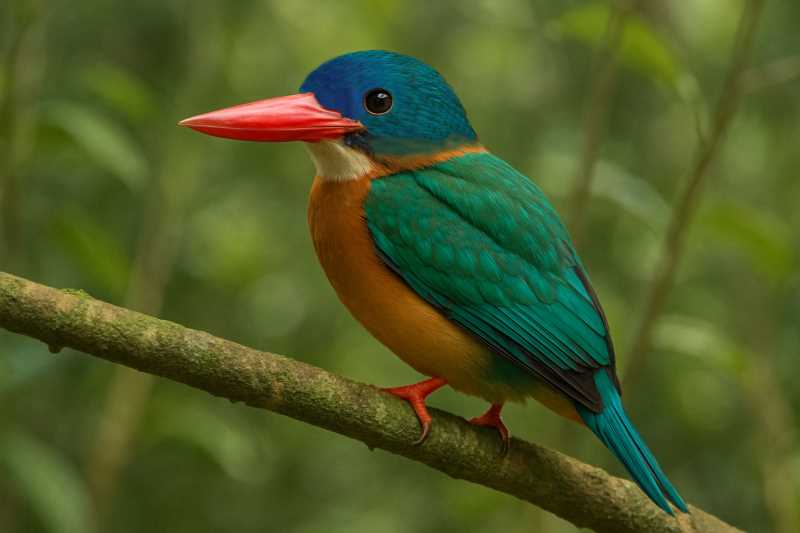
The Green-backed Kingfisher is a medium-sized bird, measuring approximately 25 centimeters in length. Its most striking feature is its iridescent green back, which gives the bird its name. This brilliant green contrasts beautifully with its orange underparts, creating a vivid display of color. The kingfisher’s head is adorned with a unique combination of blue and red patches, making its appearance all the more enchanting.
One of the more distinctive features of the Green-backed Kingfisher is its large, robust bill, which is perfectly adapted for its dietary habits. Unlike many of its relatives in the kingfisher family, this species does not primarily feed on fish. Instead, it has adapted to a diet consisting mainly of insects and small vertebrates, which it skillfully hunts in the dense forest undergrowth.
Habitat and Distribution
The Green-backed Kingfisher is endemic to the island of Sulawesi, a region known for its high level of endemism and unique wildlife. This bird thrives in the island’s lowland and montane rainforests, where it can find plenty of food and suitable nesting sites. Unfortunately, its preference for these specific habitats makes it particularly vulnerable to habitat destruction.
Deforestation and land conversion for agriculture are significant threats to the kingfisher’s habitat. As rainforests are cleared, the delicate balance of the ecosystem is disrupted, and the birds are forced to move into smaller, fragmented patches of forest, where they are more susceptible to predation and other threats.
Conservation Status
The International Union for Conservation of Nature (IUCN) currently lists the Green-backed Kingfisher as Near Threatened. This status highlights the ongoing risk of habitat loss and the need for concerted conservation efforts to ensure the species’ survival. Protecting the remaining forests of Sulawesi is crucial, not only for preserving the Green-backed Kingfisher but also for maintaining the biodiversity that these ecosystems support.
Conservation organizations are actively working to raise awareness about the importance of these habitats and to implement measures that can help protect them. Initiatives include establishing protected areas, promoting sustainable land use practices, and engaging local communities in conservation efforts. By fostering a deeper understanding and appreciation for the unique wildlife of Sulawesi, conservationists hope to secure a future for the Green-backed Kingfisher and other endemic species.
Behavior and Reproduction
The Green-backed Kingfisher is a solitary and elusive bird, often heard rather than seen. Its call is a distinctive, melodious series of whistles that echoes through the forest canopy. This vocalization plays a crucial role in communication, especially during the breeding season.
Breeding typically occurs during the rainy season when food is abundant. The female kingfisher lays her eggs in a nest excavated in a riverbank or a decaying tree trunk. Both parents are involved in rearing the young, sharing responsibilities such as incubating the eggs and feeding the chicks.
Parenting is a demanding task, as the chicks require constant feeding and protection from predators. Once the young birds fledge, they remain with their parents for a short period before venturing out on their own.
Importance to Ecosystem
The Green-backed Kingfisher plays a vital role in the ecosystem it inhabits. As an insectivore, it helps control insect populations, contributing to the balance and health of the forest environment. Moreover, its presence is an indicator of a healthy, undisturbed ecosystem, as the species is sensitive to environmental changes and degradation.
Conclusion
The Green-backed Kingfisher is not just a beautiful bird; it is an emblem of the rich biodiversity found in the rainforests of Sulawesi. Understanding and protecting this species and its habitat is essential for maintaining the ecological integrity of the region. Through continued conservation efforts and increased awareness, there is hope that the Green-backed Kingfisher will continue to enchant and inspire future generations, serving as a reminder of the natural world’s wonders and the importance of preserving them.
Related posts


