The Majestic Great-billed Heron: A Comprehensive Overview
The Great-billed Heron (Ardea sumatrana) is a striking member of the Ardeidae family, captivating bird enthusiasts and ornithologists with its impressive stature and unique characteristics. Predominantly found in the coastal regions of Southeast Asia, Australasia, and certain parts of the Indian subcontinent, this bird species is a testament to nature’s grandeur and diversity.
Physical Description
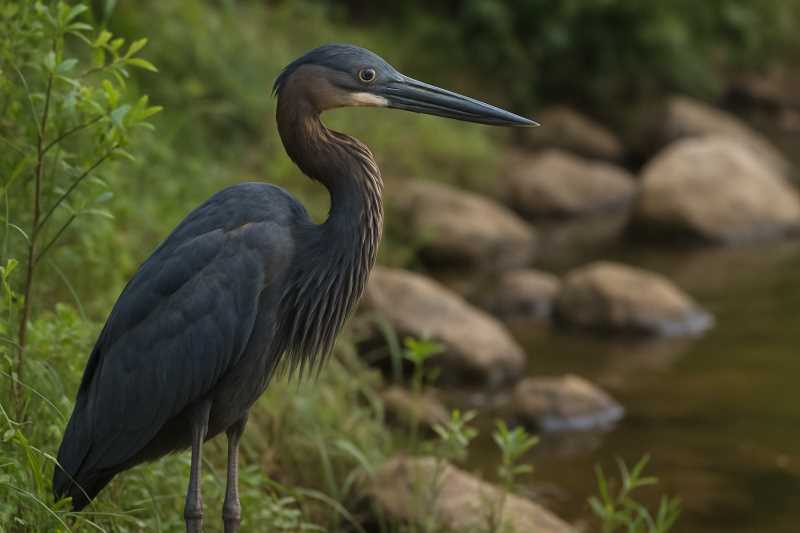
The Great-billed Heron is renowned for its substantial size, standing at an average height of 100 to 115 cm (39 to 45 inches) with a wingspan that stretches from 185 to 230 cm (73 to 91 inches). Its most distinctive feature is its large, robust bill, which is dark grey and perfectly adapted for hunting in its aquatic habitat. The plumage of the Great-billed Heron is predominantly grey, with a subtle blend of brown and white that provides an excellent camouflage against the backdrop of its natural environment. The neck is long and sinuous, allowing for swift and precise movements when hunting.
Habitat and Distribution
This heron’s habitat is primarily coastal, thriving in mangroves, estuaries, and along tidal rivers. The Great-billed Heron is particularly adept at navigating these watery landscapes, where it finds ample prey and minimal competition. Its range extends across the tropical coastal regions of Southeast Asia, Papua New Guinea, northern Australia, and parts of the Andaman and Nicobar Islands. Occasionally, it can also be spotted in inland wetlands, although such occurrences are rare.
Behavior and Diet
The Great-billed Heron is a solitary bird, often found alone or in pairs rather than in large flocks. It is a patient and strategic hunter, relying on stealth and precision. This heron feeds primarily on fish, but its diet also includes crustaceans, amphibians, and occasionally small mammals. The hunting technique involves standing still for extended periods, waiting for the prey to venture close before striking with its powerful bill.
During the breeding season, which varies depending on the geographical location, the Great-billed Heron becomes more social. It builds large nests made from sticks, typically located high in the mangrove trees to protect its young from predators. Both male and female herons participate in nest building and caring for the young, showcasing a cooperative breeding strategy.
Conservation Status
Currently, the Great-billed Heron is listed as a species of Least Concern by the International Union for Conservation of Nature (IUCN). However, like many other bird species, it faces threats from habitat destruction and degradation. Coastal development, pollution, and climate change pose significant risks to its natural habitat. Conservation efforts are essential to ensure the sustainability of their populations, particularly in regions where human activities encroach upon their breeding and foraging grounds.
Importance in Ecosystems
The Great-billed Heron plays a vital role in maintaining the ecological balance within its habitat. As a top predator in the aquatic food chain, it helps regulate fish and amphibian populations, preventing overpopulation and maintaining healthy ecosystems. Its presence is also an indicator of the health of the wetlands and coastal areas it inhabits, providing insights into the overall biodiversity and environmental conditions of these regions.
Human Interactions
Historically, the Great-billed Heron has had minimal negative interactions with humans, primarily due to its preference for remote and undisturbed habitats. However, as human populations expand and coastal areas become more developed, encounters have increased. Education and awareness about the importance of preserving their habitats can aid in reducing potential conflicts and ensuring the coexistence of humans and herons.
Conclusion
The Great-billed Heron is a magnificent bird that embodies the beauty and complexity of coastal ecosystems. Its impressive size, unique behaviors, and ecological significance make it a subject of great interest and importance. Continued research and conservation efforts are crucial to safeguard this species and the delicate environments it calls home. By appreciating and protecting the Great-billed Heron, we contribute to the broader goal of preserving the rich tapestry of life that thrives in our world’s wetlands and coastal regions.
Related posts