The Black-headed Heron: A Majestic Sentinel of African Wetlands
The Black-headed Heron (Ardea melanocephala) is a captivating avian species found predominantly across sub-Saharan Africa. This member of the Ardeidae family is known for its striking appearance, adaptability, and ecological significance, making it a subject of interest for ornithologists and bird enthusiasts alike.
Taxonomy and Physical Description
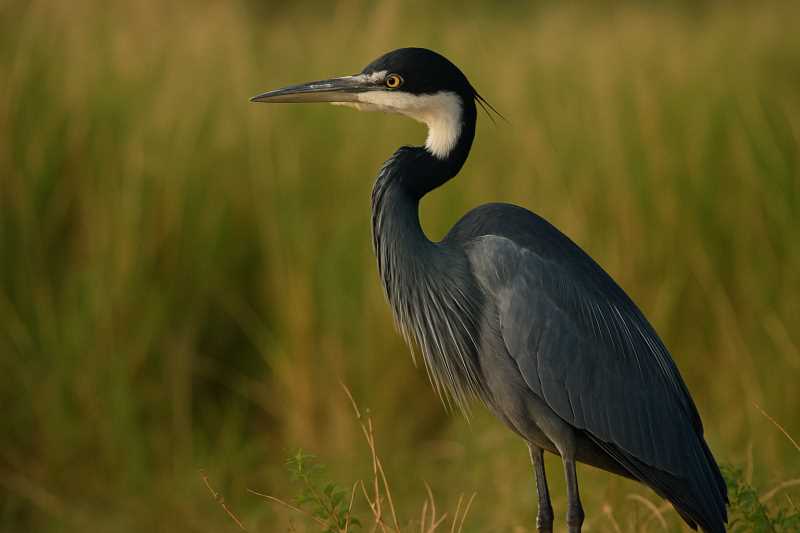
The Black-headed Heron belongs to the genus Ardea, which includes several large heron species. It is characterized by its distinctive black head, from which it derives its name, and a slate-grey body that contrasts elegantly with its yellow eyes and long yellow bill. These birds have a wingspan ranging from 150 to 170 cm, with a body length of about 85 to 102 cm.
Their neck is long and S-shaped, a typical heron feature, facilitating their adept hunting skills. During the breeding season, adults develop long black plumes on the head, lending them an even more striking appearance.
Habitat and Distribution
The Black-headed Heron is highly adaptable, inhabiting a wide range of environments, from wetlands and marshes to grasslands and agricultural fields. Its preference for sub-Saharan regions allows it to thrive in countries like Kenya, South Africa, and Tanzania. These birds are often spotted near rivers, lakes, and estuarine environments, where water is abundant.
Despite their affinity for wetland habitats, Black-headed Herons are versatile enough to exploit drier areas, particularly during the non-breeding season when they might wander inland to forage in open fields. This adaptability is crucial for their survival in regions where water bodies may be seasonal.
Behavior and Diet
Black-headed Herons are solitary hunters, primarily feeding on a diverse diet that includes insects, fish, amphibians, and small mammals. Their foraging technique involves patiently stalking prey in shallow waters before swiftly striking with their sharp bills.
Interestingly, these herons exhibit a unique behavior known as “standing sentinel,” where they remain motionless for extended periods, watching for potential prey or threats. This not only aids in hunting but also helps them conserve energy.
Breeding and Reproduction
Breeding typically occurs during the wet season when food is plentiful. Black-headed Herons are monogamous, forming pairs that often last for multiple breeding seasons. They build large nests out of sticks, usually in trees or large shrubs near water bodies.
The female lays between 2 to 4 eggs, which are incubated by both parents for about 25 to 28 days. Once hatched, the chicks are fed by regurgitation and grow rapidly, fledging at approximately 7 weeks old. The cooperative care by both parents increases the likelihood of offspring survival, crucial in environments where predation and environmental conditions can be challenging.
Conservation Status and Threats
Currently, the Black-headed Heron is classified as a species of Least Concern by the International Union for Conservation of Nature (IUCN). Their widespread distribution and adaptability contribute to a stable population trend. However, like many wetland species, they face threats from habitat destruction, pollution, and climate change.
Wetland drainage for agriculture and urban development poses significant risks, as does pollution from pesticides and industrial waste. Conservation efforts focus on preserving wetland habitats and promoting sustainable land-use practices to ensure these elegant birds continue to thrive.
Cultural Significance
In various African cultures, the Black-headed Heron is revered as a symbol of patience and precision, reflecting its hunting prowess and calm demeanor. Its presence in art and folklore underscores its role in the cultural landscape of the regions it inhabits.
Conclusion
The Black-headed Heron stands as a testament to nature’s adaptability and resilience. Its ability to thrive in diverse environments, coupled with its striking appearance, makes it a vital component of Africa’s avian biodiversity. As we continue to face environmental challenges, the preservation of such species becomes increasingly important, not only for maintaining ecological balance but also for preserving the rich cultural heritage they represent.
Efforts to conserve their habitats and mitigate human-induced threats are crucial in ensuring that future generations can enjoy the sight of these magnificent creatures across Africa’s wetlands and beyond.
Related posts