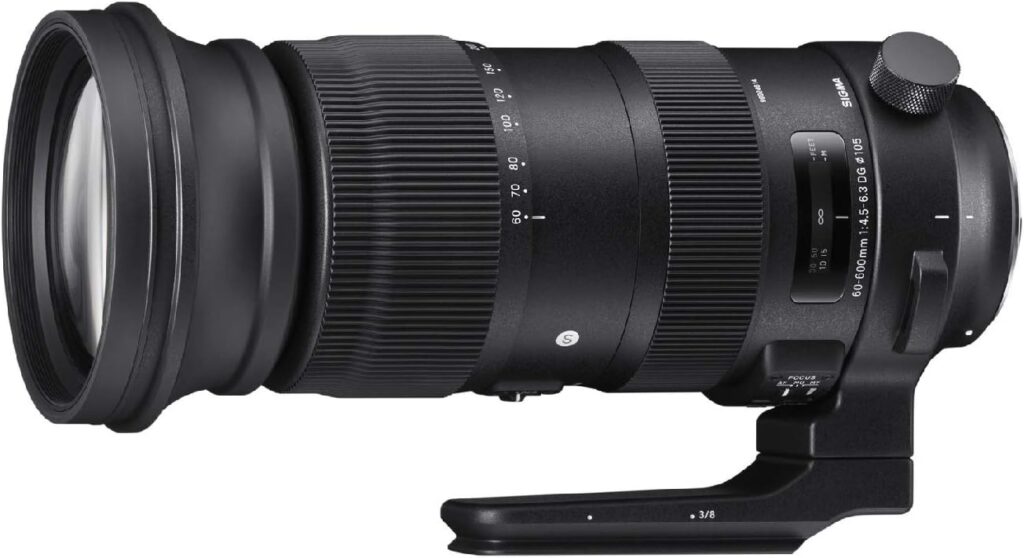
Sigma 60-600mm f/22-32 Fixed Zoom F4.5-6.3 DG OS HSM: A Game Changer for Bird Enthusiasts?
Bird photography is a challenging yet rewarding pursuit that requires not only patience and skill but also the right equipment. The Sigma 60-600mm f/22-32 Fixed Zoom F4.5-6.3 DG OS HSM lens has emerged as a versatile option for bird photographers seeking to capture stunning images of avian subjects in their natural habitats. This article delves into the features, advantages, and potential drawbacks of this lens, providing bird enthusiasts with a comprehensive understanding of whether it could be the ideal addition to their photography arsenal.
The Reach and Flexibility of the Sigma 60-600mm
One of the most significant selling points of the Sigma 60-600mm lens is its remarkable zoom range. Covering focal lengths from 60mm to 600mm, this lens offers unparalleled flexibility for bird photographers. Whether you’re aiming to capture a wide-angle shot of a flock in flight or a detailed close-up of a solitary bird, this lens provides the versatility you need.
For bird enthusiasts who often find themselves in diverse shooting situations, the ability to transition smoothly from a moderate telephoto to an extreme telephoto lens can make a significant difference. This adaptability reduces the need to switch lenses frequently, allowing photographers to focus on the moment rather than their equipment.
Optical Stabilization: Enhancing Image Quality
The inclusion of Optical Stabilization (OS) is another highlight of the Sigma 60-600mm lens. This feature is particularly beneficial for bird photographers who frequently work in dynamic environments where the stability of the camera cannot always be guaranteed. The OS system compensates for camera shake, making it possible to capture sharp images even at slower shutter speeds or when using the lens at its maximum focal length.
In practice, this means that bird photographers can achieve crisp, clear images without necessarily having to rely on a tripod. This is especially advantageous when photographing birds in flight or when traversing through rough terrain where setting up a tripod might not be feasible.
High-Quality Optics and Build
Sigma has incorporated high-quality optics into the 60-600mm lens, including three FLD (F Low Dispersion) and one SLD (Special Low Dispersion) elements. These components are critical in minimizing chromatic aberrations and ensuring high image clarity and contrast. The lens also features a Super Multi-Layer Coating that reduces flare and ghosting, contributing to the production of sharp, high-contrast images even in challenging lighting conditions.
In terms of build quality, the Sigma 60-600mm is robust and durable, designed to withstand the rigors of outdoor photography. Its dust- and splash-proof construction is particularly appealing to bird photographers who often find themselves in unpredictable weather conditions or rugged environments.
Autofocus Performance: Fast and Accurate
The lens is equipped with a Hyper Sonic Motor (HSM) that ensures fast and accurate autofocus performance, which is essential for capturing fleeting moments in bird photography. The autofocus system is both silent and efficient, allowing photographers to approach their subjects without causing disturbance.
However, while the autofocus system performs admirably in most situations, some users have noted that it can occasionally struggle to lock onto fast-moving subjects, particularly in low-light conditions. This limitation could be a consideration for bird photographers who frequently work in early morning or late evening light.
Weight and Size: A Consideration for Mobility
One of the potential drawbacks of the Sigma 60-600mm lens is its size and weight. Weighing in at approximately 6 pounds, it is not the most lightweight lens on the market. This factor might be a concern for bird photographers who prioritize mobility and prefer to travel light.
Carrying the lens for extended periods can be cumbersome, and it may require additional support, such as a monopod or a sturdy camera strap. Bird enthusiasts who frequently embark on long hikes might need to weigh the benefits of the lens’s zoom range and performance against the practicalities of its size and weight.
Aperture Range: A Trade-Off
The variable aperture range of f/4.5-6.3 is another point of consideration. While the lens performs well in good lighting conditions, the aperture range may limit its effectiveness in low-light scenarios where a faster lens would be beneficial. This trade-off is worth considering for bird photographers who often work in dimly lit environments or who wish to achieve a shallower depth of field.
Conclusion: A Valuable Tool with Considerations
The Sigma 60-600mm f/22-32 Fixed Zoom F4.5-6.3 DG OS HSM lens offers compelling advantages for bird photographers, including an impressive zoom range, effective optical stabilization, and high-quality optics. Its robust construction and reliable autofocus performance make it a worthy contender for those passionate about capturing the beauty of birds.
However, potential buyers should consider the weight and size of the lens, as well as its variable aperture, when making their decision. For many bird enthusiasts, the benefits may far outweigh the drawbacks, making it a valuable tool in their quest to document avian life.
Ultimately, the Sigma 60-600mm lens is a versatile option that can significantly enhance the bird photography experience, provided users are aware of its limitations and plan accordingly.
We are affiliated with Amazon and make a small royalty at no extra cost to you, so by using the links below to purchase your next birding gear you can help us to maintain Simply Birding and continue to bring great content:
Buy the Sigma 60-600mm f/22-32 Fixed Zoom F4.5-6.3 DG OS HSM on Amazon now
Related posts