The Elusive Brown-chested Jungle Flycatcher: An Ornithological Marvel
The Brown-chested Jungle Flycatcher (Cyornis brunneatus) is a small passerine bird that captivates bird enthusiasts and ornithologists alike. This elusive species is known for its distinct plumage and unique migratory patterns. Found primarily in the dense forests of Southeast Asia, the Brown-chested Jungle Flycatcher is not only a testament to the rich biodiversity of the region but also an indicator of the health of its ecosystem.
Taxonomy and Description
The Brown-chested Jungle Flycatcher belongs to the family Muscicapidae, which comprises a diverse group of small to medium-sized insectivorous birds. The species was first described by Swinhoe in 1863, and its scientific name, Cyornis brunneatus, highlights its rich brown chest, a defining characteristic.
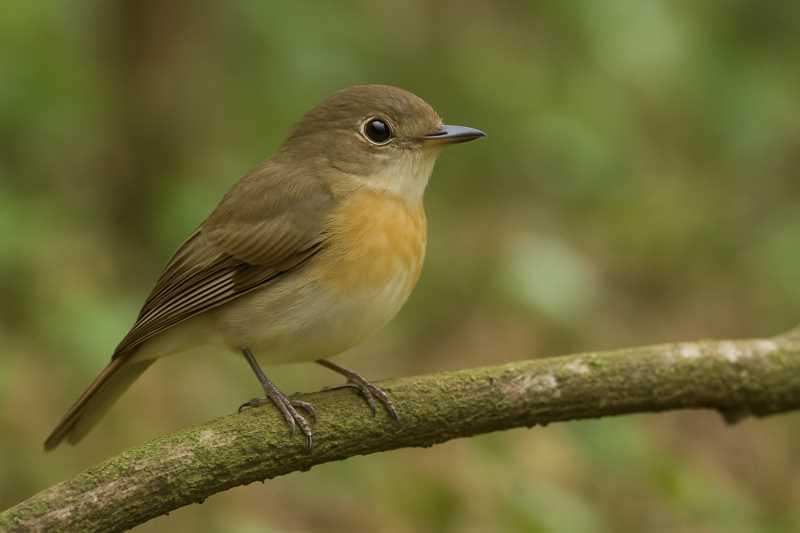
Adult Brown-chested Jungle Flycatchers measure approximately 15 centimeters in length. Their plumage is predominantly olive-brown with a paler underbelly. The brown chest, from which the species derives its name, contrasts subtly with the rest of its body, providing effective camouflage in its forested habitat. The bird’s delicate features include a slender bill, adapted for its insectivorous diet, and a relatively short tail that aids in maneuverability through dense foliage.
Habitat and Distribution
This species thrives in subtropical or tropical moist lowland forests, often favoring areas with dense undergrowth and proximity to water sources. Its range extends across Southeast Asia, particularly in countries like China, Thailand, Vietnam, Laos, and Cambodia. However, due to habitat destruction and fragmentation, the Brown-chested Jungle Flycatcher’s distribution has become increasingly patchy.
The bird is primarily sedentary but exhibits some migratory behavior, particularly in northern populations. During the breeding season, these birds can be found in higher altitudes, descending to lower elevations during the non-breeding season.
Behavior and Diet
The Brown-chested Jungle Flycatcher is known for its skittish and elusive nature, often remaining hidden in the underbrush. It is a solitary bird, except during the breeding season, when pairs can be observed engaging in courtship displays.
This species feeds primarily on insects, employing a sit-and-wait strategy to capture prey. It often perches quietly on a low branch, suddenly sallying forth to snatch an unsuspecting insect from the air or leaf litter. Its diet consists of a variety of insects, including beetles, flies, and caterpillars, all of which are abundant in its forest habitat.
Breeding and Lifespan
The breeding season for the Brown-chested Jungle Flycatcher typically occurs from March to July. During this time, the males engage in elaborate displays to attract females, showcasing their agility and vocal prowess. The species is monogamous, with both sexes participating in nest building and chick rearing.
Nests are usually constructed in the fork of a tree or shrub, using twigs, leaves, and other plant materials. The female lays a clutch of 2-4 eggs, which are incubated for about 14 days. After hatching, the chicks are altricial, requiring constant care and feeding by both parents. Fledging occurs approximately two weeks after hatching.
Conservation Status
The Brown-chested Jungle Flycatcher is currently listed as Near Threatened on the IUCN Red List. The primary threat to this species is habitat loss due to deforestation for agriculture, logging, and infrastructure development. As their forest habitats are fragmented and degraded, the survival of this species becomes increasingly precarious.
Conservation efforts are crucial for the preservation of the Brown-chested Jungle Flycatcher. Protecting and restoring its natural habitat, along with implementing sustainable land-use practices, are essential measures. Conservation organizations are working alongside local communities to raise awareness and promote eco-friendly practices that benefit both the environment and the species that depend on it.
The Importance of the Brown-chested Jungle Flycatcher
The Brown-chested Jungle Flycatcher serves as an important indicator species for the health of Southeast Asian forests. Its presence signifies a rich and balanced ecosystem, where insect populations are controlled, and biodiversity thrives.
Furthermore, the Brown-chested Jungle Flycatcher plays a vital role in the cultural and ecological tapestry of its region. It is a subject of fascination for birdwatchers and researchers, contributing to the growing interest in avian biodiversity and conservation.
Conclusion
In conclusion, the Brown-chested Jungle Flycatcher is a remarkable species that highlights the intricate connections within Southeast Asian ecosystems. While it faces significant challenges due to habitat loss and environmental changes, conservation efforts and continued research offer hope for its future. By understanding and protecting this enigmatic bird, we can ensure that it remains a vibrant part of the natural world for generations to come.
Related posts