The Woodland Kingfisher: A Vibrant Jewel of the African Skies
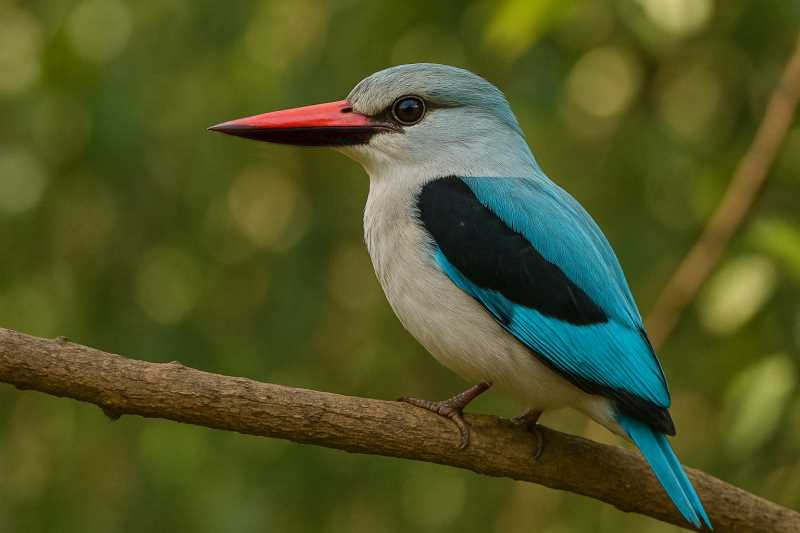
The Woodland Kingfisher (Halcyon senegalensis) is an eye-catching bird, known for its vibrant plumage and distinctive calls. Found predominantly in sub-Saharan Africa, this striking species is a member of the tree kingfisher family, Halcyonidae. With its electric-blue wings and back, contrasting with a snowy white belly and a bold black stripe through its eye, the Woodland Kingfisher is not only a visual delight but also an important player in its ecosystem.
Habitat and Distribution
The Woodland Kingfisher thrives in a variety of habitats, primarily favoring savannas, woodlands, and forest edges. It is widely distributed across the African continent, from Senegal and Gambia in the west, extending eastward to Ethiopia, and south to South Africa. Its adaptability to different environments has allowed it to flourish across this vast range. The presence of water bodies such as rivers and lakes within these areas is particularly beneficial, as they support abundant prey populations.
Physical Characteristics
Adult Woodland Kingfishers measure approximately 23 cm (9 inches) in length and weigh between 54 to 81 grams. Their vivid plumage is one of their most distinguishing features; the upper parts are a vibrant blue, while the head, neck, and underparts are white. The eye is lined with a striking black stripe that extends to the nape, adding to their distinctive appearance. These birds possess a strong, red bill, which is slightly curved and perfectly adapted for their predatory lifestyle.
Behavior and Diet
Despite their name, Woodland Kingfishers are not heavily reliant on aquatic habitats or fish for survival. Instead, they are opportunistic feeders, often seen hunting from a perch in trees or shrubs. Their diet primarily consists of insects, such as grasshoppers and beetles, but they are also known to consume small reptiles, amphibians, and occasionally small birds.
These birds exhibit a sit-and-wait hunting technique, remaining motionless on a perch before swooping down to capture prey with precision. Once caught, the prey is typically beaten against the perch to subdue it before consumption.
Breeding and Nesting
The breeding season of the Woodland Kingfisher varies geographically, typically aligning with the onset of the rainy season, which ensures a plentiful supply of food. During courtship, males perform a series of aerial displays, including fast dives and wing flaps, accompanied by their signature loud, trilling calls.
Woodland Kingfishers are cavity nesters, often utilizing old woodpecker holes or natural cavities in trees. The female lays a clutch of 2 to 4 white eggs, which are incubated by both parents. The cooperative nature of these birds extends to the rearing of the chicks, ensuring a higher survival rate of the offspring.
Vocalizations
One of the most distinctive characteristics of the Woodland Kingfisher is its vocalization. Known for their loud, trill-like calls, these birds communicate effectively over long distances, an essential trait for maintaining territory and attracting mates. The call is often heard at dawn and dusk, a time when the birds are most active.
Conservation Status
The Woodland Kingfisher is currently classified as Least Concern by the International Union for Conservation of Nature (IUCN). This status is due to its wide distribution and stable population numbers. However, like many species, it faces potential threats from habitat destruction due to deforestation, agriculture, and urban development.
Role in Ecosystem
Woodland Kingfishers play a crucial role in their ecosystems by controlling insect populations and serving as prey for larger predators. Their presence is an indicator of a healthy environment, and their vibrant appearance adds to the biodiversity of the regions they inhabit.
Conclusion
The Woodland Kingfisher is a remarkable bird, not only for its striking appearance and enchanting calls but also for its adaptability and ecological significance. As a species that thrives across a vast range of habitats in Africa, it serves as a reminder of the continent’s rich biodiversity. Conservation efforts must continue to ensure that this dazzling avian species remains a fixture of the African landscape for generations to come.
Related posts