Storm’s Stork: An Enigmatic Avian Treasure of Southeast Asia
In the lush tropical rainforests of Southeast Asia, a unique and elusive bird navigates the winding rivers and dense canopies with remarkable grace. Known as Storm’s Stork (Ciconia stormi), this rare species is a beacon of biodiversity, representing the delicate balance of its fragile ecosystem. Despite its somewhat cryptic presence, the Storm’s Stork holds immense ecological significance, showcasing the richness of Southeast Asia’s natural heritage.
A Glimpse into the Identity of Storm’s Stork
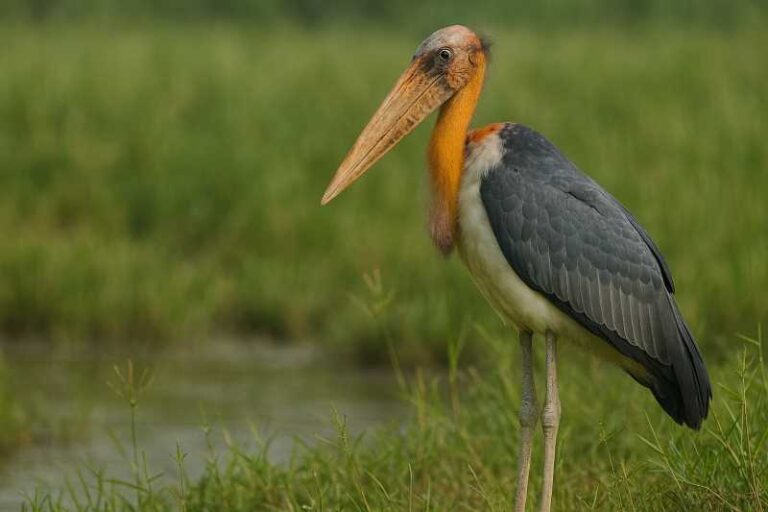
Storm’s Stork is a relatively small member of the stork family, standing about 75 to 91 centimeters tall, with a wingspan reaching up to 130 centimeters. Its distinctive appearance is marked by a stark black and white plumage, with glossy greenish-black feathers adorning its wings and back, contrasted by a white belly. The bird’s face is accentuated by a striking red facial skin and long, orange legs, providing a vivid splash of color against the lush rainforest backdrop.
This stork was first described by the German ornithologist Ferdinand Heine in 1865, and it was named after the German naturalist, Hugo Storm, who was instrumental in its discovery. Despite being recognized for over a century, the Storm’s Stork remains one of the least understood stork species, primarily due to its elusive nature and the inaccessibility of its preferred habitats.
Habitat and Distribution
Storm’s Stork is predominantly found in the lowland freshwater and peat swamp forests of the Sundaic region, which includes parts of southern Thailand, Peninsular Malaysia, Sumatra, and Borneo. These birds have a strong preference for dense, undisturbed forested areas near slow-moving rivers and wetlands, where they forage for their diet of fish, amphibians, and small invertebrates.
The stork’s habitat is under severe threat from human activities such as logging, agricultural expansion, and land conversion for palm oil plantations. These activities have led to the fragmentation and degradation of their natural habitats, making the conservation of these areas critical for the stork’s survival.
Conservation Status and Challenges
Storm’s Stork is currently listed as Endangered on the IUCN Red List, with an estimated population of fewer than 500 individuals remaining in the wild. The primary threats to their survival include habitat loss, hunting, and disturbance from human activities. The draining of swamp forests for agricultural purposes has significantly reduced their available habitat, while hunting poses a direct threat to their numbers.
Conservation efforts for Storm’s Stork are challenging due to the limited knowledge about their breeding habits and population dynamics. Protecting their remaining habitat is crucial, and this requires a collaborative effort between governments, conservation organizations, and local communities. Initiatives such as establishing protected areas, promoting sustainable land-use practices, and engaging local communities in conservation activities are essential steps towards ensuring the survival of this enigmatic bird.
Importance of Storm’s Stork in Ecosystem
As a top predator in its aquatic ecosystem, the Storm’s Stork plays a vital role in maintaining the ecological balance of the wetlands and forests it inhabits. By regulating fish and amphibian populations, the stork contributes to the health and diversity of its environment. Furthermore, its presence indicates a healthy, undisturbed habitat, making it an important bioindicator for conservationists and researchers.
The conservation of Storm’s Stork also has broader implications for biodiversity. Protecting the stork’s habitat safeguards a multitude of other species that share the same ecosystem, including other birds, mammals, and plants. Thus, efforts to conserve Storm’s Stork contribute to the preservation of Southeast Asia’s rich biodiversity.
The Way Forward
The survival of Storm’s Stork hinges on increased awareness and concerted conservation efforts. Education and outreach programs can play a pivotal role in highlighting the importance of conserving this species and its habitat. By fostering a deeper understanding and appreciation of the natural world, these programs can inspire local communities to become stewards of their environment.
Research and monitoring are also crucial in filling the knowledge gaps about Storm’s Stork. Detailed studies on their breeding, feeding, and migratory patterns can inform more effective conservation strategies. Collaboration between international conservation organizations can bolster these efforts, providing the resources and expertise needed to protect this remarkable species.
In conclusion, Storm’s Stork is not just a rare avian species; it is a symbol of the intricate beauty and complexity of Southeast Asia’s ecosystems. Protecting this stork ensures the preservation of a unique piece of our world’s natural heritage, underscoring the urgent need for sustainable practices and conservation efforts that benefit both wildlife and people. With a collective commitment to conservation, we can hope to see Storm’s Stork soaring gracefully through the rainforests for generations to come.
This is one of the species covered in one of the books in our Kings Birds of the world series, Storks Of The World.

Related posts