The Barred Long-tailed Cuckoo: A Detailed Exploration of Cercococcyx montanus
The avian world is replete with fascinating species, each contributing uniquely to biodiversity. Among these remarkable birds is the Barred Long-tailed Cuckoo, scientifically known as Cercococcyx montanus. This elusive bird, with its distinct characteristics and intriguing behavior, captures the attention of ornithologists and bird enthusiasts alike.
Habitat and Distribution
The Barred Long-tailed Cuckoo finds its home in the dense forests of Central and East Africa, spanning countries such as Uganda, Kenya, and Tanzania. Preferring montane and submontane forests, this species thrives at elevations ranging from 1,000 to 3,000 meters. The dense canopy of these forests provides the perfect environment for the cuckoo to forage and breed.
Physical Characteristics
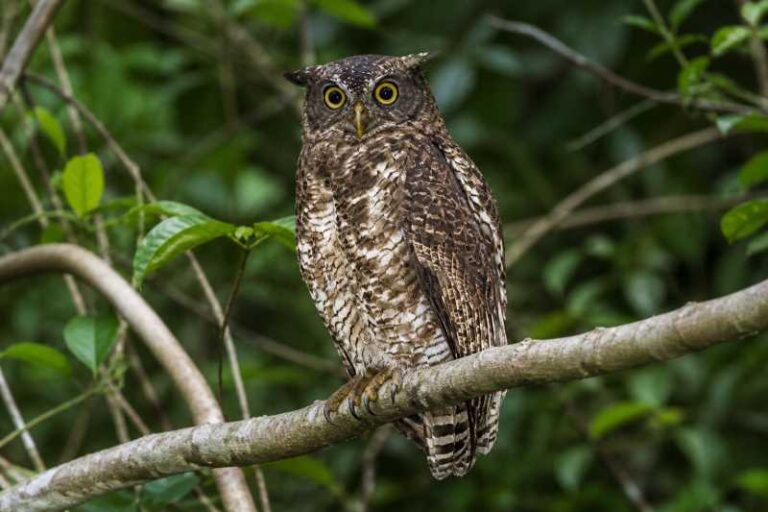
Cercococcyx montanus is renowned for its striking appearance. It averages about 30 centimeters in length, with its long tail accounting for nearly half of its total length. The bird’s plumage is primarily brown, but its underparts are marked with distinctive barring that gives the species its name. The barred pattern provides excellent camouflage against the forest backdrop, aiding in its elusive nature.
Its eyes are a deep brown, and its bill is slightly curved, well-suited for its diet. The tail is not only long but also elegantly shaped, adding to its distinctive silhouette as it flits through the forest.
Behavior and Diet
The Barred Long-tailed Cuckoo is a solitary bird, often seen alone or in pairs. It is known for its secretive nature, making it a challenging bird to observe in the wild. The cuckoo is primarily insectivorous, feasting on a diet of caterpillars, beetles, and other small invertebrates. Its foraging strategy involves moving stealthily through the foliage, picking insects from leaves and branches.
Vocal communication plays a crucial role in the life of the Barred Long-tailed Cuckoo. Its call, a series of melodious whistles, can often be heard echoing through the forest, particularly during the breeding season. These calls are not only used for attracting mates but also for establishing territory.
Breeding and Reproduction
One of the most fascinating aspects of the Barred Long-tailed Cuckoo’s life is its breeding behavior. Like many cuckoos, this species is a brood parasite. It lays its eggs in the nests of other bird species, leaving the unsuspecting host to incubate the eggs and raise the chicks. This behavior is an evolutionary adaptation that allows the cuckoo to ensure the survival of its offspring without the need for parental care.
The choice of host species is critical, and the Barred Long-tailed Cuckoo carefully selects nests where its eggs can blend in with the host’s clutch. Once hatched, the cuckoo chick often outcompetes the host’s offspring for food, ensuring its growth and development.
Conservation Status
Currently, the Barred Long-tailed Cuckoo is classified as Least Concern by the International Union for Conservation of Nature (IUCN). However, its reliance on specific forest habitats makes it vulnerable to habitat destruction and deforestation. Conservation efforts are crucial to preserving the montane and submontane forests that are vital for the survival of this species.
Conclusion
The Barred Long-tailed Cuckoo is a testament to the complexity and diversity of avian life. Its unique adaptations, from its striking plumage to its parasitic breeding behavior, make it a subject of great interest in ornithological studies. Protecting the habitats that support such species is essential for maintaining biodiversity and ensuring that future generations can continue to marvel at the wonders of the natural world.
In summary, the Barred Long-tailed Cuckoo exemplifies the intricate balance of nature. Its presence in the forests of Africa is not just an indicator of ecological health but also a reminder of the intricate relationships that sustain our planet’s biodiversity.
Related posts