The Great Spotted Kiwi: A Symbol of New Zealand’s Unique Biodiversity
The Great Spotted Kiwi (Apteryx maxima) stands as a remarkable emblem of New Zealand’s unique biodiversity. With its distinctive features and nocturnal habits, this flightless bird captivates both scientists and nature enthusiasts alike, highlighting the evolutionary marvels and conservation challenges that define New Zealand’s ecological landscape.
Physical Characteristics and Behavior
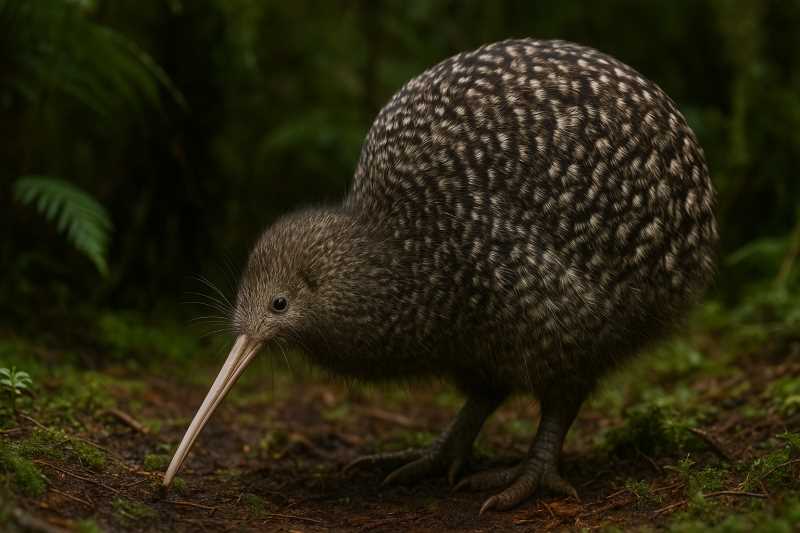
The Great Spotted Kiwi, or Roroa, as it is known in the Māori language, is the largest of the kiwi species. It boasts an average weight of 3.3 kilograms (7.3 pounds) for females and 2.4 kilograms (5.3 pounds) for males, with a height ranging from 45 to 50 centimeters (18 to 20 inches). Its plumage is a mottled gray-brown, allowing it to blend seamlessly into the dense forest underbrush it calls home.
One of the most distinctive features of the Great Spotted Kiwi is its long, slender bill, equipped with nostrils at the tip. This adaptation is particularly beneficial for foraging, as the kiwi relies heavily on its keen sense of smell to detect invertebrates hidden beneath the soil. Unlike most birds, its vestigial wings are hidden beneath a layer of soft feathers, rendering it completely flightless.
Nocturnal by nature, the Great Spotted Kiwi spends its nights actively foraging and its days resting in burrows dug into the ground. Despite their solitary disposition, kiwis are known for their monogamous pairing, often maintaining the same partner throughout their lifespan, which can exceed 20 years in the wild.
Habitat and Distribution
The Great Spotted Kiwi is predominantly found in the mountainous regions of the South Island of New Zealand, particularly within the Arthur’s Pass and Kahurangi National Parks. These areas provide the dense vegetation and secluded environments that are ideal for the kiwi’s survival.
New Zealand’s temperate rainforests offer a rich tapestry of life, but they also pose challenges for the Great Spotted Kiwi. The introduction of mammalian predators, such as stoats, dogs, and feral cats, has significantly impacted kiwi populations. As ground-nesting birds, kiwis and their eggs are particularly vulnerable to these invasive species.
Conservation Status and Efforts
The International Union for Conservation of Nature (IUCN) currently classifies the Great Spotted Kiwi as "Vulnerable," with population estimates ranging between 14,000 to 15,000 individuals. The decline in numbers is attributed primarily to predation and habitat destruction.
Conservation efforts are underway to protect this iconic species. The Department of Conservation in New Zealand has implemented several measures, including predator control programs and habitat restoration initiatives. The use of kiwi sanctuaries, predator-proof areas where kiwis can breed safely, has shown promise in bolstering population numbers.
Community involvement also plays a crucial role in conservation. Local initiatives, such as the "Kiwi Ranger" program, engage the public in monitoring efforts and raise awareness about the importance of preserving kiwi habitats. Additionally, organizations like Kiwis for Kiwi are instrumental in funding research and conservation projects through public donations.
The Cultural Significance of the Kiwi
Beyond its ecological importance, the Great Spotted Kiwi holds profound cultural significance for the people of New Zealand. The bird is an enduring symbol of national identity, often used to represent New Zealanders themselves. The term "Kiwi" is commonly used internationally to refer to people from New Zealand, reflecting the deep connection between the bird and the country’s cultural heritage.
In Māori tradition, the kiwi is considered a taonga, or treasure, and its feathers were historically used in the creation of ceremonial cloaks. The bird’s presence in myths and stories further underscores its importance in Māori culture.
Conclusion
The Great Spotted Kiwi is more than just a bird; it is a symbol of New Zealand’s unique natural heritage. As conservation efforts continue, the collective responsibility to protect this remarkable species becomes increasingly clear. By understanding and addressing the challenges faced by the Great Spotted Kiwi, New Zealand sets a precedent for biodiversity conservation, ensuring that future generations can appreciate the wonders of this flightless nocturnal icon.
In preserving the Great Spotted Kiwi, New Zealand preserves a piece of its identity—a testament to the intricate web of life that thrives on these isolated islands. The ongoing dedication to kiwi conservation mirrors a broader commitment to protecting the planet’s biodiversity, highlighting the interconnectedness of all living things.
Related posts