In the world of bird photography, capturing fleeting moments demands a camera that combines speed, precision, and adaptability. The Canon EOS R6 Mark II enters this arena as a formidable mirrorless option for serious birders. With a 24.2-megapixel full-frame sensor, blistering 40 fps burst shooting, and a sophisticated autofocus system, it promises to deliver professional-level results for wildlife enthusiasts. But does it live up to the hype in the demanding field of avian photography? This article explores the strengths and shortcomings of the R6 Mark II specifically from a bird photographer’s perspective.
1. Sensor and Image Quality
One of the most welcome upgrades in the R6 Mark II is its 24.2MP full-frame CMOS sensor—a step up from the 20MP in the original R6. While not a resolution monster like the Canon R5 (45MP), it offers a valuable balance: sufficient resolution for cropping tight on small birds while keeping file sizes manageable. More importantly, Canon’s sensor technology delivers excellent dynamic range and color fidelity, critical when photographing birds in dappled light or against bright skies.
Low-light performance is a particular strength. With a native ISO range of 100–102,400 (expandable to 204,800), the R6 Mark II maintains sharpness and detail even in early morning or twilight conditions—key times for bird activity. Noise handling remains exemplary up to ISO 6400, with usable files well beyond that if exposed properly.
Verdict:
✅ Excellent image quality
✅ Strong low-light capabilities
⚠ Not as much resolution as R5 for extreme cropping
2. Autofocus: Speed and Intelligence
Arguably the biggest selling point of the R6 Mark II is its Dual Pixel CMOS AF II system. With 100% frame coverage and 1,053 AF zones, this camera tracks birds seamlessly across the viewfinder—even in erratic flight.
It features subject detection for animals and birds, including eye-detection AF. When photographing perched birds or those in slower flight, the eye-AF is incredibly effective, locking on quickly and maintaining focus even with branches or foliage in the way.
However, the system can struggle slightly with very small or fast-moving birds in dense backgrounds. While the eye-AF works beautifully on larger species or clean backdrops, smaller birds (like finches or warblers) may not always trigger accurate tracking.
Verdict:
✅ Excellent bird detection and tracking
✅ Sticky and reliable eye-AF in most conditions
⚠ Struggles occasionally with small birds in cluttered scenes
3. Burst Rate and Buffer Performance
The Canon R6 Mark II is one of the fastest mirrorless cameras in its class. With the electronic shutter, it shoots up to 40 frames per second with continuous AF/AE tracking. This makes it incredibly capable for capturing fast, unpredictable bird movement—whether it’s a hawk launching off a branch or a hummingbird mid-hover.
Additionally, Canon has added a pre-capture feature, allowing the camera to buffer frames before the shutter is fully depressed. This is a fantastic tool for catching sudden motion, such as a bird taking flight.
However, there are a few caveats. While 40 fps is impressive, it comes with a risk of rolling shutter distortion—most noticeable when panning rapidly. Also, dual SD UHS-II card slots may bottleneck long bursts of full-resolution RAW images.
Verdict:
✅ Blazing 40 fps burst with subject tracking
✅ Pre-capture feature is great for action
⚠ Rolling shutter distortion at high fps
⚠ SD card slots limit buffer speed vs. CFexpress options
4. Ergonomics and Handling
Canon has long been praised for its user-friendly ergonomics, and the R6 Mark II is no exception. The deep grip and balanced body make it comfortable to use with large telephoto lenses like the RF 100–500mm f/4.5-7.1L IS USM, a favorite among birders.
Canon has refined the layout further, adding a dedicated still/video switch, repositioning the power toggle, and improving button feel. The vari-angle LCD screen and 3.69M-dot EVF both offer clear, responsive displays, with an optional optical-simulation mode that mimics DSLR-style viewing.
One gripe is the position of the still/video switch—it can be accidentally bumped, resulting in unintentional mode changes.
Verdict:
✅ Excellent ergonomics for handheld birding
✅ Logical control layout and intuitive menus
⚠ Still/video switch placement is a minor annoyance
5. Stabilization and Handheld Use
Bird photographers often find themselves shooting without a tripod—either due to weight restrictions, mobility, or terrain. The R6 Mark II offers up to 8 stops of in-body image stabilization (IBIS), which works in conjunction with stabilized RF lenses.
This enables handheld shooting at slower shutter speeds, particularly useful in low light or when using heavy telephoto lenses. It also helps maintain clarity when tracking birds in flight, especially at long focal lengths.
Verdict:
✅ Excellent IBIS for handheld use
✅ Practical for fieldwork without a tripod
⚠ Performance depends on lens compatibility
6. Battery Life and Storage
The R6 Mark II uses the LP-E6NH battery, which delivers solid performance—better than the original R6. Depending on usage, photographers can expect up to 500–700 shots per charge, or more when using power-saving features.
Storage-wise, it offers dual UHS-II SD card slots, allowing for simultaneous backup or separation of RAW and JPEG files. While fast enough for most users, those shooting long bursts of 40 fps RAW may hit performance ceilings that CFexpress-equipped cameras avoid.
Verdict:
✅ Good battery life for a mirrorless body
✅ Dual card slots for redundancy
⚠ SD cards may not keep up with ultra-fast shooting
7. Video Capability: Bonus for Hybrid Shooters
While not a primary concern for still-focused birders, the R6 Mark II’s video features are an added bonus for content creators. It records 4K60p oversampled from 6K, with excellent detail and dynamic range, and offers 6K RAW output via HDMI.
Those interested in filming bird behavior will appreciate the eye-AF during video, reliable subject tracking, and ability to switch modes instantly—albeit at the risk of bumping the still/video switch unintentionally.
Verdict:
✅ Great hybrid tool for photo and video
✅ Excellent video quality with AF support
⚠ Minor handling quirks when switching modes
8. Lens Ecosystem and Compatibility
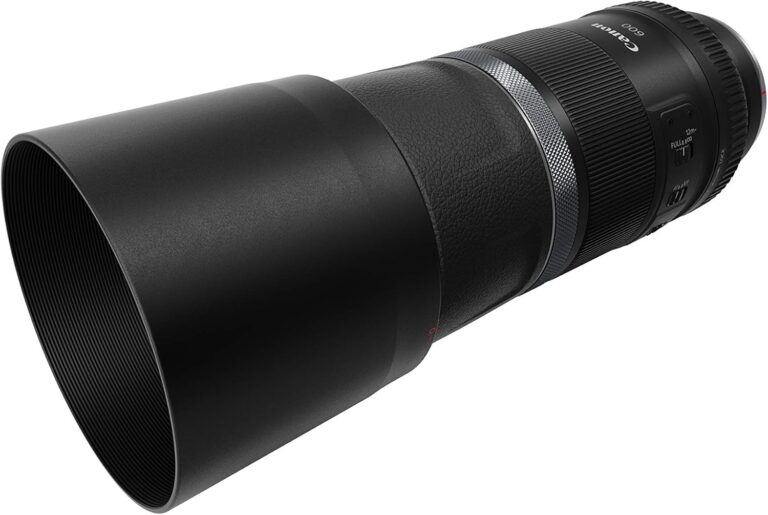
The RF mount has matured significantly, and Canon now offers an excellent selection of telephoto lenses, including the 600mm f/11 and 800mm f/11 for budget-conscious shooters, and L-series glass for pros.
However, third-party autofocus lenses for RF remain limited due to Canon’s closed licensing. Those migrating from DSLR systems may need to adapt their EF lenses, which the R6 II handles very well via Canon’s EF-RF adapter.
Verdict:
✅ Excellent native RF lens options
✅ EF lens compatibility works well
⚠ Limited third-party RF autofocus lens availability
Final Thoughts: Is the Canon R6 Mark II Good for Bird Photography?
The Canon EOS R6 Mark II is an exceptional camera for bird photography, blending high-speed performance, dependable autofocus, strong image quality, and ergonomics that suit extended field use. It offers features typically reserved for higher-end models like the Canon EOS R3, at a far more accessible price point.
It’s not without flaws—rolling shutter at 40 fps, occasional AF misses on tiny birds, and SD card speed bottlenecks. But for most bird photographers, from advanced enthusiasts to semi-pros, the R6 Mark II hits a near-perfect sweet spot.
⭐ Summary
| Feature | Rating |
|---|---|
| Image Quality | ★★★★☆ |
| Autofocus | ★★★★★ |
| Burst Speed | ★★★★★ |
| Ergonomics | ★★★★☆ |
| Stabilization | ★★★★☆ |
| Battery & Storage | ★★★★☆ |
| Overall for Birding | ★★★★★ |
In conclusion, the Canon R6 Mark II delivers everything a bird photographer needs—speed, accuracy, low-light performance, and excellent image quality—in a well-rounded, field-ready body. It’s a modern workhorse worthy of any birding expedition.
Related posts