The Canada Warbler: A Jewel of the Boreal Forest
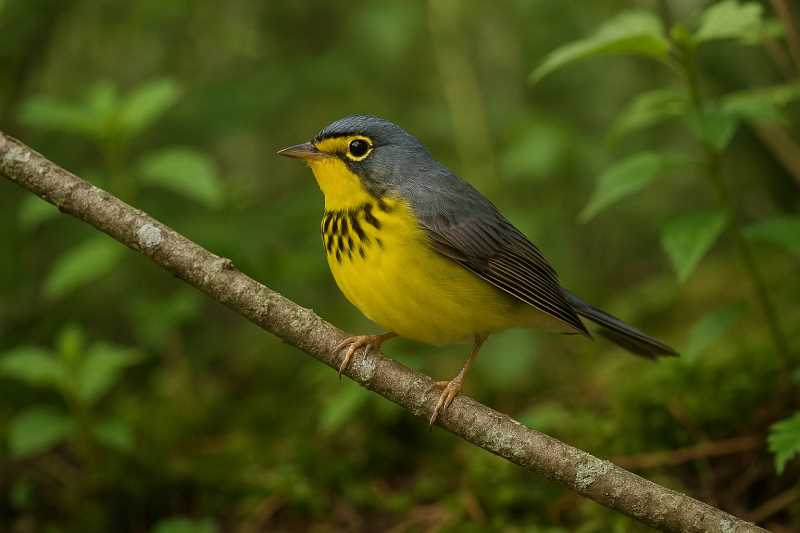
The Canada Warbler (Cardellina canadensis) is a small, vibrantly colored songbird that holds a special place in the avian community of North America. Known for its striking appearance and melodic song, this species is often referred to as the "necklaced warbler" due to the distinctive band of black markings across its chest. With its bright yellow underparts and slate-gray back, the Canada Warbler is a true gem of the boreal forest.
Habitat and Distribution
The Canada Warbler breeds primarily in the boreal forests of Canada and the northeastern United States. These birds favor wet, mixed deciduous-coniferous forests with dense understories, often near swamps or along streams. During migration, they can be found across the eastern United States and into Central and South America, where they spend the winter months in countries such as Colombia, Venezuela, and Ecuador.
Their preference for dense, shrubby habitats makes them somewhat elusive, but when spotted, they are a sight to behold. The Canada Warbler’s reliance on specific forest types for breeding makes it a key indicator species for the health of these ecosystems.
Conservation Status
The Canada Warbler is currently listed as a species of special concern in Canada and is considered near threatened globally. Over the past few decades, populations have declined due to habitat loss both on their breeding grounds and in their wintering habitats. Deforestation in Central and South America, coupled with fragmentation of forests in North America, poses significant threats to their survival.
Conservation efforts are underway to address these challenges. Organizations such as Partners in Flight and BirdLife International are working to protect critical habitats and promote sustainable forestry practices. Additionally, international cooperation is essential to ensure the preservation of wintering grounds in South America.
Behavioral Traits and Diet
Canada Warblers are insectivorous, feeding primarily on a variety of insects and spiders. They are adept at catching prey on the wing, displaying agile flight patterns as they dart through foliage. During the breeding season, they often forage in the lower to mid-levels of the forest, making the most of their habitat’s dense vegetation.
These birds are monogamous, with pairs forming soon after arrival at their breeding grounds. The female typically selects the nest site, which is usually well-concealed on or near the ground. She builds the nest from moss, leaves, and grasses, lining it with finer materials for comfort.
Vocalizations and Song
The song of the Canada Warbler is a delightful series of clear, sweet notes often described as a "chip-chupety-sweee." Males use their songs to establish territories and attract mates during the breeding season. Their vocalizations are not only a joy to hear but also play a crucial role in their reproductive success.
Despite their small size, Canada Warblers possess a powerful voice that resonates through the forest, often heard before they are seen. This vocal prowess is essential for maintaining communication within the dense habitats they favor.
The Future of the Canada Warbler
The Canada Warbler’s future hinges on our ability to preserve and restore their natural habitats. Efforts to mitigate deforestation, promote reforestation, and protect migratory corridors are vital for their continued survival. Public awareness and engagement are also critical components of conservation strategies, encouraging communities to recognize and support the importance of biodiversity.
Citizen science initiatives, such as birdwatching and reporting sightings to databases like eBird, play a crucial role in monitoring population trends and distribution changes. These efforts help inform conservation policies and actions, ensuring that the Canada Warbler remains a vibrant part of our natural heritage.
In summary, the Canada Warbler is more than just a bird; it is a symbol of the rich biodiversity found within the boreal forests of North America. Its presence signifies a healthy ecosystem, and its conservation represents a commitment to preserving the natural world for future generations to enjoy.
Related posts