Introduction to the Cirl Bunting (Emberiza cirlus)
The Cirl Bunting (Emberiza cirlus) is a small passerine bird belonging to the bunting family Emberizidae. This charming bird has garnered attention among ornithologists and bird enthusiasts due to its distinctive appearance and unique behaviors. The Cirl Bunting is primarily found in Europe, with a substantial population in the southwestern regions of the continent. This article delves into the Cirl Bunting’s habitat, physical characteristics, diet, breeding behaviors, conservation status, and the efforts being made to protect this species.
Physical Description
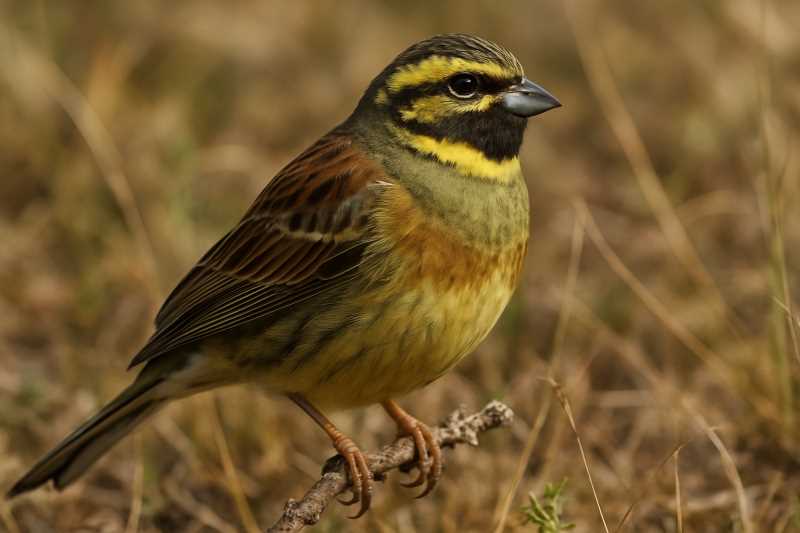
The Cirl Bunting is a striking bird with a length of approximately 15-16 centimeters and a wingspan ranging from 22 to 25 centimeters. It weighs between 20 and 25 grams. Males and females exhibit sexual dimorphism, with males being more colorful. The male Cirl Bunting is characterized by its bright yellow underparts, olive-brown upperparts, and a distinctive black head with a striking yellow eye stripe. Females, on the other hand, have a more subdued color palette, with brownish tones and less pronounced markings.
The bird’s plumage plays a crucial role in its camouflage, enabling it to blend seamlessly into its surroundings, especially in the Mediterranean landscapes it frequents. The Cirl Bunting’s tail is slightly forked, and its bill is short and conical, adapted for its seed-based diet.
Habitat and Distribution
Cirl Buntings inhabit a range of environments, including open countryside, farmlands, and coastal areas. They show a preference for mixed agricultural landscapes with hedgerows and small woodlands. The bird’s distribution is largely confined to southwestern Europe, with significant populations in France, Italy, and the Iberian Peninsula. In the United Kingdom, the Cirl Bunting is primarily found in the southern counties of England.
Historically, the range of the Cirl Bunting extended further north, but changes in agricultural practices and habitat loss have restricted its distribution. The bird’s reliance on traditional farming systems means that changes in land use can have significant impacts on its population.
Diet and Feeding Habits
The Cirl Bunting’s diet consists mainly of seeds and insects, making it an omnivorous forager. During the breeding season, insects become a crucial food source, providing the necessary protein for chicks. The bird’s feeding habits are opportunistic; it forages on the ground and in bushes, using its sharp eyesight to locate food.
In winter, seeds become the primary food source, and the bird often feeds in mixed-species flocks to improve foraging efficiency and reduce predation risk. The Cirl Bunting’s diet varies with the seasons and the availability of food resources, showcasing its adaptability to different environments.
Breeding Behavior
Cirl Buntings are monogamous, forming pairs during the breeding season, which extends from April to July. The male’s song, a series of melodious notes, plays a significant role in territory establishment and mate attraction. Males sing from prominent perches to declare their presence and ward off rivals.
Nesting typically occurs in dense hedgerows or low shrubs. The female builds the nest, a cup-shaped structure made from grass, twigs, and lined with softer materials like feathers. Clutch sizes range from three to five eggs, which the female incubates for about 12-14 days. Both parents are involved in feeding the chicks, which fledge approximately two weeks after hatching.
Conservation Status and Threats
The Cirl Bunting is currently listed as a species of Least Concern by the International Union for Conservation of Nature (IUCN). However, its population trends vary across its range. In some regions, particularly the United Kingdom, the bird has faced significant declines due to changes in agricultural practices, loss of hedgerows, and pesticide use.
Conservation efforts have been successful in certain areas, particularly in the UK, where targeted initiatives have helped stabilize and even increase populations. Agri-environment schemes that promote traditional farming methods have proven beneficial, as have measures to restore and maintain suitable habitats.
Conservation Efforts
Efforts to conserve the Cirl Bunting focus on habitat restoration and sustainable farming practices. In the UK, organizations like the Royal Society for the Protection of Birds (RSPB) have been instrumental in implementing conservation projects. These initiatives include planting hedgerows, preserving mixed farming landscapes, and reducing pesticide use to maintain insect populations.
Public awareness campaigns and community involvement have also played crucial roles in conservation. Educating farmers and landowners about the ecological importance of the Cirl Bunting and providing incentives for biodiversity-friendly practices have been effective strategies.
Conclusion
The Cirl Bunting is a remarkable species that serves as an indicator of healthy agricultural ecosystems. Its presence reflects the success of conservation efforts and highlights the importance of sustainable farming practices. Continued collaboration between conservationists, farmers, and policymakers is essential to ensure the long-term survival of the Cirl Bunting and the preservation of the diverse habitats it calls home.
As we strive to balance agricultural productivity with biodiversity conservation, the Cirl Bunting stands as a testament to the positive impact of targeted conservation strategies. By fostering a deeper understanding of this species and its needs, we can contribute to a future where humans and wildlife coexist harmoniously.
References
– BirdLife International. (2021). Emberiza cirlus. The IUCN Red List of Threatened Species 2021.
– Royal Society for the Protection of Birds (RSPB). Conservation of Cirl Buntings.
– European Bird Census Council. (2020). State of Europe’s Common Birds.
– Nature Conservation Agency. (2022). Cirl Bunting Habitat Restoration Projects.
Related posts