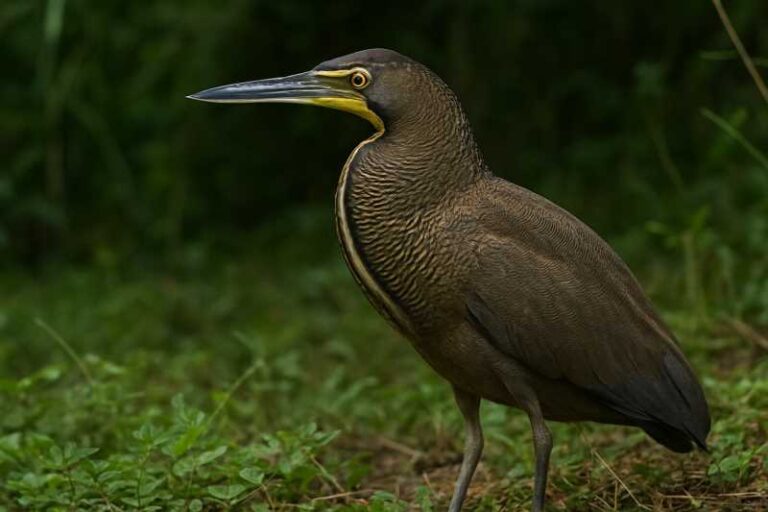
The Buff-breasted Sandpiper: A Journey of Grace and Survival
The Buff-breasted Sandpiper (Calidris subruficollis) is a small, graceful shorebird that captures the fascination of birdwatchers and ornithologists alike. With its delicate plumage and remarkable migratory patterns, this sandpiper species stands out not only for its beauty but also for its incredible journey across the Americas.
Physical Characteristics and Identification
The Buff-breasted Sandpiper is a medium-sized shorebird, measuring approximately 18-20 cm in length, with a wingspan of about 43-47 cm. It is easily identified by its buff-colored breast, which is especially noticeable during the breeding season. The bird’s plumage is a subtle blend of browns and tans, allowing it to blend seamlessly into the grasslands that form its habitat. The species has a short, straight bill and yellowish legs, adding to its distinct appearance.
During the breeding season, the males exhibit captivating courtship displays, which include a series of intricate dances and vocalizations aimed at attracting females. These displays are often performed in open grasslands, providing a delightful spectacle for onlookers.
Habitat and Distribution
The Buff-breasted Sandpiper breeds in the Arctic tundra of North America, with primary breeding grounds located in Alaska and Canada. These birds prefer the drier, well-drained parts of the tundra, where they can find ample food and nesting sites. Post-breeding, the sandpipers embark on a long migratory journey to their wintering grounds in South America, primarily in Argentina, Uruguay, and Brazil.
This migration is one of the most remarkable aspects of the Buff-breasted Sandpiper’s life. Covering thousands of miles, these birds travel along the central flyway of North America, stopping at key staging areas to rest and refuel. Their migration strategy involves traveling in small flocks, often consisting of mixed species, which offers some protection from predators and enhances foraging efficiency.
Conservation Status and Threats
The Buff-breasted Sandpiper is currently listed as Near Threatened by the International Union for Conservation of Nature (IUCN). Various factors contribute to the decline in their population, including habitat loss due to agricultural expansion, climate change, and human disturbance in their breeding and migratory stopover sites.
Agricultural development in the Great Plains of North America and the Pampas of South America, which serve as critical stopover sites, poses a significant threat to these birds. The conversion of grasslands into cropland reduces available habitat, impacting their ability to find food and rest during migration. Additionally, climate change poses a long-term threat by altering the timing of migration and the availability of resources in both breeding and wintering grounds.
Conservation Efforts and Future Prospects
Efforts to conserve the Buff-breasted Sandpiper focus on habitat protection and restoration. Key initiatives include the preservation of grasslands in North and South America and the establishment of protected areas to safeguard critical stopover sites. International cooperation is crucial, as the sandpiper’s migratory route spans multiple countries and ecosystems.
Organizations such as the Western Hemisphere Shorebird Reserve Network (WHSRN) and BirdLife International play significant roles in coordinating conservation efforts across the bird’s range. These organizations work with local governments, landowners, and communities to implement sustainable land-use practices that benefit both the sandpipers and the people who depend on these ecosystems.
The future of the Buff-breasted Sandpiper depends on continued research and monitoring to better understand their migratory patterns and ecological needs. By promoting awareness and engaging in collaborative conservation strategies, there is hope for stabilizing and even increasing their populations.
In conclusion, the Buff-breasted Sandpiper is a testament to the marvels of avian migration and adaptation. Protecting this species requires a concerted effort from all stakeholders involved, highlighting the interconnectedness of ecosystems and the shared responsibility in preserving our natural heritage.
References
- BirdLife International. "Calidris subruficollis." The IUCN Red List of Threatened Species 2021.
- Western Hemisphere Shorebird Reserve Network (WHSRN). "Buff-breasted Sandpiper."
- National Audubon Society. "Guide to North American Birds: Buff-breasted Sandpiper."
Related posts