Smith’s Longspur: An Enigmatic Bird of the Northern Plains
Smith’s Longspur, scientifically known as Calcarius pictus, is a captivating bird species that captures the interest of ornithologists and bird enthusiasts alike. Renowned for its elusive nature and unique breeding habits, this small passerine bird is a seasonal visitor to the northern Great Plains of North America. This article delves into the fascinating aspects of Smith’s Longspur, highlighting its physical characteristics, habitat preferences, breeding behavior, and conservation status.
Physical Characteristics
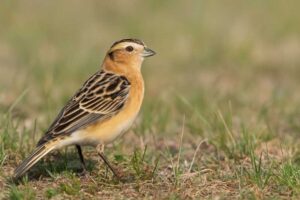
Smith’s Longspur is a medium-sized songbird measuring approximately 15-16 cm in length with a wingspan of about 25 cm. The species exhibits sexual dimorphism, with males being more vividly colored than females. During the breeding season, male Smith’s Longspurs showcase a striking plumage with a black crown, nape, and bib, offset by a bright rufous collar and white underparts. Females and non-breeding males display a more subdued coloration, which includes streaked brown upperparts and buffy underparts, facilitating camouflage in their natural habitat.
Habitat and Range
Smith’s Longspur primarily inhabits the northern prairies and tundra regions of North America. Their breeding grounds are concentrated in the open grasslands and tundra of Alaska and northwestern Canada, particularly in areas characterized by low vegetation and scattered shrubs. During the winter months, these birds migrate southward to the central United States, favoring open fields and agricultural lands that provide adequate food resources.
The choice of habitat is crucial for Smith’s Longspur, as it influences their breeding success and survival rates. Grassland preservation in their breeding and wintering ranges is essential for maintaining healthy populations of this species.
Breeding Behavior
One of the most remarkable aspects of Smith’s Longspur is its unique breeding system, which is described as polygynandrous. In this system, both males and females have multiple mating partners within a single breeding season. This complex mating strategy is accompanied by intense competition among males for access to females, often resulting in elaborate courtship displays.
Breeding usually takes place from late May to early August, during which females construct nests on the ground, carefully concealed among vegetation. Nests are typically made from grasses and lined with soft materials. A typical clutch consists of 4 to 6 eggs, which the female incubates for about 12 days. Both parents participate in feeding the chicks, which fledge approximately 10 days after hatching.
Conservation Status
Smith’s Longspur is currently classified as a species of Least Concern by the International Union for Conservation of Nature (IUCN). However, this status does not imply that the species is free from threats. Habitat loss due to agricultural expansion, climate change, and human disturbances pose significant challenges to their populations. Conservation efforts aimed at preserving native grasslands and mitigating climate change impacts are vital for ensuring the long-term survival of Smith’s Longspur.
Observing Smith’s Longspur
For birdwatchers hoping to observe Smith’s Longspur, timing and location are key. The best opportunities to see these birds are during their spring migration and breeding seasons in the northern Great Plains. Birding hotspots such as the Denali National Park in Alaska and the grasslands of Saskatchewan offer prime viewing opportunities. Observers should be equipped with binoculars and a field guide to aid in identification, given the bird’s cryptic plumage outside the breeding season.
In conclusion, Smith’s Longspur is a remarkable example of avian adaptability and resilience. Its unique breeding strategies, coupled with its reliance on specific habitats, underscore the importance of targeted conservation efforts. By understanding and appreciating the ecological role of Smith’s Longspur, we can contribute to the preservation of biodiversity in our rapidly changing world.
Related posts