The Great Shearwater: A Transoceanic Voyager of Remarkable Resilience
The Great Shearwater (Ardenna gravis) is a captivating seabird that captures the imagination of ornithologists and bird enthusiasts alike. Known for its extensive migratory patterns and distinctive appearance, this bird is a testament to the wonders of avian life and the mysteries of the oceanic environment.
Description and Identification
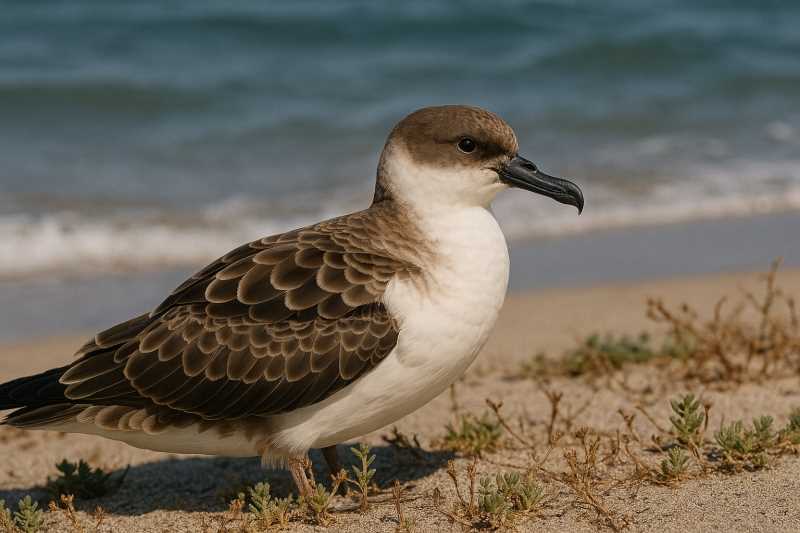
The Great Shearwater is a medium-sized seabird, measuring approximately 43-51 cm in length with a wingspan ranging from 105 to 122 cm. Its plumage is characterized by a dark brown upper body contrasted with a white underbody, making it easily distinguishable. The bird’s head is capped with a dark hood, and it possesses a distinctive white band across the rump, which aids in identification during flight. These features, combined with its long, slender wings, enable the bird to glide effortlessly over ocean waves, a sight that is both graceful and awe-inspiring.
Habitat and Distribution
The Great Shearwater is a pelagic bird, meaning it spends the majority of its life in the open ocean. It is predominantly found in the North Atlantic, where it exhibits one of the most extensive migratory patterns observed in the avian world. Breeding primarily takes place in the Southern Hemisphere on remote islands such as Gough Island and the Tristan da Cunha archipelago. After the breeding season, these birds embark on a remarkable journey, traveling north to the North Atlantic Ocean, where they spend the non-breeding season.
During their northward migration, Great Shearwaters can be seen off the eastern coast of North America, from Newfoundland down to Florida, and across to Europe and the Mediterranean region. This extensive migration covers thousands of kilometers and underscores the bird’s adaptability and resilience. The open ocean provides a habitat rich in food resources, primarily small fish and squid, which the birds catch by diving or snatching from the water’s surface.
Behavior and Ecology
Great Shearwaters are highly social birds, often found in large flocks, especially during migration and in feeding areas. Their social structure is complex, with individuals exhibiting cooperative behavior during foraging. This cooperation is particularly evident when they engage in a feeding strategy known as ‘shearing,’ where they glide close to the water’s surface, snatching prey with precision.
Their vocalizations are another fascinating aspect of their behavior. While generally silent at sea, they are known to produce a range of calls and sounds during the breeding season, which is essential for mate attraction and territorial defense.
Conservation Status
Despite their widespread distribution, Great Shearwaters face several conservation challenges. The most significant threats include climate change, which affects ocean temperatures and food availability, and human activities such as fishing, which can lead to accidental bycatch. Additionally, pollution, particularly plastic waste, poses a severe threat to these birds, as they can ingest plastic debris, mistaking it for food.
Conservation efforts are vital to ensure the survival of Great Shearwaters. Protection of breeding sites, sustainable fishing practices, and pollution reduction are critical strategies that need to be implemented globally. Organizations dedicated to bird conservation are working tirelessly to monitor populations and promote awareness about the threats these remarkable birds face.
Conclusion
The Great Shearwater is a symbol of the enduring spirit of seabirds, showcasing an impressive ability to traverse vast oceanic distances. Their presence in the marine ecosystem is a reminder of the interconnectedness of our natural world and the importance of preserving it. As we continue to learn more about these extraordinary birds, it is imperative that we take action to protect their habitats and ensure that future generations can marvel at their beauty and resilience.
Through concerted conservation efforts and a deeper understanding of their ecological role, we can contribute to the preservation of the Great Shearwater, ensuring that they continue to soar across the world’s oceans for generations to come.
Related posts