Buller’s Shearwater: A Gliding Marvel of the Pacific
The Buller’s Shearwater (Ardenna bulleri) is a seabird known for its graceful flight and remarkable migratory patterns. Found primarily in the Pacific Ocean, this species is a fascinating subject for ornithologists and bird enthusiasts alike. Named after the renowned New Zealand ornithologist Sir Walter Buller, this bird is also sometimes referred to as the "New Zealand Shearwater," highlighting its strong ties to the region.
Physical Characteristics
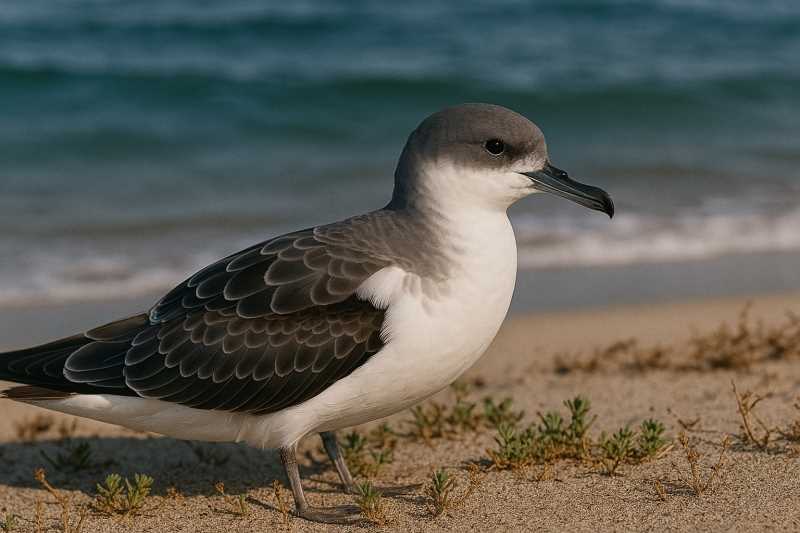
Buller’s Shearwater is distinguished by its sleek, streamlined body and striking plumage. It measures approximately 46 cm in length with a wingspan reaching up to 100 cm. Its upperparts are a soft grayish-blue, providing excellent camouflage against the ocean waves, while the underparts are predominantly white. The species also sports a characteristic dark cap on its head and a white facial area that enhances its distinct appearance.
Habitat and Distribution
The primary breeding grounds for Buller’s Shearwater are located in the Poor Knights Islands, a small group of islands off the northeastern coast of New Zealand. This restricted breeding range makes the species particularly vulnerable to environmental changes. Outside of the breeding season, these birds exhibit a pelagic lifestyle, roaming vast areas of the Pacific Ocean. They are often found over nutrient-rich waters where food is abundant, ranging as far north as the Aleutian Islands in Alaska and as far south as Chile.
Behavior and Diet
Buller’s Shearwaters are exceptional gliders, using dynamic soaring techniques to travel long distances with minimal energy expenditure. This skill is crucial for their long migratory journeys across the Pacific. They feed primarily on fish and squid, diving from the air and capturing their prey with precision. Their feeding strategy often involves associating with mixed-species flocks, capitalizing on the feeding activities of other seabirds and marine predators.
Breeding and Conservation
Breeding occurs from September to January, with each pair laying a single egg in a burrow or crevice. Both parents share incubation duties, which last approximately 50 days. After hatching, the chick is cared for by both parents until it fledges. Given the localized nature of their breeding habitat, Buller’s Shearwaters face numerous conservation challenges. The primary threat is habitat degradation, particularly due to introduced predators such as rats and cats on breeding islands. Additionally, climate change poses a significant risk by altering marine ecosystems and food availability.
Conservation Efforts
Conservation initiatives have been implemented to protect Buller’s Shearwater, focusing on habitat restoration and predator control in the Poor Knights Islands. The islands are now a nature reserve, and efforts to eradicate invasive species have been largely successful. These measures, along with international collaborations to monitor and study the species, are vital for ensuring its long-term survival.
Conclusion
Buller’s Shearwater is an emblematic species of the Pacific Ocean, embodying the challenges faced by seabirds in a changing world. Their remarkable adaptations, coupled with their vulnerability, make them a priority for conservationists. Continued efforts to protect their breeding habitats and mitigate broader environmental threats are essential to preserve this unique seabird for future generations.
Buller’s Shearwater not only captivates those who study it but also serves as a reminder of the delicate balance within marine ecosystems. Its story is one of resilience and the ongoing need for conservation action in the face of ever-evolving global challenges.
In summary, the Buller’s Shearwater is a testament to the wonders of avian adaptation and the intricate connections between species and their environments. By safeguarding their habitats, we not only ensure the survival of this species but also contribute to the broader health of our planet’s oceans.
Related posts