Understanding the Elusive Nelson’s Sparrow: A Detailed Insight
Nelson’s Sparrow, scientifically recognized as Ammospiza nelsoni, is a small, yet fascinating bird species that captures the attention of birdwatchers and ornithologists alike. Known for its elusive nature and distinctive vocalizations, the Nelson’s Sparrow inhabits the marshlands of North America, where it plays a vital role in the ecosystem.
Habitat and Distribution
Nelson’s Sparrow primarily inhabits coastal marshes, but it can also be found in inland freshwater wetlands during different times of the year. The bird’s breeding range extends across the northern United States and southern Canada, particularly in areas around the Great Lakes and the Hudson Bay Lowlands. During the non-breeding season, Nelson’s Sparrows migrate to the southeastern United States, where they can be found in salt marshes along the Atlantic and Gulf coasts.
This species thrives in habitats that provide dense vegetation and high moisture levels, which are essential for their nesting and foraging activities. The marshes offer abundant food resources, including insects and seeds, which are crucial for their diet.
Physical Characteristics
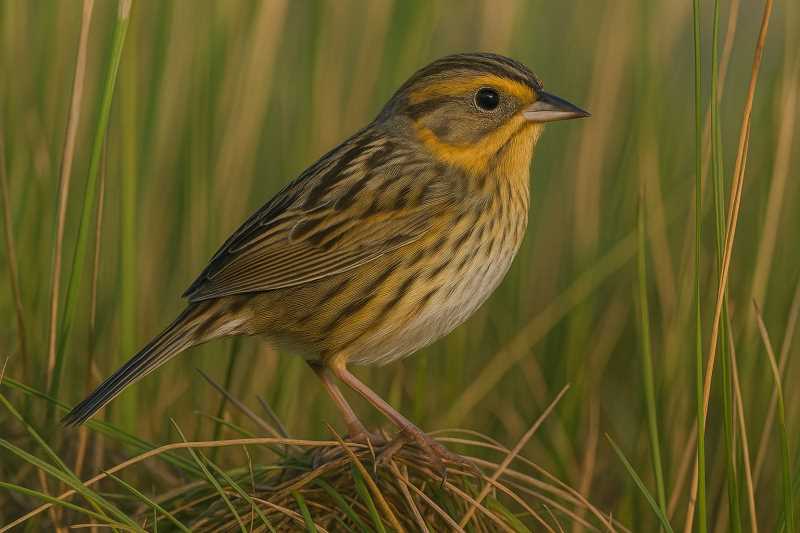
Nelson’s Sparrow is a small bird, measuring about 4.5 to 5 inches in length, with a wingspan of approximately 7 inches. It exhibits a distinctive plumage that aids in its camouflage within the marshy environment. The bird’s upperparts are grayish-brown with streaks of darker brown, while its underparts are pale with fine streaking. One of its most distinguishing features is the orange-buff coloration on its face and breast, which contrasts with its otherwise muted tones.
The bird’s bill is short and conical, perfectly adapted for its diet, which primarily consists of insects and seeds. This physical adaptation allows Nelson’s Sparrow to efficiently forage within its marshy habitat.
Behavior and Vocalization
Nelson’s Sparrow is known for its secretive behavior, often remaining hidden within dense vegetation. This elusive nature makes it a challenging subject for study. However, during the breeding season, males become more vocal, using song to establish territory and attract mates. The bird’s song is a soft, buzzing trill, which is distinctive yet easily missed due to its subtle nature.
Breeding occurs in the summer months, with females constructing nests low in the vegetation, often just above the water level. These nests are carefully hidden and provide a safe environment for raising their young. The female is primarily responsible for incubating the eggs and caring for the chicks once they hatch.
Conservation Status
Nelson’s Sparrow is currently listed as a species of least concern by the International Union for Conservation of Nature (IUCN). However, habitat loss and degradation pose significant threats to their populations. The encroachment of human development into wetland areas, along with climate change impacts, such as rising sea levels, threaten the delicate balance of their natural habitats.
Conservation efforts are critical to ensure the continued survival of Nelson’s Sparrow. Protecting and restoring wetland habitats, along with monitoring population trends, are essential strategies for maintaining healthy populations of this unique bird species.
Conclusion
Nelson’s Sparrow is a testament to the incredible diversity of avian life found in North America’s wetland ecosystems. Its unique adaptations and behaviors are a reflection of the intricate balance required to thrive in these specialized habitats. As we continue to study and appreciate this enigmatic bird, efforts to conserve and protect its environment remain paramount to ensuring its survival for future generations.
For bird enthusiasts and researchers, Nelson’s Sparrow offers a captivating glimpse into the world of marshland avifauna, reminding us of the importance of preserving these critical ecosystems.
Related posts