Introduction
The Buff-bellied Hummingbird (Amazilia yucatanensis) is a medium-sized hummingbird of Mexico, Belize, Guatemala and the southern United States. It is particularly associated with the Lower Rio Grande Valley of Texas, where it breeds and occurs in suitable habitats throughout much of the year. Its warm buff underparts, reddish bill and green plumage make it one of the region’s most distinctive hummingbirds. (allaboutbirds.org)
Physical Description
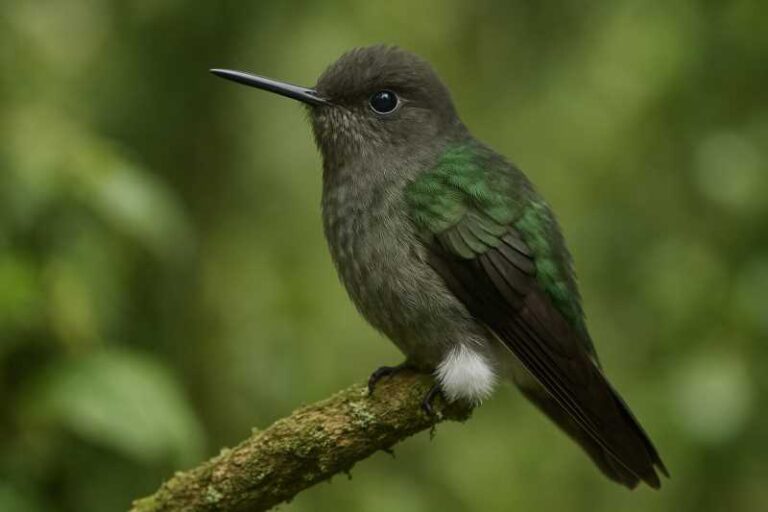
The Buff-bellied Hummingbird measures approximately 10–11 cm in length and weighs about 2.9–4.7 g. Adults have green upperparts, a blue-green throat and breast that may appear brighter in good light, warm buff or cinnamon underparts, and a rusty, slightly forked tail. The bill is reddish or orange-red with a black tip.
Males and females are broadly similar in appearance, although individual birds can vary in the intensity of their plumage. Immature birds are generally duller than adults and may show less clearly defined colour on the head and breast. The combination of a red-and-black-tipped bill, buff belly and rusty tail is especially useful for identification in the field. (tpwd.texas.gov)
Range and Habitat
The species has a broad distribution along the Gulf-facing side of Mexico, extending from southern Texas through eastern and southern Mexico to the Yucatán Peninsula, northern Belize and northern Guatemala. Several geographic forms are recognised, including birds associated with southern Texas and northeastern Mexico, the Yucatán region, and central and southern Mexico. (doi.org)
Buff-bellied Hummingbirds use semi-open and open habitats rather than dense, unbroken forest. Favoured environments include thorn scrub, woodland edges, riparian vegetation, brushlands, clearings, gardens, parks and areas with flowering shrubs. In Texas, they are particularly characteristic of the Lower Rio Grande Valley and may also occur in suburban neighbourhoods with mature vegetation and nectar-producing plants.
The species is resident or short-distance migratory across different parts of its range. Some Texas birds move south into Mexico during winter, while others may disperse north-eastwards along the Gulf Coast, reaching Louisiana outside the breeding season. (allaboutbirds.org)
Where to See This Species
Bentsen-Rio Grande Valley State Park, Texas, United States
Bentsen-Rio Grande Valley State Park preserves brushland, woodland, wetland and riparian habitats in the Lower Rio Grande Valley. Texas Parks and Wildlife Department identifies Buff-bellied Hummingbirds among the sought-after birds of the World Birding Center network, and the park’s native vegetation, trails and bird-viewing areas provide realistic opportunities to look for the species. (tpwd.texas.gov)
Nearby accommodation: Mission is the nearest practical town, with hotels, guest houses, self-catering accommodation and campsites available in the wider Rio Grande Valley.
Santa Ana National Wildlife Refuge, Texas, United States
Santa Ana National Wildlife Refuge near Alamo protects subtropical woodland, thorn scrub, wetlands and other Rio Grande Valley habitats. The refuge is listed by the U.S. Fish and Wildlife Service among the national wildlife refuges where Buff-bellied Hummingbirds may be found. Visitors can search along the refuge trails and around flowering vegetation, with additional opportunities near managed viewing areas. (fws.gov)
Nearby accommodation: Alamo is the nearest practical town, while McAllen and the surrounding Lower Rio Grande Valley provide a wider choice of hotels, guest houses and self-catering accommodation.
Laguna Atascosa National Wildlife Refuge, Texas, United States
Laguna Atascosa National Wildlife Refuge near Los Fresnos supports extensive brushland and other coastal South Texas habitats. The U.S. Fish and Wildlife Service lists the refuge as a place where Buff-bellied Hummingbirds can be observed. Visitor-centre feeding stations, water features and refuge trails may be productive, particularly where flowering plants and dense cover occur. (fws.gov)
Nearby accommodation: Los Fresnos and Brownsville are the most practical bases, with hotels, guest houses, self-catering accommodation and campsites in the surrounding area.
Behaviour and Diet
Buff-bellied Hummingbirds are active during the day and are usually encountered singly. They hover while taking nectar from flowers and may perch between feeding visits. Around food sources, they can be territorial and may chase smaller hummingbirds away with rapid flights and sharp calls. (allaboutbirds.org)
Their diet consists mainly of flower nectar, supplemented by small insects and spiders. Insects may be captured in the air or picked from foliage, providing an important source of protein. Native and ornamental plants used by the species include Turk’s cap, coral bean, tropical sage, Texas ebony, mesquite and other tubular or nectar-rich flowers. Hummingbird feeders may also attract them where they are maintained responsibly.
Breeding in Texas extends at least from April to August, although timing varies across the wider range. The female builds the nest, incubates the eggs and raises the young without assistance from the male. The small cup-shaped nest is made from plant fibres and other fine materials, bound with spider silk and often decorated with lichen, bark or plant fragments. Nests are usually placed in a small tree or shrub, commonly a few metres above the ground. (audubon.org)
Identification Tips
- Look for a green hummingbird with a warm buff or cinnamon belly.
- Check the bill carefully: it is reddish or orange-red with a contrasting black tip.
- The rusty, slightly forked tail is distinctive when the bird is perched or flying away.
- The throat and upper breast may show blue-green or turquoise tones, especially in direct light.
- In southern Texas, compare it with the more common Ruby-throated and Black-chinned Hummingbirds. The Buff-bellied Hummingbird is identified by its buff underparts and red bill, whereas those species have different bill and underpart patterns.
- The species is often found in dense brush, woodland edges, gardens and flowering areas rather than only at open feeders.
Conservation Status
The Buff-bellied Hummingbird is currently assessed as Least Concern. Available assessments indicate that the overall population is not considered to be undergoing a severe decline, although habitat loss and degradation may affect local populations, particularly where native brushland and riparian vegetation are cleared. (audubon.org)
Important conservation measures include protecting remaining thorn scrub and riparian woodland, maintaining connected habitat in the Lower Rio Grande Valley, and planting native flowering species. Garden feeding stations should be kept clean and should supplement, rather than replace, natural habitat.
Frequently Asked Questions
Where can the Buff-bellied Hummingbird be found?
It occurs mainly in Mexico, with additional populations in Belize, Guatemala and southern Texas. In the United States, the Lower Rio Grande Valley is the principal area for regular sightings and breeding.
What does a Buff-bellied Hummingbird look like?
It is a medium-sized green hummingbird with a reddish bill tipped in black, a rusty tail and warm buff or cinnamon underparts. The throat and breast can show blue-green tones.
Is the Buff-bellied Hummingbird migratory?
It is resident or a short-distance migrant depending on location. Some Texas birds move south into Mexico during winter, while others disperse north-east along the Gulf Coast.
What does the Buff-bellied Hummingbird eat?
It feeds mainly on nectar from flowering plants and also takes small insects and spiders. Insects are captured in flight or gathered from foliage.
Where does the Buff-bellied Hummingbird nest?
The female builds a small cup nest in a shrub or small tree, usually a few metres above the ground. She incubates the eggs and cares for the young without help from the male.
Is the Buff-bellied Hummingbird endangered?
No. It is currently assessed as Least Concern, although the loss of native scrub, woodland and riparian habitat remains a local conservation concern.
References
- BirdLife International
- Cornell Lab of Ornithology
- Texas Parks and Wildlife Department
Related posts