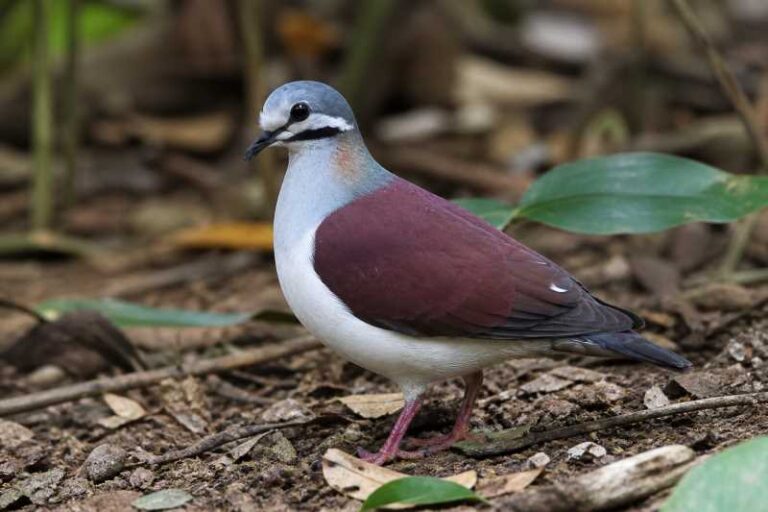
The Orange-cheeked Waxbill (Estrilda melpoda) is a small, brilliantly colored songbird native to the grasslands, savannas, and wetlands of sub-Saharan Africa. Known for its vivid facial markings and lively disposition, this species is not only a visual delight but also a key member of its ecological community. Its adaptability, charming behavior, and popularity among aviculturists have made it one of the most recognizable members of the estrildid finch family.
Physical Description
The Orange-cheeked Waxbill is a diminutive bird, typically measuring around 10 centimeters (4 inches) in length and weighing just 7 to 9 grams. Despite its small size, it is impossible to miss due to its striking coloration. The bird has a grayish-brown back and wings, a pinkish belly, and a distinctive orange patch on each cheek—its namesake feature. The rump and tail are bright crimson, and the bill is a bold coral-red.
These colors are most vibrant in adult males, though females and juveniles also possess the trademark orange cheeks, albeit less vividly. The bill, like other waxbills, is thick and conical, adapted for seed consumption.
Natural Habitat and Range
The Orange-cheeked Waxbill inhabits a wide range across western and central Africa, from Senegal and Guinea eastward to Uganda and western Kenya. It thrives in grasslands, marshy areas, open woodlands, and edges of cultivated fields, preferring areas with tall grasses, scattered shrubs, and access to water.
This species has also been introduced to a few non-native regions, such as the island of Puerto Rico and parts of southern Spain, where small feral populations have become established due to escapes from captivity.
Behavior and Social Structure
Orange-cheeked Waxbills are highly social birds, often seen in pairs or small flocks. Outside of the breeding season, they may join larger mixed-species flocks for foraging. Their movements are quick and fluttery, and they often forage low to the ground, hopping delicately through grasses and undergrowth.
Their calls are soft and musical, consisting of high-pitched “tseep” notes and twittering trills. These vocalizations help maintain contact within flocks and between mates. During the breeding season, males perform courtship displays that include puffing up their plumage, bobbing, and singing to attract females.
Nesting and Reproduction
Breeding typically aligns with the rainy season when grass seeds and insects are abundant. Orange-cheeked Waxbills build domed nests using grasses and fine plant fibers, often concealed in dense grass or shrubs. Both males and females participate in nest-building and care of the young.
A typical clutch contains 4 to 6 eggs, which hatch after about 12 days of incubation. The chicks are altricial, meaning they hatch blind and featherless, relying entirely on their parents for warmth and food. Fledging occurs around 21 days after hatching, and the young become independent shortly thereafter.
Diet and Foraging
The diet of the Orange-cheeked Waxbill consists mainly of small grass seeds, which they husk using their specialized beaks. During the breeding season, their diet expands to include small insects and larvae, which provide essential protein for growing chicks.
They forage primarily on the ground or among low vegetation, using their nimbleness to navigate dense grasses. Their preference for semi-open habitats makes them relatively easy to observe for patient birdwatchers.
Conservation Status
The Orange-cheeked Waxbill is classified as Least Concern by the IUCN Red List, owing to its wide range and stable population. It is common throughout much of its native habitat and shows a degree of adaptability to human-modified environments. However, localized threats such as overgrazing, pesticide use, and habitat degradation can impact populations.
The species is popular in the cage bird trade due to its attractive plumage and gentle nature. While captive breeding programs have reduced pressure on wild populations, illegal trapping still poses a risk in some regions.
In Aviculture
In captivity, Orange-cheeked Waxbills are valued for their beauty, peaceful temperament, and ease of care. They thrive in aviaries with plenty of space, access to grass seed mixes, fresh greens, and live insects. Because of their social nature, they do best when kept in small flocks or with compatible species.
Their breeding habits can be successfully replicated in aviary settings, provided they are given ample nesting materials and privacy. With proper care, these birds can live up to 5 to 8 years in captivity.
Final Thoughts
The Orange-cheeked Waxbill is a vibrant example of nature’s subtle artistry. From its charming appearance to its ecological role as a seed disperser and insect predator, this tiny bird brings color and vitality to the African landscape. Its presence in both wild habitats and aviaries around the world is a testament to its adaptability, resilience, and appeal. Protecting the natural environments where these birds thrive will ensure their continued success and enjoyment for generations to come.
Related posts