Birds are among the most inventive architects in the animal kingdom. From weaving complex baskets to commandeering active ant nests, their ingenuity defies expectations. But some species take nesting to truly bizarre extremes. In this article, we explore the weirdest bird nests found around the world and reveal the science, survival strategy, and sheer creativity behind each one.
1. Sociable Weaver – Nature’s Skyscraper Architects (Namibia & Botswana)
The sociable weaver (Philetairus socius) builds the largest communal nests on Earth. Looking like haystacks slung over telephone poles, these nests can house hundreds of birds across generations and span over 4 meters wide. Constructed from twigs and grass, they are designed to regulate temperature extremes in the desert, with different chambers offering cool daytime retreats and warm night-time shelter.
These mega-nests can last for over a century and are sometimes occupied by other species like pygmy falcons and owls.
2. Edible-nest Swiftlet – The Nest You Can Eat (Southeast Asia)
Built entirely from hardened saliva, the nests of edible-nest swiftlets (Aerodramus fuciphagus) cling to cave walls in places like Borneo and Thailand. These nests are harvested and used to make bird’s nest soup — a delicacy in Chinese cuisine that can fetch thousands of dollars per kilogram.
3. Bowerbirds – The Artist Engineers (Australia & New Guinea)
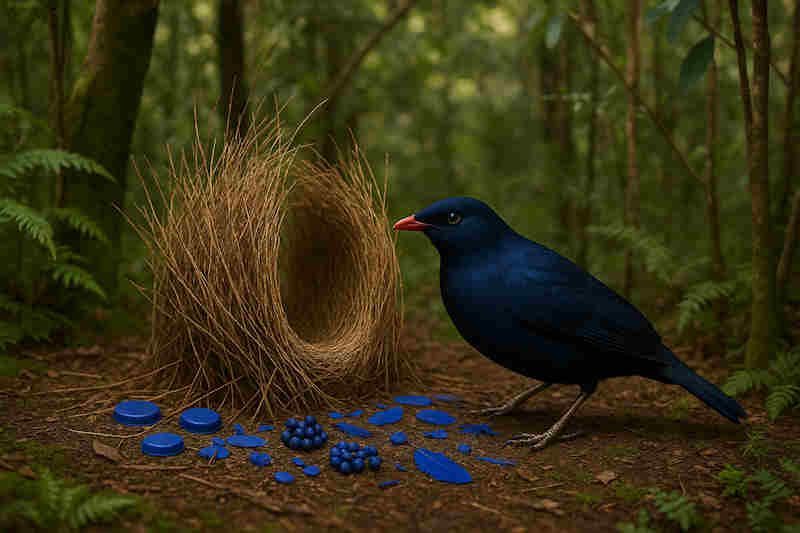
Male bowerbirds build elaborate display arenas, or “bowers,” to attract females. These can include color-coordinated objects like bottle caps, berries, and even bits of plastic. The structures often reflect symmetry and creative flair, showcasing the bird’s aesthetic sense.
4. Megapodes – Birds That Use Compost (Australia & Southeast Asia)
Also known as “incubator birds,” megapodes lay their eggs in massive compost heaps. The decaying vegetation produces heat that naturally incubates the eggs. Males tend the mound, adjusting the material and checking temperature with their beaks like feathered thermostats.
5. Tailorbird – Nature’s Seamstress (Asia)
Using its beak like a needle, the tailorbird (Orthotomus sutorius) stitches leaves together using spider silk, plant fibers, or thread. It then lines the nest with soft materials to cradle its eggs, hidden in the canopy. These nests are nearly invisible from above — a brilliant form of camouflage.
6. Cactus Wren – Nesting Among Spines (Southwestern USA & Mexico)
This fearless bird builds its nests in thorny cacti like the cholla or saguaro. The vicious spines deter predators, and the wren weaves large domed nests with side entrances to protect its young from desert heat and danger.
7. Hornero – The Oven Architect (South America)
Known as the “ovenbird,” the hornero builds a hardened, mud-based nest that looks like a tiny clay oven. These nests are strong, weather-resistant, and often outlast the birds themselves, being reused by other species.
8. Red-headed Weaver – The Suspended Architect (Sub-Saharan Africa)
The male red-headed weaver (Anaplectes rubriceps) constructs a hanging, pear-shaped nest with a long hanging entrance tunnel suspended from branches using plant fibers and grasses. What makes it strange is its incomplete construction phase — the male often starts multiple nests, waiting to see if a female approves one before finishing it. If she rejects the attempt, he abandons it and starts over.
These nests sometimes appear like dangling baskets or balloons mid-air, a curious sight in African savannas and woodlands.
Final Thoughts: The Power of Nature’s Creativity
From nests made of spit to towering colonies in trees, birds prove that evolution rewards not only functionality but ingenuity. Whether you’re a birdwatcher, nature lover, or simply fascinated by wildlife, the world of bird nesting behavior is endlessly surprising and marvelously diverse.
Related posts