Decken’s Sifaka (Propithecus deckenii)
Introduction
Decken’s Sifaka, scientifically known as Propithecus deckenii, is a charismatic primate found only in the diverse ecosystems of Madagascar. These beautiful lemurs are part of the Indriidae family, which also includes other sifakas, the indri, and the woolly lemurs. Named in honor of the German explorer Karl Klaus von der Decken, Decken’s Sifaka is distinguished by its striking appearance and fascinating behaviors, which make it a subject of interest among researchers and wildlife enthusiasts alike.
Physical Description
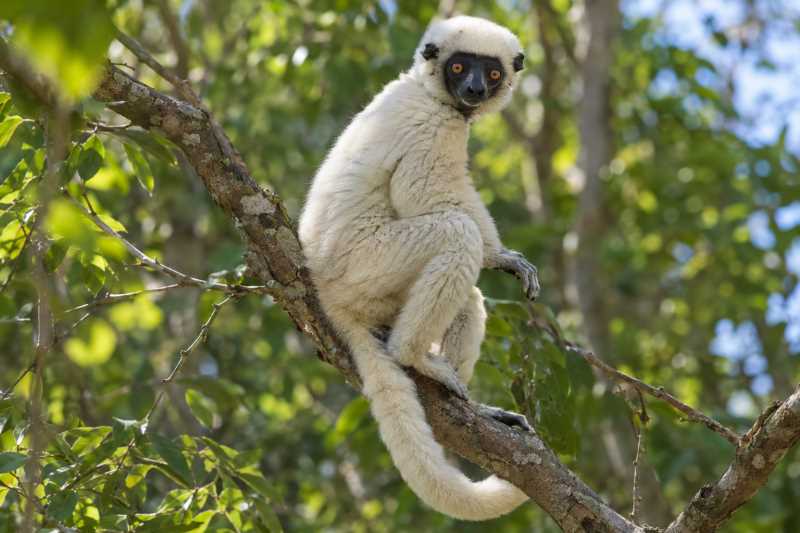
Decken’s Sifaka is a medium-sized lemur, notable for its long limbs and distinctive coloration. Adults typically measure between 43 to 48 centimeters in body length, with tails extending an additional 40 to 50 centimeters. This gives them an overall length of approximately 83 to 98 centimeters. Weighing around 3.5 to 6 kilograms, these sifakas present a slender and agile build ideal for their arboreal lifestyle.
The fur of Decken’s Sifaka is predominantly creamy white, with some variations including light gold or beige tinges. Their faces are bare with dark, expressive eyes and a black muzzle, which contrasts sharply with their lighter body fur. This stark coloration pattern aids in their identification and adds to their unique appearance.
Range and Habitat
Decken’s Sifaka is endemic to the dry deciduous forests and woodlands of western Madagascar. Their range extends from the Tsiribihina River in the north to the Mangoky River in the south, encompassing a variety of habitats that include dry forests, scrublands, and spiny thickets. These regions are characterized by seasonal variations, with distinct wet and dry periods that influence the sifaka’s behavior and diet.
The forests they inhabit are often fragmented and face significant anthropogenic pressures, yet they remain critical to the survival of Decken’s Sifaka, providing the necessary resources for their daily activities and reproduction.
Behavior and Diet
Decken’s Sifaka is a diurnal and arboreal species, spending the majority of its life in the trees. Known for their impressive leaping ability, they can cover distances of over 10 meters in a single bound, moving gracefully between branches with the aid of their powerful legs and long tails for balance.
Socially, they live in small groups typically comprising 3 to 10 individuals. These groups are matriarchal, meaning females often take the lead in group movements and decisions. Communication within these groups is complex, involving vocalizations, body postures, and grooming behaviors.
The diet of Decken’s Sifaka is primarily folivorous, consisting of leaves, flowers, and fruits. However, they are known to occasionally consume bark and seeds, especially during the dry season when preferred food sources are scarce. Their digestive system is well-adapted to process a high-fiber diet, enabling them to extract necessary nutrients efficiently.
Identification Tips (Field Recognition Cues)
Recognizing Decken’s Sifaka in the field can be facilitated by several key characteristics:
- Coloration: Look for the creamy white fur with possible golden tinges, and a contrasting black face and muzzle.
- Size and Shape: Note their medium size and long limbs, which are adapted for leaping.
- Movement: Observe their distinctive leaping locomotion, a key behavioral trait that distinguishes them from other lemurs.
- Vocalizations: Listen for their unique calls, which include a variety of sounds used for communication within groups.
Conservation Status (with Threats and Protections)
Decken’s Sifaka is currently classified as "Endangered" on the IUCN Red List. The primary threats to their survival include habitat destruction due to slash-and-burn agriculture, illegal logging, and charcoal production, which lead to significant habitat fragmentation. Additionally, hunting for bushmeat poses a significant threat in some areas.
Conservation efforts are in place to protect Decken’s Sifaka and their habitats. Protected areas such as national parks and reserves within their range offer some degree of safety, although enforcement of conservation laws can be inconsistent. Community-based conservation programs aimed at sustainable land management and education are also critical in reducing human impacts on their habitats.
Frequently Asked Questions
What is the lifespan of Decken’s Sifaka in the wild?
Decken’s Sifaka can live up to 20 years in the wild. However, life expectancy can vary depending on environmental conditions and threats from predators and human activities.
How does Decken’s Sifaka contribute to its ecosystem?
As seed dispersers, Decken’s Sifakas play a crucial role in maintaining the health of their forest ecosystems. By consuming fruits and excreting seeds, they help in the regeneration of plant species.
Are Decken’s Sifakas social animals?
Yes, they are highly social and live in matriarchal groups. Social structures are important for their survival, providing protection, grooming, and cooperative care of young.
How do Decken’s Sifakas communicate?
They use a range of vocalizations, body postures, and grooming to communicate. Vocal calls can convey alarm, coordinate movements, or maintain social bonds.
What efforts are being made to conserve Decken’s Sifaka?
Conservation efforts include habitat protection through the establishment of reserves, anti-poaching initiatives, and community engagement programs to promote sustainable practices.
Related posts