The Banggai Cicadabird: A Unique Avian Marvel of Indonesia
The rich tapestry of Indonesian biodiversity is adorned with numerous unique species, among which the Banggai Cicadabird (Edolisoma pelingi) stands out as a fascinating subject for ornithologists and bird enthusiasts alike. Endemic to the Banggai Islands in Indonesia, this bird offers unique insights into the intricate ecosystems of the region and the evolutionary paths that have shaped its existence.
Taxonomy and Physical Description
The Banggai Cicadabird belongs to the family Campephagidae, which comprises various species known for their melodious calls and agile flight. The genus Edolisoma encompasses several cicadabird species, but the Banggai Cicadabird is distinguished by its restricted range and distinct characteristics.
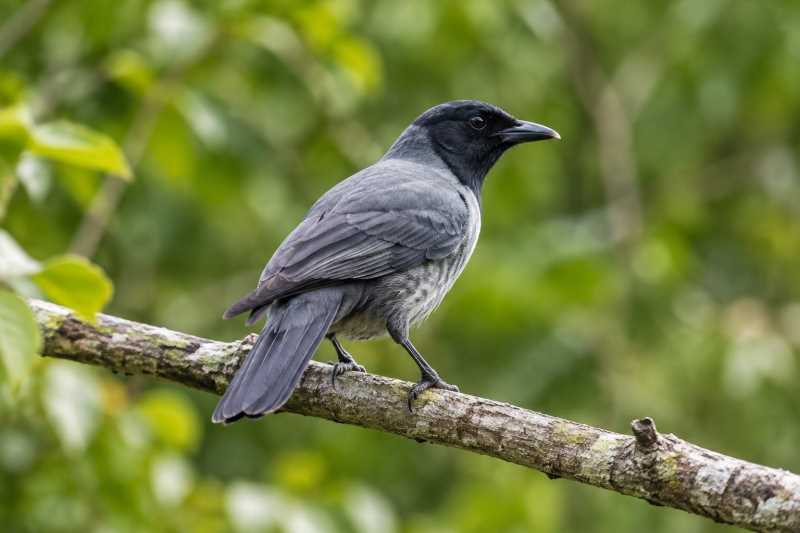
In terms of physical appearance, the Banggai Cicadabird exhibits sexual dimorphism, with males and females displaying different color patterns. Males typically have a sleek, glossy black plumage that shimmers with a subtle blue hue in the sunlight, while females are more subdued with a grey-brown coloration, providing them with camouflage against the island’s dense foliage. Both sexes have a robust build, aiding their agile movements through the forest canopy.
Habitat and Distribution
The Banggai Cicadabird is native exclusively to the Banggai Islands, a cluster of islands situated east of Sulawesi. This archipelago’s unique geographical isolation has played a significant role in the evolution of the Banggai Cicadabird, contributing to its status as an endemic species.
The bird predominantly inhabits lowland forests, where it thrives in the dense canopy and undergrowth. These forests provide not only shelter but also a rich supply of insects, which constitute the primary diet of the Banggai Cicadabird. Unfortunately, the habitat of these birds is under threat due to deforestation and land conversion for agriculture, making conservation efforts crucial for their survival.
Behavior and Diet
Banggai Cicadabirds are known for their striking vocalizations, which are both a means of communication and a method of asserting territoriality. Their calls, reminiscent of the rhythmic sound of cicadas, are a defining feature and have contributed to their common name.
Diet-wise, the Banggai Cicadabird is primarily insectivorous, feeding on a variety of insects and arthropods found within its forest habitat. The bird’s sharp eyesight and swift movements make it an adept hunter, capable of catching prey both in flight and from foliage.
Reproductive Behavior
Breeding behaviors of the Banggai Cicadabird are not extensively documented, but it is known that these birds are monogamous, forming lasting pair bonds. Nesting typically occurs in the dense forest canopy, where the female lays a clutch of two to three eggs. Both parents participate in incubating the eggs and feeding the chicks, ensuring high survival rates for their offspring.
Conservation Status
The Banggai Cicadabird is currently classified as Near Threatened by the International Union for Conservation of Nature (IUCN). This status is primarily due to habitat loss from deforestation and the fragmentation of the Banggai Islands’ forests. Conservation efforts are imperative to preserve this unique species and its habitat. Local and international conservation organizations are working to establish protected areas and promote sustainable land-use practices to mitigate these threats.
The Importance of Conservation Efforts
The conservation of the Banggai Cicadabird is not only crucial for maintaining biodiversity but also for preserving the ecological balance of the Banggai Islands. As insectivores, these birds play a vital role in controlling insect populations, which in turn affects plant health and ecosystem stability.
Furthermore, the Banggai Cicadabird serves as an indicator species for the health of its forest habitat. Protecting this bird indirectly safeguards other species within the same ecosystem, highlighting the interconnected nature of biodiversity conservation.
Conclusion
The Banggai Cicadabird is a testament to the wonders of evolution and the unique biodiversity of Indonesia. Its distinct characteristics and ecological role underscore the importance of protecting this species and its habitat. Through concerted conservation efforts, there is hope for securing a future where the Banggai Cicadabird continues to thrive in its natural environment, delighting future generations with its presence and song.
As we advance our understanding of the Banggai Cicadabird, it becomes increasingly clear that preserving such species is a reflection of our commitment to maintaining the planet’s rich natural heritage. Efforts to protect the Banggai Cicadabird will not only contribute to biodiversity conservation but also enhance our appreciation of the intricate web of life that exists on Earth.
Related posts