The Enigmatic Bornean Bristlehead: A Unique Jewel of the Rainforest
The Bornean Bristlehead (Pityriasis gymnocephala) is a captivating and enigmatic bird species that has long intrigued ornithologists and bird enthusiasts alike. Endemic to the lush rainforests of Borneo, this avian marvel is the sole representative of its family, Pityriasidae. With its distinctive appearance, fascinating behaviors, and unique ecological role, the Bornean Bristlehead stands as a testament to the island’s rich biodiversity. This article delves into the various facets of the Bornean Bristlehead, shedding light on its habitat, behavior, conservation status, and the challenges it faces in a rapidly changing environment.
Habitat and Distribution
The Bornean Bristlehead is exclusively found in the tropical lowland and hill rainforests of Borneo, an island divided among Malaysia, Indonesia, and Brunei. These forests are characterized by dense canopies, towering trees, and a rich understory that provides an ideal habitat for this elusive bird. The bristlehead prefers undisturbed primary forests, but it can occasionally be found in selectively logged areas, provided there is sufficient canopy cover.
The species’ range is limited to the lowland and lower montane forests, typically below 1,200 meters in elevation. Its presence is often a good indicator of forest health, as it relies on the intricate ecological networks inherent to pristine forest environments. The Bornean Bristlehead’s preference for such habitats highlights the importance of conserving these ecosystems, which are increasingly threatened by logging, agriculture, and human encroachment.
Physical Characteristics and Adaptations
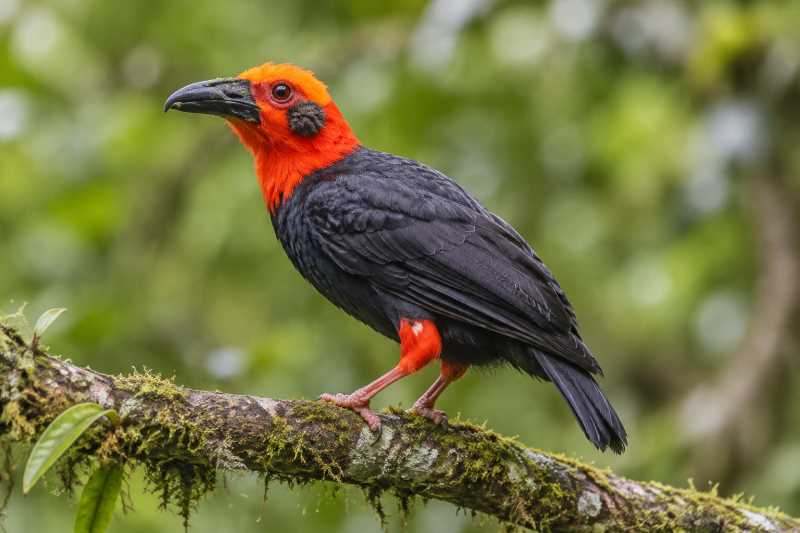
The Bornean Bristlehead is a medium-sized bird, measuring approximately 25 cm in length. Its most striking feature is its vibrant plumage, which is a mix of bright red, orange, and black. The bird’s head is bare, adorned with bristle-like feathers that give it its name. These bristles are believed to serve a protective function, shielding the bird from debris and parasites as it forages in the dense foliage.
Its strong, hooked beak is perfectly adapted for its diet, allowing it to extract insects and small invertebrates from crevices in bark and foliage. The bristlehead’s robust legs and claws enable it to navigate the complex canopy with agility, hopping and climbing in search of food. Its vocalizations are equally distinctive, comprising a series of harsh, raucous calls that reverberate through the forest.
Behavior and Social Structure
Bornean Bristleheads are social birds, often found in small family groups or mixed-species flocks. This social structure offers several advantages, including increased vigilance against predators and more efficient foraging. The species is known for its cooperative breeding behavior, where group members assist in raising the young of a dominant breeding pair.
Their diet primarily consists of insects, spiders, and other small arthropods, which they forage for in the mid to upper canopy. The bristlehead’s foraging strategy is one of active searching, using its acute vision and dexterous beak to probe into crevices and under leaves. This foraging behavior not only sustains the bird but also plays a role in controlling insect populations, thus contributing to the ecological balance of the forest.
Conservation Status and Challenges
The Bornean Bristlehead is currently classified as Near Threatened by the International Union for Conservation of Nature (IUCN). The primary threat to its survival is habitat loss due to deforestation, driven by logging, palm oil plantations, and agricultural expansion. These activities result in the fragmentation and degradation of the bird’s natural habitat, making it increasingly difficult for populations to sustain themselves.
Conservation efforts are crucial in ensuring the survival of this unique species. Protecting large tracts of contiguous forest is essential to maintain the ecological integrity of its habitat. Initiatives such as establishing protected areas, promoting sustainable land-use practices, and restoring degraded habitats are pivotal in safeguarding the future of the Bornean Bristlehead.
Raising awareness about the importance of this species and the broader biodiversity of Borneo is also vital. Ecotourism, when managed responsibly, can provide economic incentives for local communities to conserve their natural resources, fostering a harmonious relationship between humans and wildlife.
Conclusion
The Bornean Bristlehead is more than just a bird; it is a symbol of the incredible biodiversity found within the rainforests of Borneo. Its unique adaptations, social behaviors, and ecological significance underscore the importance of preserving these fragile ecosystems. As we continue to grapple with the challenges of habitat loss and environmental degradation, the Bornean Bristlehead serves as a poignant reminder of the urgent need to protect our planet’s natural heritage.
By taking concerted action to conserve the Bornean Bristlehead and its habitat, we can ensure that future generations will have the opportunity to marvel at this extraordinary bird and the rich tapestry of life that Borneo’s forests have to offer.
Related posts