The Enigmatic Papuan Black Myzomela: A Comprehensive Insight
The Papuan Black Myzomela, scientifically known as Myzomela nigrita, is a fascinating bird species belonging to the Meliphagidae family. This bird, endemic to the rich and biodiverse regions of Papua New Guinea, is a subject of interest for ornithologists and bird enthusiasts globally due to its unique characteristics and significant role in its ecosystem.
Taxonomy and Classification
The Myzomela genus is composed of small, nectar-feeding birds distributed across the Australasian region. The Papuan Black Myzomela is one of the more elusive members of this genus. Its taxonomic journey began in the mid-19th century when it was first described by the British ornithologist, George Robert Gray. Since then, its classification has been refined with advances in genetic and morphological studies, placing it firmly within the Myzomela genus.
Habitat and Distribution
The Papuan Black Myzomela is predominantly found in the lowland and montane forests of Papua New Guinea. These habitats are characterized by dense vegetation and a rich diversity of flora, providing ample feeding grounds for this nectarivorous bird. The bird thrives in both primary and secondary forests, displaying a remarkable adaptability to varying forest conditions. Despite its preference for forested areas, the Myzomela nigrita can occasionally be spotted in garden areas close to forest boundaries, drawn by flowering plants cultivated by local communities.
Physical Description
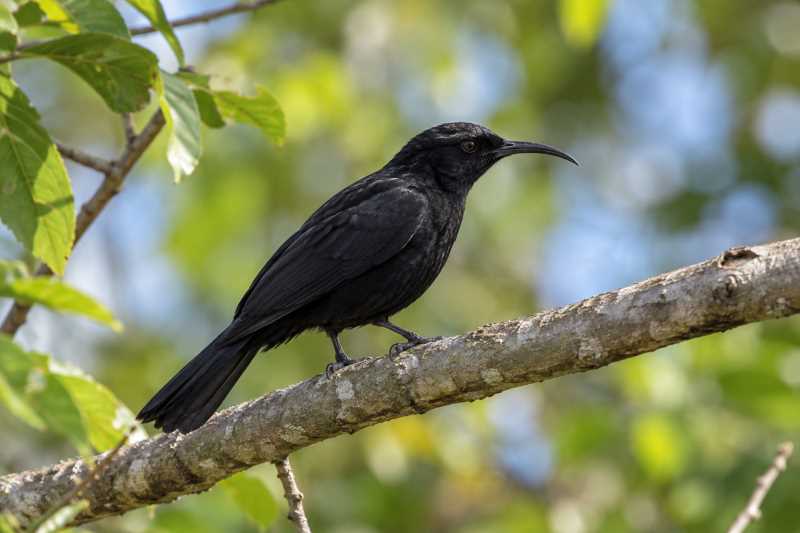
The Papuan Black Myzomela is a relatively small bird, measuring approximately 12 centimeters in length. As its name suggests, this species is primarily black, with variations in shading that give it a distinctive glossy appearance. This glossy black plumage is occasionally accented by subtle, iridescent hues, particularly noticeable when the bird is in direct sunlight. The beak is slender and slightly curved, an adaptation ideal for nectar feeding, while its eyes are a striking dark brown, adding to its enigmatic appearance.
Behavior and Diet
Known for its active and agile nature, the Papuan Black Myzomela is often seen flitting energetically from flower to flower in search of nectar, which forms the core of its diet. In addition to nectar, it supplements its intake with small insects and spiders, ensuring a balanced diet that caters to its nutritional needs. The bird’s feeding habits play a crucial ecological role, as it aids in the pollination of numerous plant species, contributing significantly to the health and regeneration of its habitat.
Reproduction and Lifespan
The breeding behavior of the Papuan Black Myzomela is not extensively documented, but like many honeyeaters, it is believed to be monogamous, forming long-lasting pair bonds. The nests are typically small, cup-shaped structures, intricately woven from grass, spider webs, and other natural materials. These are usually situated in shrubbery or low trees, providing protection from predators. The average clutch size ranges from one to three eggs, with both parents participating in feeding and nurturing the young. Though the exact lifespan of Myzomela nigrita in the wild is not well-recorded, similar species within the genus are known to live for several years under natural conditions.
Conservation Status
As of the latest assessments, the Papuan Black Myzomela is not considered endangered, largely due to its wide distribution and adaptability to different forest environments. However, ongoing threats such as habitat destruction due to logging, agriculture, and human encroachment pose potential risks. Conservation efforts are essential to ensure the stability of its populations, emphasizing habitat preservation and sustainable environmental practices.
Ecological Significance
Beyond its role in pollination, the Papuan Black Myzomela is an integral part of the avian community in Papua New Guinea. Its presence is an indicator of the health of its forest habitats. A decline in its population could signal underlying environmental issues, thus highlighting the importance of ecological monitoring and conservation initiatives.
Cultural and Scientific Importance
In addition to its ecological contributions, the Papuan Black Myzomela holds cultural significance for indigenous communities, often featured in local folklore and traditions. Scientifically, it offers valuable insights into the evolutionary adaptations of nectarivorous birds, particularly in the context of island biogeography and ecological niches.
In conclusion, the Papuan Black Myzomela is a remarkable species that embodies the rich biodiversity of Papua New Guinea. Its study not only enriches our understanding of avian ecology but also underscores the importance of preserving the natural habitats that sustain such unique wildlife.
References
- BirdLife International. (2023). "Species factsheet: Myzomela nigrita."
- Coates, B. J., & Peckover, W. S. (2001). "Birds of New Guinea and the Bismarck Archipelago: A Field Guide."
- del Hoyo, J., Elliott, A., & Christie, D. (2008). "Handbook of the Birds of the World."
By continuing to study and protect the Papuan Black Myzomela, we not only safeguard a vital part of the natural world but also contribute to the global efforts in biodiversity conservation.
Related posts