The Enchanting Duchess Lorikeet: A Jewel of the Avian World
The avian realm is abundant with myriad species, each possessing its own unique charm and ecological significance. Among these vibrant creatures, the Duchess Lorikeet (Charmosynoides margarethae) stands out as a particularly captivating specimen due to its striking appearance and fascinating behaviors. This parrot species, endemic to the lush forests of the Solomon Islands, is a testament to the diversity and splendor of nature.
Taxonomy and Classification
The Duchess Lorikeet belongs to the family Psittaculidae, which comprises many species of parrots and lorikeets. The genus Charmosynoides is relatively small, but it embodies the characteristic vibrancy and playful demeanor associated with lorikeets. First described scientifically in the late 19th century, Charmosynoides margarethae was named in honor of a notable figure, often believed to be Queen Margherita of Italy, reflecting the bird’s regal beauty.
Physical Characteristics
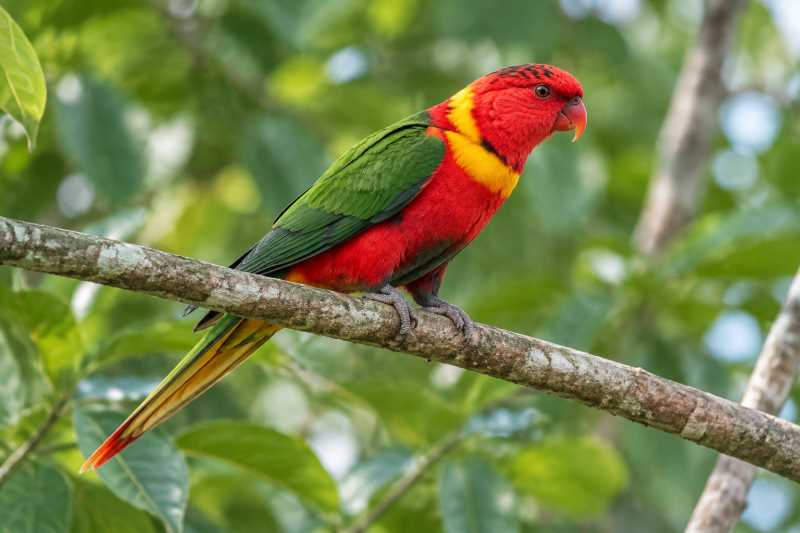
One of the most distinctive features of the Duchess Lorikeet is its radiant plumage. This species exhibits a brilliant interplay of colors, with its predominantly green body accented by striking red and blue markings. The crown and nape are typically adorned with a vivid red, while the breast and underparts often showcase a softer shade of blue. Such a spectacular display of colors not only aids in identification but also plays a role in social interactions and mate attraction.
The Duchess Lorikeet is a medium-sized lorikeet, measuring around 18 to 20 centimeters in length. Its slender build, coupled with a slightly curved beak adapted for feeding on nectar and soft fruits, makes it well-suited to its ecological niche. The bird’s zygodactyl feet, a common feature among parrots, enable it to grasp branches and navigate through its arboreal habitat with ease.
Habitat and Distribution
Endemic to the Solomon Islands, the Duchess Lorikeet thrives in subtropical or tropical moist lowland forests. These birds are typically found at elevations ranging from sea level to about 1,000 meters. The dense foliage of the island’s forests provides ample food resources and shelter, supporting the lorikeet’s active lifestyle.
The Solomon Islands, with their rich biodiversity, offer an ideal environment for the Duchess Lorikeet. The islands’ varied plant life ensures a constant supply of nectar, fruits, and pollen, which constitute the primary diet of these birds. Their specialized brush-tipped tongues are perfectly adapted to extract nectar from flowers, making them important pollinators within their ecosystem.
Behavior and Ecology
Duchess Lorikeets are typically social birds, often seen in small flocks or pairs. Their gregarious nature is evident in their playful interactions, both with each other and within mixed-species groups. These lorikeets are highly vocal, employing a range of calls to communicate with their peers, establish territory, and ward off potential threats.
Breeding typically occurs during the wetter months, when food is most abundant. Duchess Lorikeets are monogamous, forming strong pair bonds that often last for life. Nesting usually takes place in tree cavities, where the female lays two to three eggs. Both parents participate in raising the young, with the chicks fledging approximately two months after hatching.
Conservation Status and Threats
The Duchess Lorikeet is currently classified as "Least Concern" by the International Union for Conservation of Nature (IUCN). However, like many island species, it faces potential threats from habitat destruction, invasive species, and climate change. Deforestation for agriculture and logging poses a significant risk, as it leads to habitat fragmentation and the loss of vital resources.
Invasive species, such as rats and snakes, further threaten the Duchess Lorikeet by preying on eggs and young birds. Climate change, with its impact on weather patterns and food availability, also poses a long-term risk to the species’ survival.
Conservation Efforts
To ensure the continued existence of the Duchess Lorikeet, various conservation measures are being implemented. Efforts to preserve the natural habitats of the Solomon Islands are crucial, involving the establishment of protected areas and the promotion of sustainable land use practices.
Community engagement and education are also vital components of conservation strategies. By raising awareness about the ecological importance of the Duchess Lorikeet and its role in pollination, conservationists hope to foster a sense of stewardship among local communities. Ecotourism initiatives that highlight the region’s unique biodiversity can also provide economic incentives for preserving these precious ecosystems.
Conclusion
The Duchess Lorikeet is more than just a visually stunning bird; it is an integral part of the Solomon Islands’ ecosystem. Its presence contributes to the health and diversity of its environment, making it a species worthy of admiration and protection. Through concerted conservation efforts and a commitment to sustainable practices, we can ensure that future generations have the opportunity to witness the beauty and vitality of the Duchess Lorikeet in its natural habitat.
Related posts