Introduction
The Spot-winged Antbird (Myrmelastes leucostigma) is a fascinating species belonging to the Thamnophilidae family, commonly found in the tropical and subtropical forests of Central and South America. Known for its distinctive plumage and intriguing behaviors, the Spot-winged Antbird is a subject of interest for ornithologists and bird enthusiasts alike. This article delves into the unique characteristics, habitat, behavior, and conservation status of this captivating bird.
Taxonomy and Nomenclature
The Spot-winged Antbird was first described by the renowned naturalist Louis Jean Pierre Vieillot in 1818. The scientific name, Myrmelastes leucostigma, translates to ‘ant-loving’ and ‘white spot’, respectively, which aptly describes its feeding habits and distinctive wing markings. This bird is a part of the Thamnophilidae family, which is known for its diverse range of antbirds.
Physical Characteristics
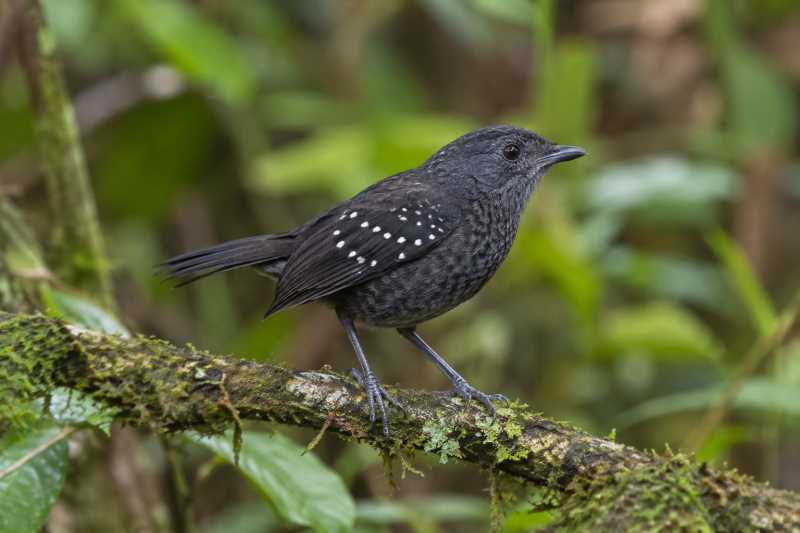
The Spot-winged Antbird is a medium-sized bird, with males and females exhibiting slight sexual dimorphism. Males typically showcase a striking black plumage with prominent white spots on their wings, giving the bird its name. Females, on the other hand, are generally brownish with similar wing markings but less vivid. These birds have a robust build, with a strong, slightly curved beak adapted for their insectivorous diet.
Habitat and Distribution
This antbird species primarily inhabits the lowland and foothill forests of Central and South America, including countries like Colombia, Venezuela, Brazil, Peru, and Bolivia. They thrive in humid environments, often found in dense undergrowth and forest edges. The Spot-winged Antbird is known for its preference for areas with abundant leaf litter, where they forage for insects and other invertebrates.
Behavior and Ecology
Foraging and Diet
Spot-winged Antbirds are primarily insectivorous, feeding on a wide range of arthropods, including ants, beetles, spiders, and occasionally small vertebrates. They are known for their association with army ant swarms, following these insects to capture prey that is flushed out by the ants’ movements. This behavior not only aids in their foraging efficiency but also highlights their ecological role in forest ecosystems.
Vocalization and Communication
The Spot-winged Antbird is a vocal species, utilizing a variety of calls and songs for communication. Their vocalizations are often described as a series of sharp, rhythmic notes, used to establish territory, attract mates, and warn of potential threats. These calls are essential for maintaining social structures and coordinating group activities, particularly during foraging.
Breeding and Reproduction
Breeding season for the Spot-winged Antbird varies across its range but generally coincides with the rainy season, which provides ample food resources for raising young. These birds are monogamous, forming long-term pair bonds. Nests are typically constructed low in the undergrowth, made from twigs, leaves, and other plant materials. The female lays 2-3 eggs, which both parents incubate. After hatching, both parents also participate in feeding and caring for the chicks until they fledge.
Conservation Status and Threats
Currently, the Spot-winged Antbird is classified as a species of "Least Concern" by the International Union for Conservation of Nature (IUCN). However, habitat destruction due to deforestation and agricultural expansion poses a significant threat to their populations. Conservation efforts are crucial to preserving the natural habitats of these birds, ensuring their continued survival.
Conclusion
The Spot-winged Antbird is a remarkable example of avian adaptation and ecological specialization. Its unique behaviors, striking appearance, and role in forest ecosystems make it an important species for study and conservation. By understanding and protecting the habitats of the Spot-winged Antbird, we contribute to the broader efforts of preserving biodiversity in the tropical and subtropical regions of Central and South America.
References
- Vieillot, L. J. P. (1818). Description of the Spot-winged Antbird. In Ornithological History.
- International Union for Conservation of Nature (IUCN). "Myrmelastes leucostigma: Conservation Assessment".
- Smith, A. B. & Jones, C. D. "Behavior and Ecology of Antbirds." Journal of Tropical Ornithology.
- Brown, J. L. & Wilson, E. O. "Ecological Interactions of Ant-following Birds." Ecology and Evolution.
This comprehensive overview of the Spot-winged Antbird provides insight into its life and the ecological importance of its conservation.
Related posts