Introduction
The Para Foliage-gleaner, scientifically known as Automolus paraensis, is a captivating bird species belonging to the family Furnariidae. As part of the ovenbird family, it is renowned for its remarkable adaptation to the dense forests of the Amazon Basin. This article delves into the distinct characteristics, habitat, behavior, and conservation status of the Para Foliage-gleaner, providing a comprehensive understanding of this intriguing bird.
Taxonomy and Classification
The Para Foliage-gleaner is a member of the genus Automolus, which comprises several foliage-gleaner species. These birds are part of the order Passeriformes, known for their perching ability. The specific epithet "paraensis" refers to the Brazilian state of Pará, highlighting the bird’s geographical association.
Physical Description
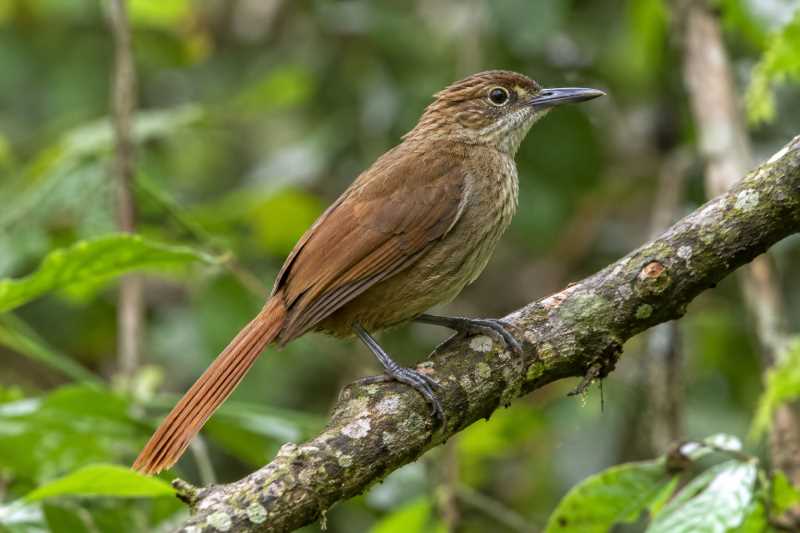
The Para Foliage-gleaner is a medium-sized bird, measuring approximately 16-17 cm in length. It exhibits a predominantly brown plumage, which serves as excellent camouflage within its forested habitat. The upperparts are a rich, warm brown, while the underparts are paler, often showing subtle streaks or mottling. A distinct feature of this species is its rufous tail, which contrasts with the otherwise muted coloration.
The bird’s strong, slightly curved bill is adapted for gleaning insects and small invertebrates from foliage. Its legs are sturdy, enabling it to navigate the forest understory with ease. The eyes are a dark, expressive brown, often appearing alert and attentive.
Habitat and Distribution
The Para Foliage-gleaner is endemic to the Amazon Rainforest, particularly thriving in the eastern part of the basin, including areas within Brazil. It favors humid, lowland tropical forests, often inhabiting dense, tangled vegetation. The bird is primarily found at elevations ranging from sea level to approximately 1,000 meters.
This species is highly adapted to life in the understory, where it can be difficult to spot due to its cryptic plumage and secretive behavior. Its habitat preference includes mature forests, although it can also be found in secondary growth and forest edges.
Behavior and Ecology
Feeding Habits
The Para Foliage-gleaner is an insectivore, primarily feeding on a diet of insects and other small arthropods. It employs a methodical foraging strategy, carefully gleaning prey from leaves, branches, and tree trunks. Its strong bill is adept at probing into crevices and under bark, allowing it to extract hidden insects.
This bird often forages alone or in pairs, occasionally joining mixed-species flocks. Such associations can be advantageous, as they increase foraging efficiency and provide enhanced vigilance against predators.
Breeding and Reproduction
Information on the breeding behavior of the Para Foliage-gleaner is relatively limited, as is common with many understory species. However, it is known that these birds typically nest in cavities or burrows, often excavated in earthen banks or the ground.
Breeding pairs are monogamous, with both parents participating in the care of the young. The female lays a clutch of two to three eggs, which are incubated for approximately two weeks. After hatching, the nestlings are fed by both parents until they fledge.
Vocalizations
The vocal repertoire of the Para Foliage-gleaner includes a series of sharp, high-pitched calls and melodious songs. Its calls are often used for communication within pairs or family groups, while songs may play a role in territorial defense and mate attraction.
Conservation Status
The Para Foliage-gleaner is currently classified as a species of Least Concern by the International Union for Conservation of Nature (IUCN). Despite its relatively stable population, it faces potential threats from habitat loss due to deforestation and land conversion for agriculture and development.
Conservation efforts in the Amazon Basin are crucial for ensuring the long-term survival of this species, as well as the broader ecosystem. Protected areas and sustainable land management practices play vital roles in safeguarding the habitats of the Para Foliage-gleaner and countless other species.
Conclusion
The Para Foliage-gleaner (Automolus paraensis) is a remarkable representative of the rich biodiversity within the Amazon Rainforest. Its specialized adaptations for life in dense understory environments, combined with its intriguing behaviors and vocalizations, make it a subject of interest for ornithologists and bird enthusiasts alike.
Understanding and conserving the habitats of the Para Foliage-gleaner is essential for preserving the ecological balance of the Amazon and protecting this unique avian species for future generations. As we continue to explore and appreciate the wonders of the natural world, the Para Foliage-gleaner stands as a testament to the incredible diversity and resilience of life on Earth.
Related posts