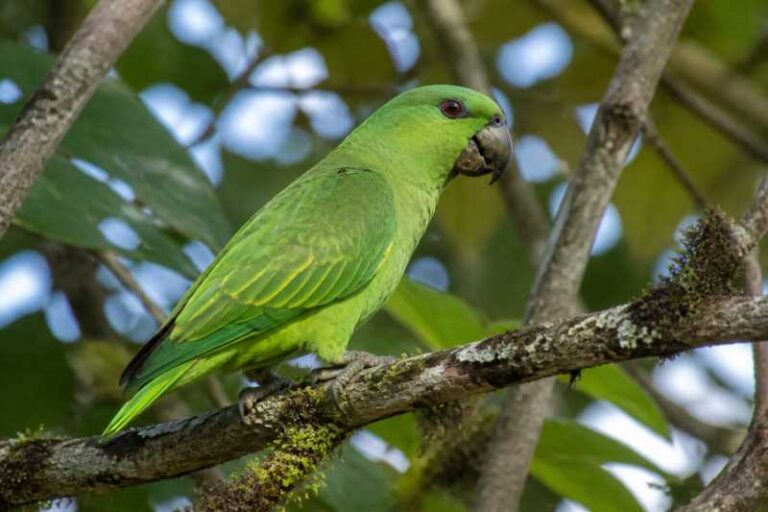
Introduction
The Little Long-tailed Woodcreeper, scientifically known as Deconychura typica, is a fascinating bird species belonging to the family Furnariidae. Renowned for its distinctive morphology and unique behavior, this bird is an integral part of the avifauna in the neotropical forests of South America. This article delves into the various aspects of the Little Long-tailed Woodcreeper, from its taxonomy and physical characteristics to its habitat, behavior, and conservation status.
Taxonomy and Classification
The Little Long-tailed Woodcreeper is classified under the order Passeriformes and is a member of the family Furnariidae, commonly known as ovenbirds or woodcreepers. The genus Deconychura comprises a few closely related species, with D. typica being the most widely recognized. The species name ‘typica’ underscores its status as a typical representative of its genus.
Physical Characteristics
The Little Long-tailed Woodcreeper is characterized by its slender build and notably long tail, which plays a crucial role in its climbing abilities. Adult birds typically measure around 18-20 cm in length, with the tail accounting for a significant portion of this measurement. Their plumage is primarily brown, providing excellent camouflage against the tree bark in their forested habitats. The underparts are lighter, often with subtle streaking that enhances their cryptic appearance.
One of the defining features of the Little Long-tailed Woodcreeper is its long, slightly decurved bill, which is adept at probing into crevices for insects and larvae. This adaptation is essential for their feeding strategy and ecological niche.
Geographic Distribution and Habitat
The Little Long-tailed Woodcreeper is predominantly found in the lowland and foothill forests of the Amazon Basin, extending into parts of the Guianas, Venezuela, Colombia, Ecuador, Peru, and Brazil. Their preferred habitats are humid tropical and subtropical forests, where they inhabit the understory and mid-canopy layers.
These birds are generally associated with pristine and undisturbed forest environments, although they can occasionally be found in secondary forests and forest edges. Their reliance on dense, continuous canopy cover makes them sensitive to habitat fragmentation and deforestation.
Behavior and Ecology
The Little Long-tailed Woodcreeper is primarily insectivorous, feeding on a diet of insects, spiders, and small arthropods. Their foraging behavior is characterized by their ability to climb vertically along tree trunks and large branches, using their stiff tail feathers as a support mechanism. They often probe into bark crevices and leaf litter to extract hidden prey.
These birds are typically solitary or found in pairs, though they may join mixed-species foraging flocks, especially in areas with high food availability. Their vocalizations are a series of high-pitched notes and trills, which serve as both communication and territorial calls.
Breeding and Reproduction
The breeding habits of the Little Long-tailed Woodcreeper are not extensively documented, largely due to their elusive nature and the dense habitats they occupy. However, like many other woodcreepers, they are believed to nest in tree cavities or crevices, where they lay a clutch of 2-3 eggs. Both parents are presumed to participate in the incubation and feeding of the chicks.
Conservation Status
The Little Long-tailed Woodcreeper is currently listed as Least Concern by the International Union for Conservation of Nature (IUCN). This classification reflects its relatively wide distribution and stable population trends. However, ongoing threats such as deforestation, habitat degradation, and climate change pose potential risks to their habitats, necessitating continued monitoring and conservation efforts.
Importance in Ecosystem
As insectivores, Little Long-tailed Woodcreepers play a vital role in controlling insect populations within their ecosystems. Their foraging activities contribute to the health and balance of the forest environment, impacting other species and maintaining ecological integrity.
Conclusion
The Little Long-tailed Woodcreeper is a remarkable bird that exemplifies the diversity and complexity of neotropical avifauna. Its specialized adaptations, ecological role, and the challenges it faces highlight the importance of preserving the rich biodiversity of South American forests. Continued research and conservation initiatives are crucial to ensuring the survival of this and other forest-dependent species, securing the ecological legacy for future generations.
Related posts